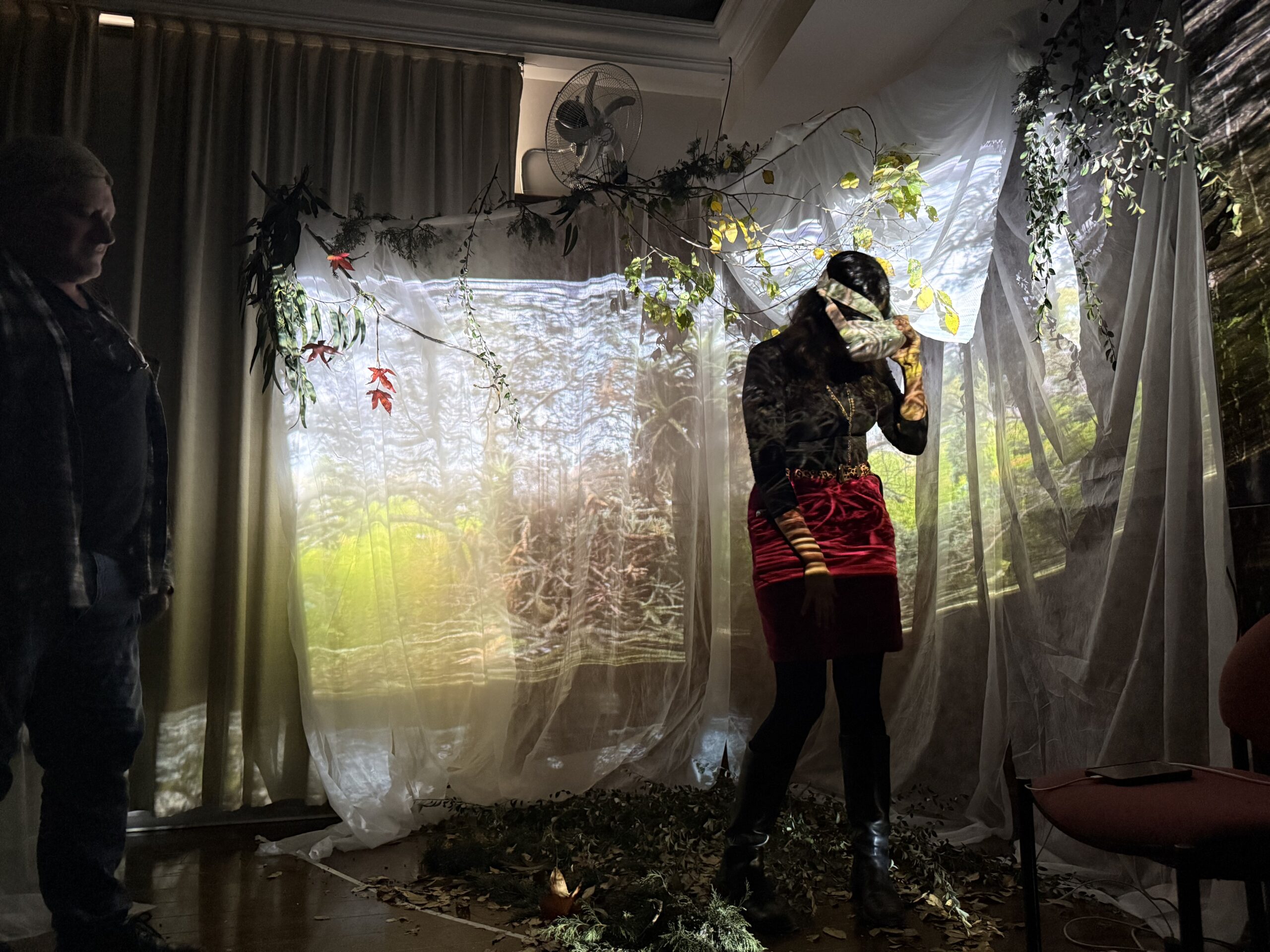

This week the guest speakers are us!. We turn the microphone on ourselves to talk about our own Venue 13 show, AI Campfire: Return, coming to the 2026 Fringe. Be ready for a more casual, conversational episode, with the two of us sharing how the show came about, why we are bringing back the concept and what has changed for this new chapter.
We then dig into a major new piece of relevant research, “AI and the Festivals”, published by Festivals Edinburgh in May 2026. It gathers essays from some serious voices in the field, including Drew Hemment of The Alan Turing Institute, and to our genuine surprise Venue 13 and AI Campfire both appear in it. We break down the key points and reflect on what it means to be named in independent research of this level.
Finally we report back from Argentina, where we have just delivered the first of what we hope will be many ecoscenography seminars, an intensive postgraduate residency at the Arts Faculty at UNICEN in Tandil, with Ian teaching in English and Vanesa collaborating and translating. We talk about what the week involved and what this growing collaboration between York University in Canada, Venue 13 in Edinburgh and universities across Argentina and the wider Spanish-speaking world might become.

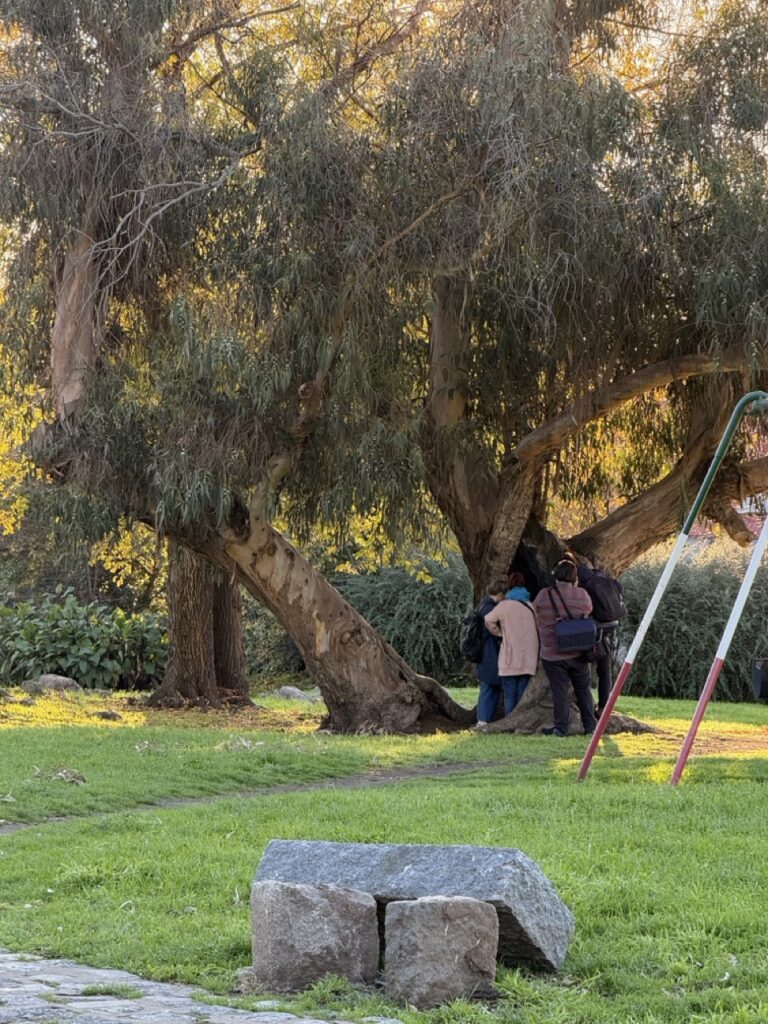


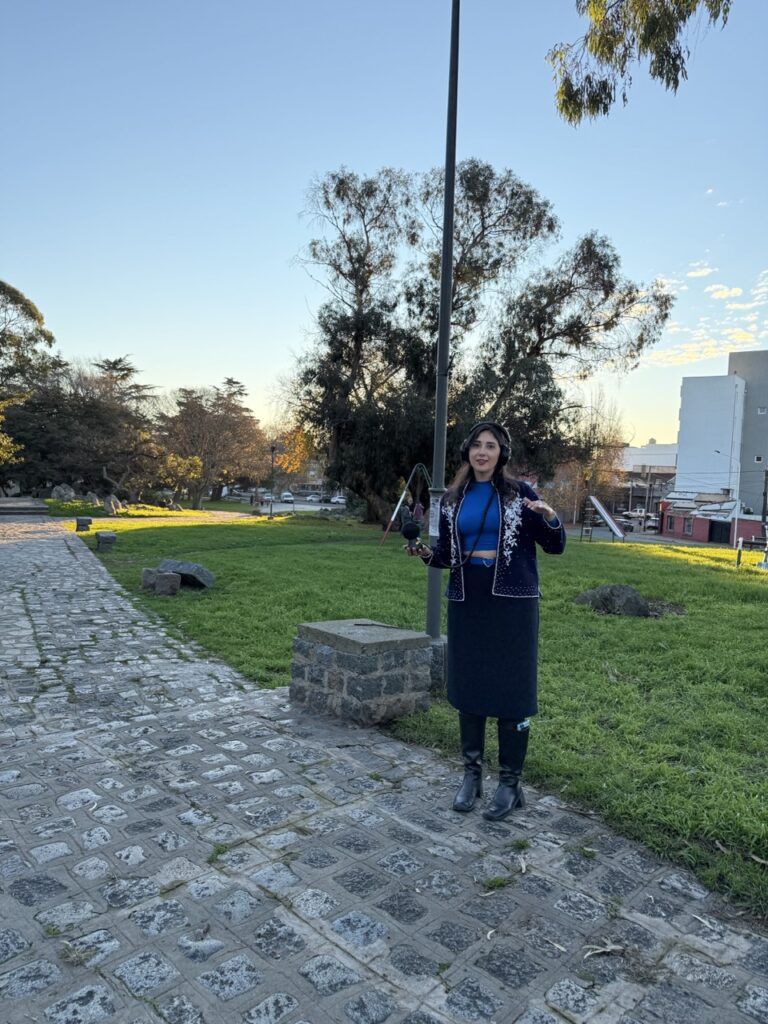

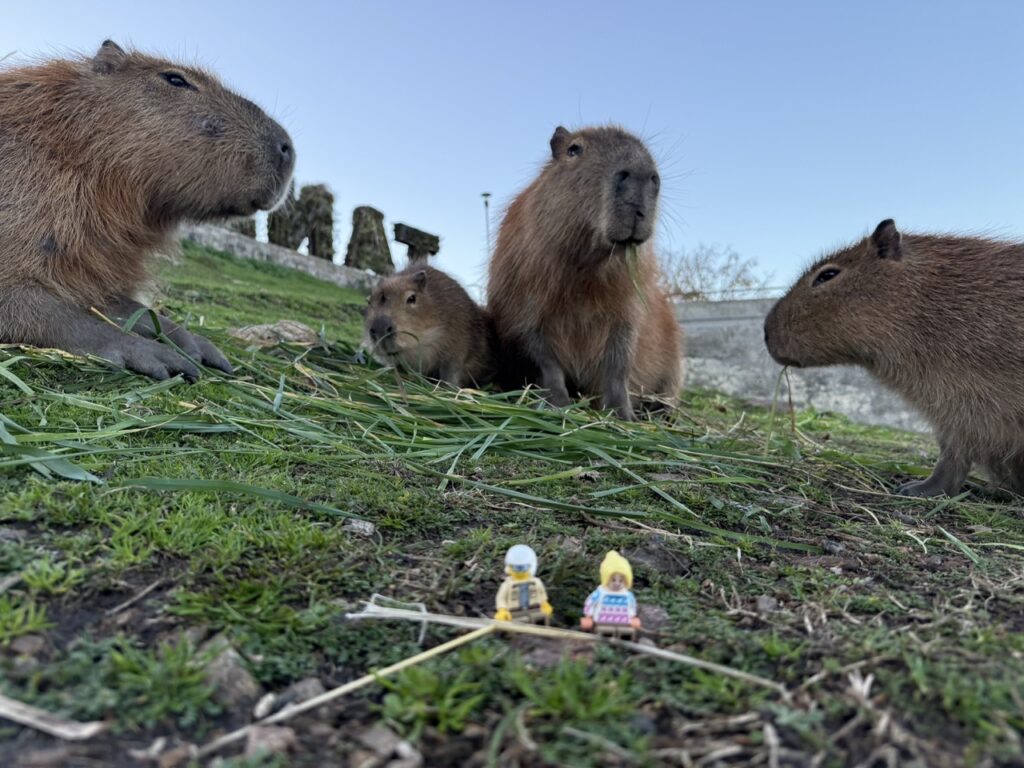





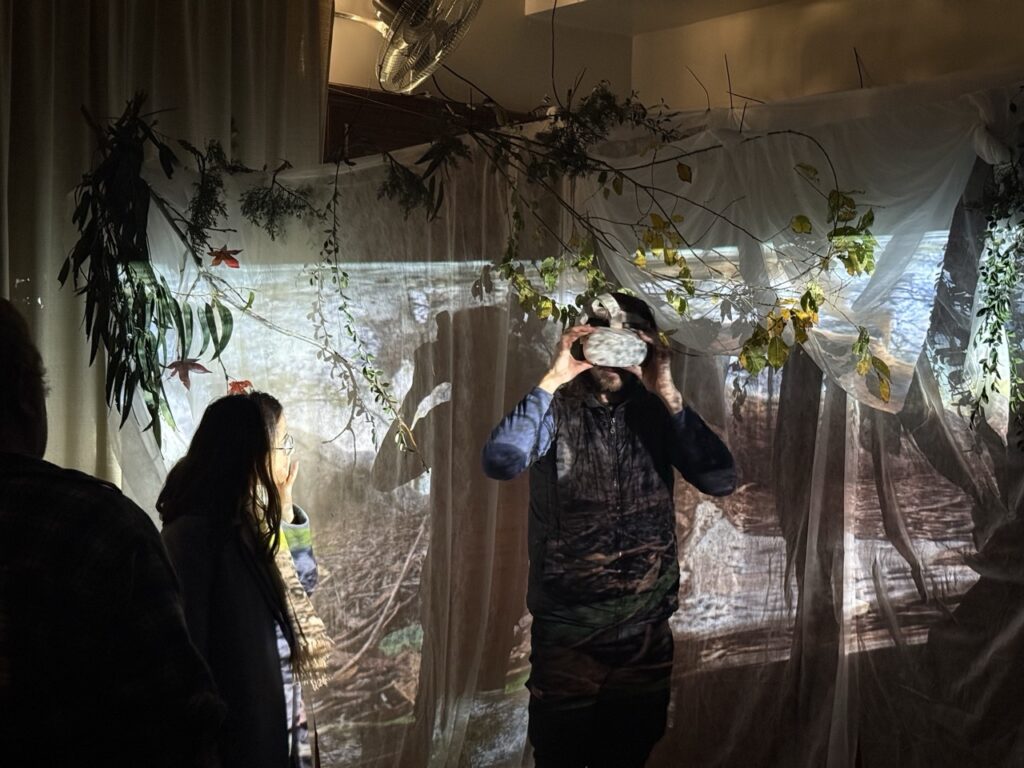
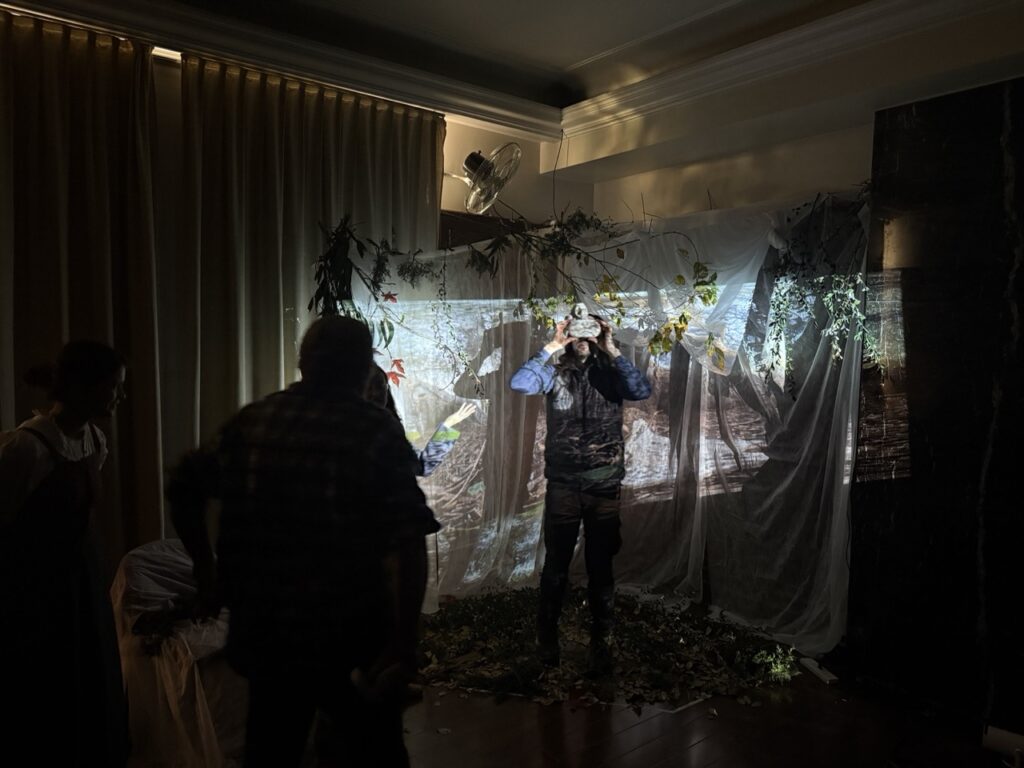

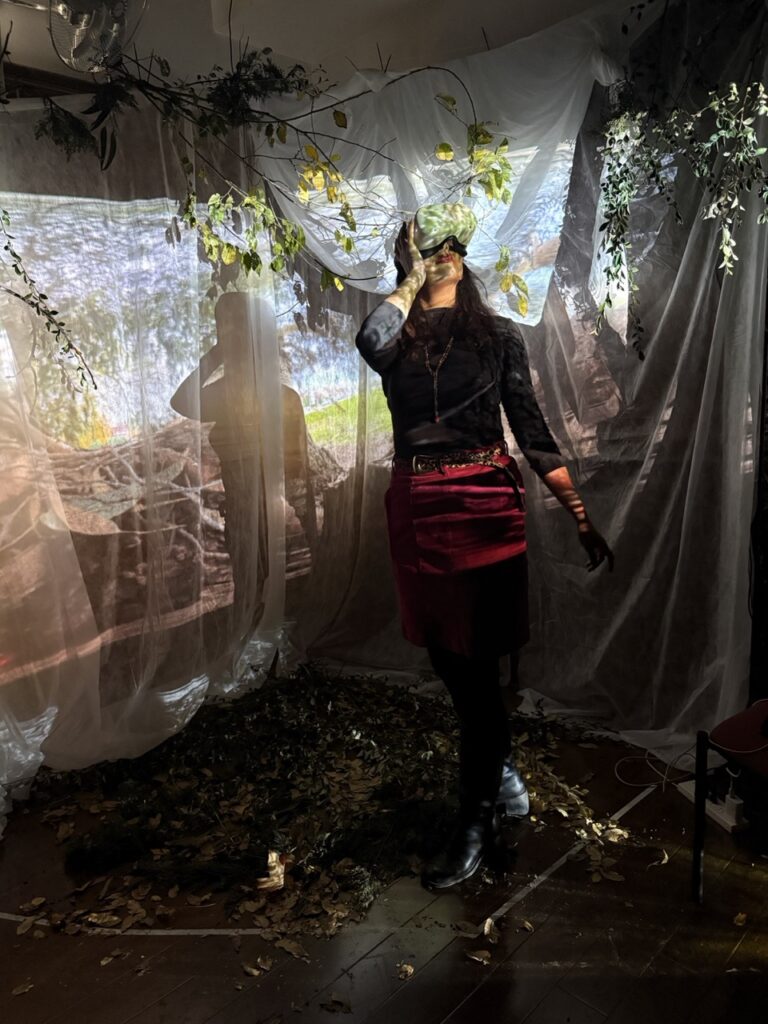

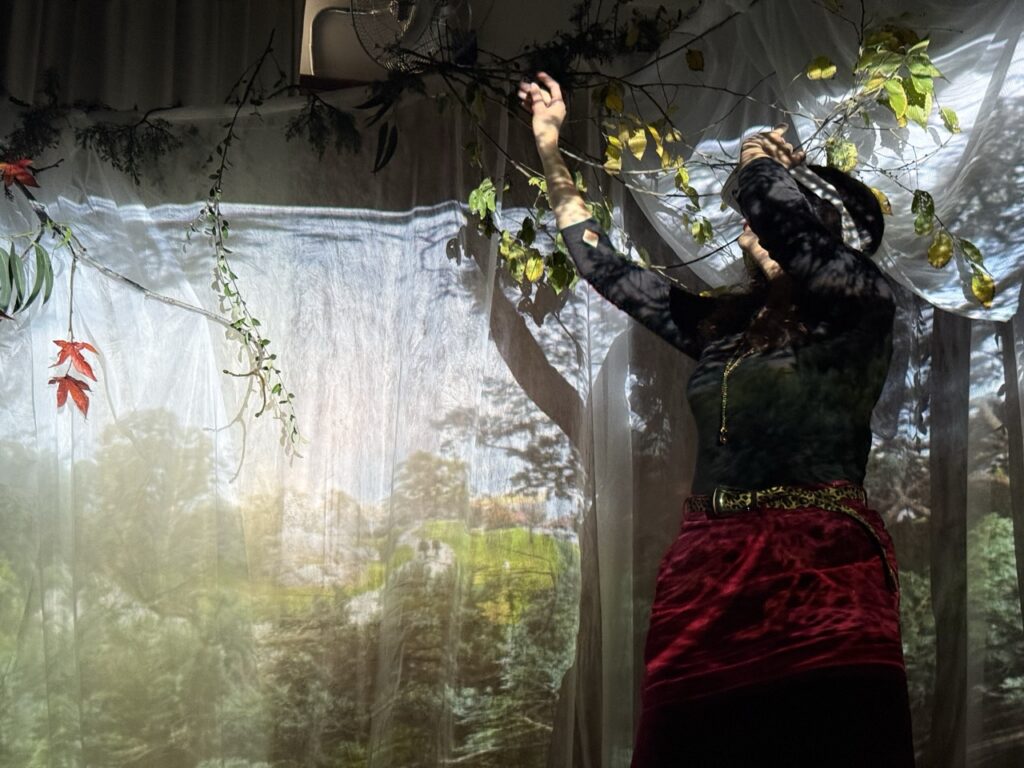
CCTA Plays Featured:
Climate Change Theatre Action – https://www.climatechangetheatreaction.com/
- Hassan Abdulrazzak’s Laila Pines For The Wolf
- Nicolas Billon’s The Polar Bears
- Heidi Kraay’s Tree People
- Elyne Quan’s Pond Life
Show Notes & Links
Catch up first
- Last episode: Chris Davis — The 40-Year-Old Ballerina (including “what type of Fringe-goer are you?”)
- The full Edinburgh Fringe 2026 programme is on sale now
- Support our renewables-powered vegan food trailer — an anonymous funder is match-funding every donation, so every contribution is worth double
AI Campfire [Return]
- AI Campfire [Return] at Venue 13 — twice nightly at 9:15pm & 9:50pm, 7–29 August (no Mondays)
- The original AI Campfire (2025)
- Darkfield — the immersive audio work from Adelaide Fringe 2025 that Vanesa mentions as an inspiration
- A.I. Artificial Intelligence (2001), dir. Steven Spielberg — Ian’s origin story
AI and the Festivals
- Read the full report: AI and the Festivals — published by Festivals Edinburgh, May 2026, under a Creative Commons license
- Professor Drew Hemment, who leads Doing AI Differently at the Alan Turing Institute and University of Edinburgh, and founded FutureEverything
- BRAID — Bridging Responsible AI Divides
- Emma Dorfman’s essay appears in the same collection
- Our research presentation, featured back in episode 2
Postcard from Argentina
- Ecoscenography and the Expanded Sensorium / EcoEscenografía y Sensorium Expandido — postgraduate residency seminar at UNICEN, Tandil, Argentina, 8–13 June 2026
- ToasterLab — Ian’s Canadian company
Find us
- Episodes & transcripts: venue13.com
- Socials: @venue13fringe
- Get in touch: podcast@venue13.com
- In person from August: Venue 13, Harry Younger Hall, Lochend Close, Edinburgh
- Music by Dusty Decks via Epidemic Sound
Transcript
Ian Hello and welcome back to podcast thirteen. I’m Ian…
Vanesa …and I’m Vanesa. And this week is a slightly unusual one because our guest speakers are well, us. TA da!
Ian TA da! That’s right. Normally we will bring you one of our 2026 artists in the guest chair. This week, we’re putting ourselves in such a chair because we have our own story coming to venue thirteen this August. Our show, AI Campfire [Return], a follow up to AI Campfire from last year.
Vanesa So we thought we’d interview each other about it and let you in on how the whole thing came about.
Ian We’ve also got some news that generally took us by surprise. We’ve been mentioned in the big new research paper on AI in the festivals, alongside some very serious names in the field. So let’s dive in.
Vanesa As usual, we want to start with a quick recap. We’ve got our previous episode with Chris Davis and the forty year old ballerina. Go back and have a listen if you missed it. And as it was really good and you can find out what type of fringe goer you are to. The full twenty twenty six program is on sale now at Edfringe dot com. And when you search our renewables vegan food trailer, crowdfunding is more alive than ever. And we also have a fabulous anonymous funder who will fund match every donation we get. So this is a huge help as it means that we only need to raise half the funds. We will add all the information on the description, and we ask you to donate and share, as every little contribution is now worth double.
Ian And with that, let’s talk about our own show.
Vanesa So, Ian, shall we tell the audience what the first AI Campfire actually is, was for anyone who hasn’t seen it?
Ian Sure. The short description of AI Campfire is a show in an immersive campfire setting. We have our main character, Symbiolene, recounting elements of Scottish folklore. Now she’s based off of the idea of the Green Man, which is motif and idea stories related to Wild Man, etc. that has existed within folklore and, uh, and lots of cultures across Europe for millennia. And so taking that idea that there is this figure that is about our human relationship to the natural world that she is recounting in a contemporary way, Scottish folklore. So, we can talk about our contemporary environmental moment. And we do this in an immersive media setting as well. And the show serves as a bit of an archive to also highlight various types of possibilities, as well as limitations of technology today that we might be using to think about how this relationship might go forward. A little bit of a solarpunk approach as well. AI Campfire is the first of what we are now doing under venue thirteen productions, and it takes a look at how we work and what other venue thirteen productions might look like in the future, both in terms of the themes and the ideas that we’re working on within this piece and our hope to create as a series, but future collaborations around international projects and immersive site specific installations, etc., like that sort of idea. Vanesa, you were there? No.
Vanesa I was there.
Ian Yeah. So that gives you a little bit of background of what we were doing before. You know, we were both there when we came up with this initial idea. Do you want to share a little bit about how the concept actually started for us?
Vanesa Yeah, I think it was we were exploring the possibilities of what we wanted Venice thirteen to be, and we wanted it to be so that we could actually connect with the artists in a way that maybe other venues can’t do. So. And what best way to do so from just, you know, from the venue perspective, but also from the artists perspective, so that we can actually demand from a venue what artists could demand from us the origin story of this, the concept was sparked was the various immersive shows that we saw at the twenty twenty five Fringe in Adelaide, including Dark Fields. For me, and we saw things. We also saw other immersive shows, and the idea sort of came up that what would it be amazing to like, take the venue, turn it into a lab for all things digital, experimental AI. And then that’s kind of where the concept of AI Campfire came about. And our backgrounds, scenography, design and ecology fed into it. And what we were trying to say with the first version is, this is what you can do now with what’s out there, and to create some sort of an archive. Because with all this, this technology is moving so fast and there are uploaded versions are coming up so quickly that you cannot actually recreate what you could a year ago. But if we don’t keep records of the proof of what you could do at the time, it’s much harder to compare the advances or the different benefits, you know, of how things are moving forward. So yeah. Can you tell us a little bit more then what is new with Campfire Return? So this is from your perspective, why are we doing something again? And what do we want to implement that we haven’t seen on a previous version. Yeah.
Ian Yeah. Well we learned so much in that first version of presenting it. Like a lot of the work that we do and we’re interested in, you sort of don’t know what it is until you’ve actually made it right. And so actually being able to put that in front of audiences for we were running it three times a night. So technically we had sixty performances that always seemed to have somebody in them. And we started to talk to people after the shows as well. And so this really gave us a lot of insight into different elements that were working and weren’t also in the way that we created it. We found that it worked in a couple of different situations. We always sort of imagined it as an immersive performance type of approach, but it worked as like a cinematic presentation. It works as an installation where it’s looping. And in the last year, we’ve been able to do all of those versions of it as well. And so we wanted to then sort of be more like proactive in thinking about what the next piece would be like. That took all of that learning into consideration. We always sort of had been talking about like, what folklore were we going to, what tales were we going to tell with it? So there’s that aspect of it too. And this one is really interesting. Without giving too much away, we’ve, we’ve really sort of broadened the, the, we’ve broadened the scope of sort of what we’re thinking. One is talking more about like how Cymbeline came to be. That gives us an opportunity also to talk about like our understanding of the relational aspects of of AI and other technologies, which is what we’ve been talking about in a lot of different research contexts over the last year. And the stories that we’re looking at are much more, I think, about seasons and their relationship to each other. So it’s a little less episodic than before, but still, but still like distinct and intertwined. And there’s also just elements of the technical side that we wanted to work on, which, you know, there’s just never enough time to do everything. So we are looking at expanding that, having a very sort of refined approach to the way that we want to work with like projected content, but looking at other things that we’ve been playing with or seeing with over the course of the last year, where we’re trying to continue to expand the way that somebody’s experiencing it through multiple senses. Right. And just as you mentioned, like the conversation around AI has moved so much. You know, it was really that we were making the first one at the same time that like, there was some maturity within generated and synthetic content, which has become a really hot topic. And so we want to continue to explore that. We’ve been doing a lot of work around what are the ethics of working with these tools and different ethical ways that we can work with that and any technology really. And so there are these aspects that both in the way that we’re making it and what we’re making and, and then also how we’re presenting it, where these are evolving things that are really key to this moment. You know, what do you think is new for you this time? You know, what can audiences expect from return that that you think that they haven’t seen before? Vanesa.
Vanesa I think right, so I believe that because we’re looking at the idea of having the AI Campfire as an umbrella, this was something like the concept that we were talking about as the more we reaffirmed ourselves on the concept of the archive and how things are moving forward throughout the years. We thought, okay, well, let’s take this year as a way to have a stronger look into the characters, their evolution story in parallel with the evolution story of AI as such a prominent topic right now is something that, you know, you have assistive AI and generative AI, and there are other types of AI. And, you know, it seems to be like everyone is, um, is involved in the conversation, whether they’re using it or they’re not using it. There’s definitely a conversation to be had. So because we feel like this is something that it’s, uh, it’s quite embedded in society right now. We do believe that AI series should have an origin story, and we’re going to try and continue with some of the characters that we started, you know, like the symbol in as as the storyteller, because I do believe that the evolution of her as a character throughout the this year and the future iterations in future years, there’s been so many changes and then yet new material or new collaborations. We’re looking the to to look into. We’re looking to incorporate new ways of immersion, sort of like playing a bit more with audio this year as an immersive factor. This goes back to my, um, immediate fascination with dark filth and the Sands. How, you know, in that time it was sort of like a dark room and you just hear things. And so much comes from that sense of hearing things. We also want to have a look at different software, including like local models, and continue the idea of setting up, giving credit to what was done or what was created with AI. This is something potentially quite new at the moment. I do believe a lot of people are using AI, but they’re not being forward in their use of AI. Um, and there is a little bit of a discourse to be had with that. Maybe because they are They’re shamed, maybe because they don’t feel like they have to. But I do believe that if you start giving credit to what we use AI on, it will, you know, pave the way for a more honest type of content creation. And also, it will give people the choice to see if they want to take part on that type of content, you know, if they know ahead of time. I do believe that’s important for people to have that choice. We’re also looking to recording the materials used to the potential of creating a sister documentary, or maybe a series of documentaries or a workshop that will feed into some sort of academic research in the hope for sharing more ethical versions of LMS the public can download and use, bypassing the need for data centers. Um, and then, you know, this has been a, a slowly developing ecological thread and erupts into some of the workshops that we have been doing. We’ve done a workshop in Argentina recently on a very similar topic to this. So I do think it’s very much relevant in what we’re doing with AI Campfire [Return]. Now, should we talk about how the show sits with everything else we do? So the venue, the research, the seminars?
Ian Yeah, I think, you know, it’s an interesting thing that we are looking at a lot of technology within all of our programming, trying to support that and trying to support ambitious usage of, you know, whether it’s video, audio, interactive content, etc. also trying to explore a lot of different ways of formatting. Like we’ve got an immersive show this year, but we’re really trying to support that sort of, you know, breaking the solo show on a stage fringe, our type of format. So there’s more experimentation happening and that doesn’t necessarily need to include AI, right? We’re definitely not the AI venue. We have shows where we’re interested in exploring it. And so I think that having a show that is engaging with such a hot topic, as, you know, as we’re pointing out, is that we’ll see in our, in our next segment on this episode and looking at different formats, you know, it’s a relatively short show. It’s done in this campfire setting. It’s done in this immersive sort of configuration. So it’s, it’s changing those things around that. It really becomes part of showing, you know, artists that are coming in what the sort of flexibility of what we can do in the space is because sometimes people can’t imagine things until they see them as well. And we think a lot about this in terms of the relationship to sonography and other shows as well. So, you know, your concept of having people sit, you know, low and comfortably. So the beanbags that we brought in, which sort of become a hallmark of what we’re doing is important to the comfort level. But that is all part of the immersive sonography, and then how that relates to then iconography and relationship to having conversations with, you know, the non-human world and sort of find that and find ways to put that on stage. And that’s something where, you know, just as we’ve been doing in Argentina, we were using technology really to expand the human sensorium so we could observe things or see things or experience things that in the way that, you know, our senses typically give us input aren’t possible. And so seeing work that happens with that and seeing how that influenced the venue and, you know, bringing this back to the way that we connect as humans. So bringing it back around, you know, you know, the most low tech form of classical theater, which is connecting it to the campfire, a good place to sit around and tell stories.
Vanesa Yeah, the storyteller bringing it back to that as well. I think that’s quite a good emphasis on the balance of what we’re trying to achieve. And one of the things about one of the questions that I can find original and ongoing versus will always bring forward is, how would you feel if you had to make the decision of losing some stories that had traditionally been passed, you know, by word of mouth and replacing the storyteller with an AI? And this is one of the conundrums, because right now we’re living in a society where the younger generations are taking up more to, to digital entertainment. You know, you have, you know, YouTube influencers and you have, you know, cartoons. You’ve always had cartoons, you have their own version of sort of like cartoons right now, which are kind of like a mixture of like a gaming with storytelling, this kind of thing of, um, similar to like Twitch or Roblox. And you have the young generations, you know, as young as four or five, six-year-olds, they are absolutely enthralled with this type of communication. But then I’m thinking, well, if they’re used to this, they will be used to a different type of storyteller. Now, you know, which would be the AI. And then you think, well, I’d much rather have someone, you know, a real person tell the stories, but that’s not happening. It’s just it’s not happening as much in this day and age. So these stories are getting lost, lost to time, lost to they’re just maybe getting dated. So also, you know, reviving these stories with a new climate focus brings them life again and brings them back into the conversation.
Ian I think that’s all that’s all good. I think that’s if I were to encourage anybody who is like, what is this show about? How does this fit into things? I’d say one, come talk to us. We’d love people to see it. And it’s become very important for us to talk to people afterwards about what they’re getting from it. And people go in all sorts of different directions because we can say it’s an AI show. AI is a very broad topic too. So it encapsulates a lot of things, and there’s a lot of things that just are in it that have nothing to do with AI. It’s part of the conversation in it. It’s been interesting. One of the interesting things that I think that’s come out of it is that, you know, I’ve been seeing people make statements or make posts around the idea. And I don’t I don’t necessarily even disagree with them that they’re like, you know, if you’re, if your flyer is generative AI, I’m not coming to see your show.
Vanesa Mhm.
Ian And like, as someone who’s been doing this since two thousand and eight, the number of flyers that I’ve designed like it, I’m like, yeah, why would you use it for that? That doesn’t seem necessary. Like, I don’t know what benefit you’re getting from that in the first place. And yeah, if you, if you really want something of a specific nature, there’s so many people that you could talk to and then like should be looking at the tools to something that’s new, but then having conversations with people that’s like, well, I mean, my flyer has generative AI on it because the show isn’t in part a conversation around generative AI. So that is part of what the show is. And they’re like, oh, well, that’s a different thing. Like you’re not using it to replace somebody. You’re using it because that’s what it is. I’m like, yeah, the actual design itself, like where the text goes and all that, like that is done by a person. Let me tell you, as the person who’s doing a lot of that work, it is very much human generated. But yeah, there are things that have come out of what we’ve created that come out of generative. So technically it is it has generative AI. And it’s like, but I still want you to come see the show because I want you to have that conversation with us. And that’s, I think that’s, that’s what I don’t like about the discourse right now is that like the, the staunch AI refusal to even engage in the conversation? Like, I don’t care if people decide to use it or not. Like, like any tool, I think people should use it if it’s useful to them and does something that otherwise they can’t accomplish or they can’t accomplish in the same way, which, you know, that’s what we’re exploring. But yeah, I think, I think that that is what I’m hoping that that we get people in to have that conversation. They can see sort of what we’re doing. They can pick it apart. We are, we’re not, you know, we’re not shrinking violets. We are more than happy to engage in the hard conversations. And that’s actually like, we also want it because that’s been part of what’s pushing it forward as we’ve been like, oh yeah, let’s look at the more ethical ways to do this. Can we still accomplish what we want to accomplish and say what we want to say without spending too much time? Just like being like, yeah, we’ll just use whatever is convenient and available and sort of looks cool. It’s very intentional. Of course, you can catch a campfire return at venue thirteen this August. We’re going to be doing two shows a night. I’ve brought it down to two shows, and I will put all the details and the dates in the show notes it’s going to be running. It’s easy to remember because it’s nine fifteen and nine fifty. So no matter how you. If you accidentally say it in a weird way, you will still be correct.
Vanesa You’ll still make it.
Ian Unless you’re, you’re, you’re trying to make plans with somebody and they’re like, they said nine fifteen. No, I think they said nine fifty. Confirm with your friends if you’re trying to say it at the same time, but otherwise show up at either of those times. We’ll be running it twice a night, every night from August seventh until the twenty ninth, except for on Mondays. Now, this next bit is something we’re still processing. In May of 2026, Festivals Edinburgh published a research collection called AI and the festivals. It’s a serious, independent piece of work. It’s got a set of essays from a variety of thinkers thinking about AI and about how the Edinburgh festivals might respond to the opportunities and the challenges of artificial intelligence. It’s published under a Creative Commons license and brings together a real range of voices from across the sector people who are working in industry, like in for-profit creative sector, people who are working in the nonprofit creative sector, doing theatre, working as artists, people who are on the academic and and research end of things. It spans the gamut.
Vanesa And one of those voices is Drew Hammnet, who leads “Doing AI Differently” at the Alan Turing Institute and University of Edinburgh. He also founded Future Everything. So, we are talking about research from very credible people in very credible organizations. Now, in the essay, the essay that Hamid mentions that basically writes at the Edinburgh Fringe twenty thirteen, run by Ian Garrett, it’s a convening point for an international network of artists working across AI, immersive storytelling and ecology. Now that’s a great mention. And he places us alongside initiatives like BRAID and “Doing AI Differently” and argues that Edinburgh already has the depth of infrastructure, relationships and expertise that other cities are trying to build.
Ian Yeah, and we should stress that we had absolutely no hand in any of this writing. I know drew. There’s like a research initiative that’s working between Canada and the UK that I’m part of that fits under this umbrella of Doing AI Differently. But I didn’t actually learn about this essay happening until it was published. That’s how I found out about it. So nobody asked us to contribute and we didn’t know it was coming. We found ourselves name in this independent research, which is exciting because we’ve been out there, you know, doing some research ourselves and presenting research. But it’s really interesting to see this in the future of the festivals and as, as venue directors, that that means a great deal that people are looking at us in that way. That’s not untrue. Like it’s, it’s, we are a convening point for a lot of people looking at a lot of different ways of approaching things. One of those topics is AI in the day to day running of a venue that is being recognized in this research, that that means a lot because, you know, as much as we very publicly like present what we’re finding in terms of, you know, audience experience, whether or not it’s, it’s our own show with AI when we’re talking about trying to be climate focused, when we’re talking about, uh, being the first vegan venue, we also are like, okay, we need to talk to people about insurance or let’s now we got to call the city council again to talk about this permit and to clear and hold this parking bay. And what day does our vendor need to get in for a little bit. Like there’s a lot of day to day practicalities in there. So it’s really great to see that that work, the background work that a lot of people don’t see is, is recognized and then validated, like the international network of artists that we’ve been building over the years and are looking at bringing in work, we’re already talking about projects that are coming in in 2027 and 2028 eight that, you know, take more preparation to do, especially for people coming from afar and that have ambitions. And that’s what we want. We want to see. And so, you know, independent recognition matters more than anything that we can say about ourselves. And we, you know, we talk a lot on this podcast, but then being able to have someone else see that sort of leadership, especially for our size is kind of awesome. What do you think, Vanesa?
Vanesa I think it’s a fantastic way to have been acknowledged. You know, the one that you don’t know about it means that, you know, the work is shining for itself. I like the fact that, you know, other organizations have been brought to light to, you know, in this ancient from dreamt about that we do have an infrastructure already here, and we are looking forward to potentially making more connections and, you know, relating to these other organizations to see where there are some similarities, similarities, and if there is room for, you know, collaboration or opportunities in the future as well. I mean, I have to say that the article in the spirit of being honest, we do, we do, we should say that we did get a second mention too. And this one is a bit more of a critical one, not of us, but it was a very important point about artificial intelligence in general. So in a different essay, Emma Dorfman cautions against shows that treat generative AI as a character with its own agency. And she lists AI Campfire of one of her examples. Because we do we do have the main character in our story is an AI, but her worry is about a tendency that could come up from that or from other shows of Anthropomorphizing AI, giving it a personality or a present that it doesn’t really have, and what that might encourage in audiences. Now, this is already something that is happening. We are treating AI as a friend, as a therapist. We tell everything. We ask Claude, we ask Gemini, we ask, chat. All of these things all the time. But we know that, you know, this is a machine. But do we really know that, Ian? And is that at some point where we start thinking we rely on it so much on its advice? You know, it also comes with each software has its own tone. It becomes friendly. You can actually customize it in a way of the you know how to respond to you. So it does become a companion of sorts to your daily life. Does it do we get to a point where we start blurring the lines? And we do think that, you know, these this is more than a machine and we should actually hear or heed that advice.
Ian That’s a really interesting question. One of the things that’s come up in a couple of the events that I’ve been at is and came up with in our research presentation that I think was featured in episode two or three. We can link back to that was talking about how the real change here is in the way that people are interfacing with AI. Like my first experience with what I would now refer to as large language models was in Edinburgh, my first fringe, because my brother in law was working in informatics around machine translation and talking about the change from like rules and grammar, like grammar and spelling rules based translation into things that were looking at like statistical analysis of large bodies of text or large samples of language, and then building models around that for better translation, which is now, you know, if you use Google Translate, they’ve gone through a few different models, which wouldn’t be referred to as LLMs until the last couple of years. And that’s part of it as well because it’s contextually aware. So that means that like we’re looking at a couple of decades of development of a technology. So in some circles, it’s a relatively mature technology. The what’s really changed is the chat interface for it and how that has changed the way that we interact with it. So it’s become much more conversational. You know, we’ve had years of people making jokes about how, you know, all the digital assistants, Alexa, Google Home, Siri are slightly ridiculous and mishear things all the time. And they are, they are these things. And now we’re getting to a point where it’s like they’re much more useful and accelerating. And it’s because of that interaction. We’ve where the previous paradigm was like someone would invent a type of technology and you sort of had to find the killer application for it so that people would see why the like a hardware or the background, like the thing that you were using was useful. This was sort of like in reverse. It’s like, what is the interface that has actually made sense for it? And apparently that’s like making a conversation using like natural language to interact with things, which has been a long term dream. But now that comes with interesting costs and considerations for it. So I think that it’s, I think that it’s interesting, particularly in this, you know, the anthropomorphize, how do we relate to it? My own interest in AI goes all the way back to the two thousand and one movie A.I., and that was all about like robotic people. It’s about someone like replacing a child with a, like the experience of, of interacting with a child in that love with a, with a robot. And a lot of these conversations were happening in that too. So it’s, it’s an interesting, it’s an interesting time to be doing this type of work and seeing it happen.
Vanesa Absolutely. We will pop a link to the full AI in the festival’s report in the show notes, so you can read it for yourself. And, you know, you can also make up your own mind on this if you want to also come and comment on it or, you know, want to. If you are a researcher on this topic, we would love to have you at the website, at the podcast at some point. So drop us a message and we’d love to, we’d love to talk to you.
Ian So as we mentioned at the top, we are recording part of this, having completed a residency in Argentina, where we’ve just delivered our first shared eco sonography seminar. What’s interesting here is that this is also our first presentation where we were doing it fully bilingually, not not between us, I am the one with the poor Spanish skills. I cannot thank Vanesa enough for agreeing to come along on this journey to make it really actually work. In English it’s referred to as Ecoscenography and the Expanded Sensorium in Spanish EcoEscenografía y Sensorium expandido. It was a postgraduate seminar at the Universidad Nacional del Centro de la Provincia de Buenos Aires (UNICEN) in Tandil, Argentina, in Buenos Aires province, and it ran as an intensive, in-person residency between those who were in the postgraduate sonography and postgraduate audiovisual programs from the eighth to thirteenth of June. And I think that it was extremely successful. We’re still in touch with the folks there, and we’re hoping that it will bloom into additional points of collaboration in both locations.
Vanesa And, you know, in my opinion, the format itself was lovely. Like you said, you know, it is, you know, bilingual workshop. So you let mainly teaching in English and I collaborated alongside and translated, but also was able to add my own experience to that. So the whole thing moved quite well between the two languages. It was quite an experience too, to give a seminar in that way, because it’s definitely a different rhythm. You have to add more time because you have to add more time for translation, and also for the translation to sink in. These are some big, complex topics, and all of the students were extremely passionate and intelligent people. And they brought in their, you know, their information and their concepts to the conversation. So those were things that I had to kind of comprehend myself and then translate to you. Ian. So that was, that was a fantastic experience. There were students and researchers in the room. So I genuinely believe that they brought so much life to this, uh, to this seminar. And then they had their own individual projects. We actually made sure that they did things that actually benefited them into their specific practices and towards the every day we would add a bit more information. We would shape each project. And then towards the end of the the week they all were able to share their projects. Yeah. So they were we had a couple of like breakthrough moments. I believe that the local LMS and the, the doing AI ethically was one of my favorite topics. There was a lot of interest. There was also a lot of interest when it comes to inclusion and accessibility. We had one of the ladies was a a director of a school, like a headmistress of a school, and the school was in a very remote location. And she told me that her students don’t have electricity. Sometimes they don’t have internet at home. So they, they see the school like the ones that are able to attend. There’s a source of, you know, the latest internet and connectivity and things like that. And basically, I think the school were trying to get ways of getting LMS so that they could have the experience of, of talking with AI because they feel like the children are falling behind in their peers of other areas and other schools that are already using AI. But because these kids were living, living in this remote area, um, they felt slightly like marginalized, so they couldn’t actually access this and they could, they were feeling behind, um, compared to the students of other schools of their similar age.
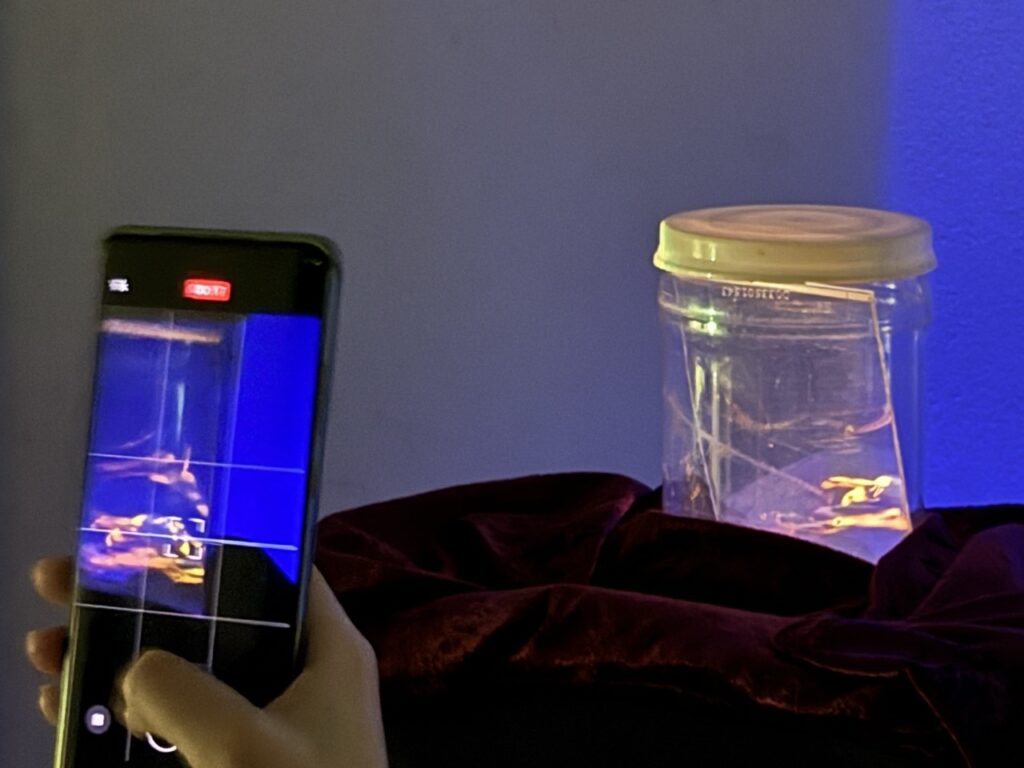
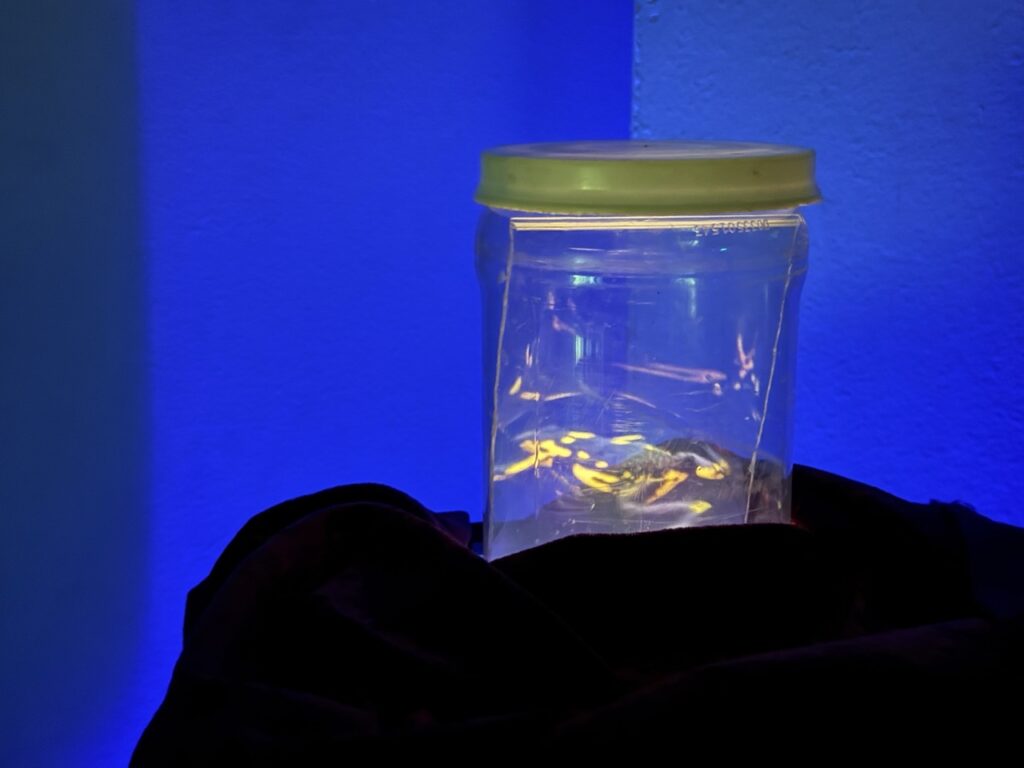
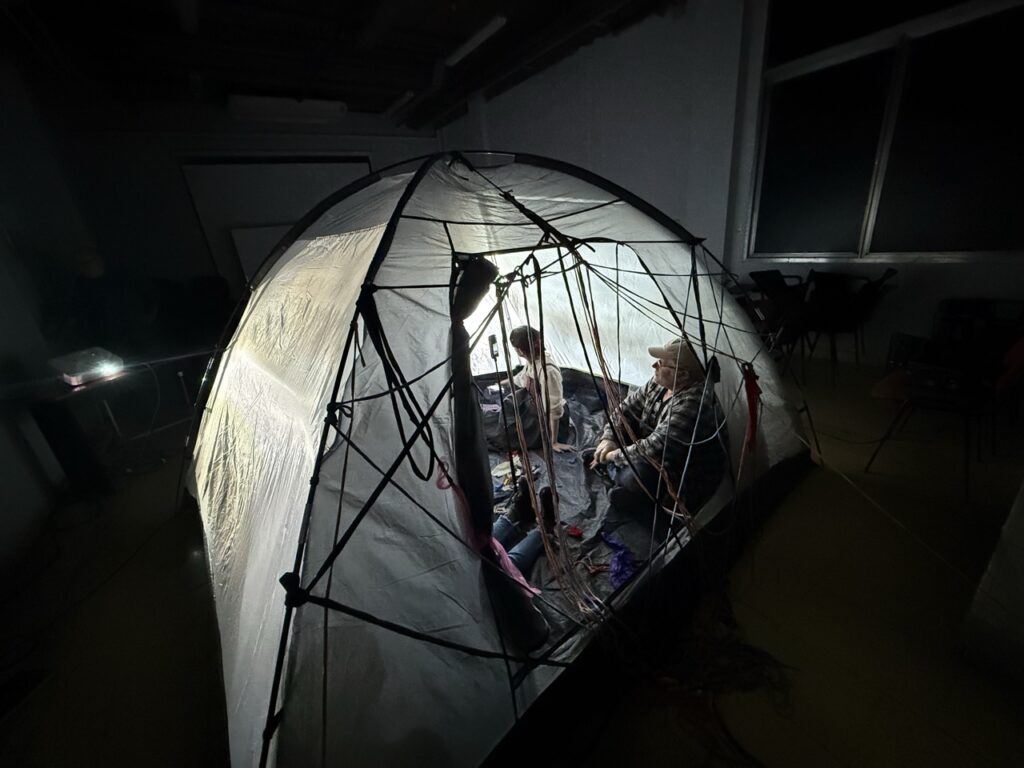
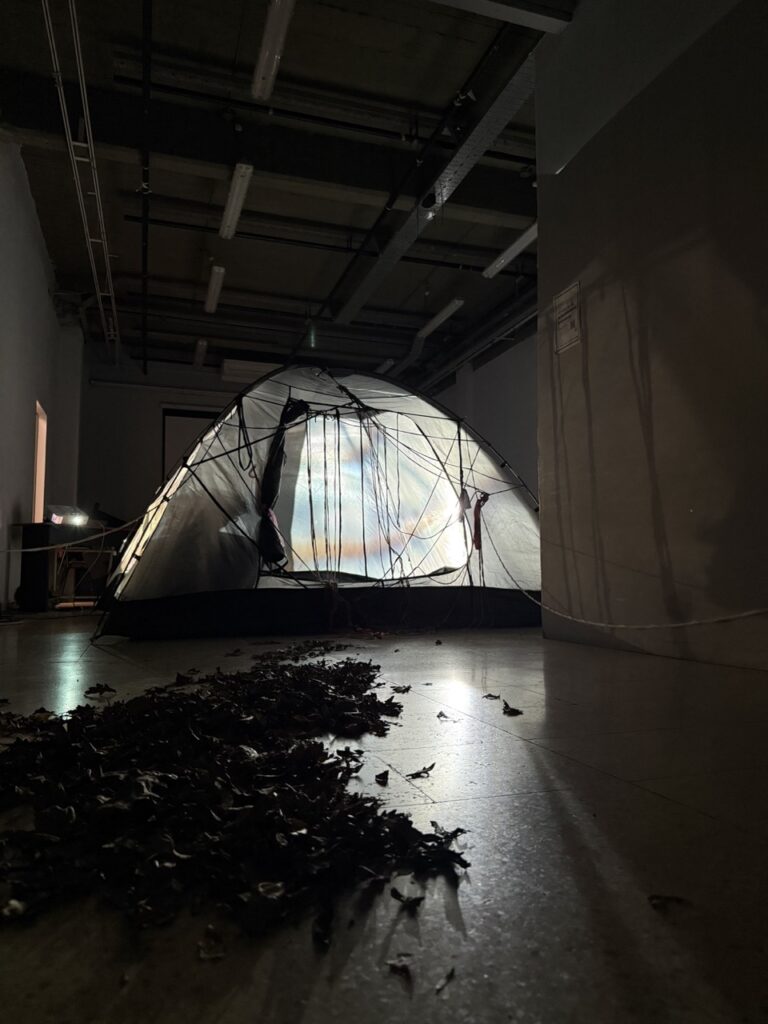
Ian Yeah. I think that’s a really interesting point too, because ultimately, like the projects that were happening that we were talking about AI and we were talking about the environmental impacts, the ethical considerations associated with them, and people started exploring the tools and seeing, you know, how they might like to interact with them. Ultimately, the projects didn’t really involve much use of them. There was one project that used it for a very specific and limited purpose that, uh, made sense. It was, you know, they had a, when we were going out and doing site work, there was a photograph of a frog. And then they wanted to do something where they needed a 3D model of it. And so they were able to like use a model that was able to extract that information from the photograph and then use the visual information to like create a texture skin on this 3D model that I created. And so that it was like sufficiently looked like the three-dimensional frog. And then they use that for some, some animation. And so there was like a very specific use, but other than that, it wasn’t really used that much. A lot of what we were doing was using technology mainly as a way of changing our perspective, right? We were doing a lot of stuff around the principle of slow technology. So even when we were talking about it, we were talking about like, okay, here’s how and what the limitations are for working with a completely offline so that you don’t need to do something that is being overseen by or involving like these large tech corporations, and you’re using whatever local energy source that you have in the schools that you mentioned. Like it. If someone might be able to tell that they have some computers, but they don’t necessarily have the internet. So we’re like developing like, how would you work with this? And then that also slows it down, right? That makes it so that you have to be in parts more intentional about what you’re using and why you’re using it, because you need still need the same amount of compute. And you might be using a computer that is and doesn’t have the power of some new data center and its cluster. And all of these things then make sort of visceral the, the sustainability component to it, the thinking about how it interacts with ecology, because then you’re actually like feeling you’re experiencing what the energy use is, is like, because that translates into processing speed. And we were working with the CCTA plays. So as opposed to having a recording for CCTA play on this episode, we’ll share some of the documentation for the projects, primarily working between Pondlife frogs and tree people, which has an interaction with a tree. It will make it a little bit more sense when you see some of the documentation, but just a little bit more for it. We were really trying to move away from purely humans storytelling and something that was more ecological and relational. So we’re using 360 video with action cameras that you could get into interesting spots to like really change perspective from anything that humans might see in terms of scale or position. You know, they were waterproof. So a lot of, a lot of time spent sticking it into ponds. Also a lot of interest in spatial and binaural recording as well. So that we were really thinking about this idea of attunement, right? This idea that we’re trying to pay specific attention to things, and we want to do that in immersive and natural feeling way so that we’re like bringing attention to other ways of understanding place. Ultimately, we ended up with these three installations. they were very different. There was a VR experience that was both in a headset for the people who were experiencing it, where you’re moving around, hearing birdsong and moving through a tree in a lots of different ways, but they also created a like a, a space for you to go into that was bringing like leaves in. They were, you know, using scents by having we happen to the our last day was also the day that just like the city of Tandil was doing like Arbury work. So they were cutting, trimming trees. And so they brought in some of that. So they were like fresh and having that blow around with fans. So like very experiential. There are others that were looking at like projection mapping onto things that like high above us and like looking at levels of like water and, and experience, like trying to put us into that in a human scale. And another, the one that ended up using AI to create a frog. I created a pepper’s ghost illusion. A frog in a jar, but otherwise, you know, was created an immersive projection experience using a couple projectors and the inner shell of a camping tent that people came into. And they all really lovely ideas, like bringing both the technology into it for this, these different perspectives, but then also bringing in a lot of the, the literal natural world, a little bit of cleanup that happened through their, you know, cleaning up leaves and such. Once we got inside.
Vanesa I thought it would that really genuinely made it very immersive for me. It really like made me made me feel like I was a, I don’t know, planning for a campfire all of a sudden because all the branches came in. And then yeah, I believe that the I don’t know, it was a very interesting way to actually bring the best of a VR headset and also understand the limitations of VR headset. For example, you had to have a one person to one person, like a one-to-one person on standby. And there were many times people were trying to start the experience and they just couldn’t get there and little things like that. And, you know, it has to do with so much more than just trying to create. Did I create the video or the, the experience correctly has to do with, with the, the model of the headset, the model, the connection, so many things going to play and just one thing not going right, then you actually need immediate help or you just don’t go forward. This is also, you know, a question that we’ve presented ourselves when we were creating AI Campfire. Do we want to use VR headsets? And the part of me was like, absolutely, yeah, they’re fantastic. But then you also have the warnings, you know, people need to be sitting down. If they’re standing, you could get dizzy, you could you could feel sick. And then there are all the reasons why you could just not work that day. And then you have, you know, a huge audience that are not having a great time. So I do believe that as much as I enjoyed it, I do believe that the technology has a bit of, I don’t know, a road to go before it’s good or viable for like a larger show.
Ian Yeah, I think what I would refer to that as is an affordance. There’s still a lot of affordances regarding how to engage with these technologies. So you’re always going to end up with some limitations associated with them. And part of the process, the iterative process, and very much the human process is figuring out then how do you creatively respond to those? So, you know, when you’re talking about doing work about a place and they spent a lot of time in a park, it’s like, well, what’s the weather going to be like? So, you know, eventually everybody sort of moved it inside. And then it’s like, well, how do we bring the outside inside? So bags of leaves, branches, etc. Coming in because they wanted to create that experience. And, you know, having a VR headset that is a solo individual experience. And it worked for that one. But I don’t think that the what was ultimately in the tent would have worked in the same way. Part of that was about having multiple people being able to share it. And so thinking about how you do those things, I think is, is really important. And something that came out of that. We’ll add all the links for the seminar and for ToasterLab. Some of this comes out of my work there, which is the Canadian company I helped run, as well as a lot of things that we’re thinking around. AI, campfire, all that will be in the show notes. If you want to read about the work a bit more, we’ll share it. And then, you know, if you come see a campfire return, I wouldn’t be surprised if you start seeing some of this stuff appear there. It was also, I think, inspirational for us as well.
Vanesa Absolutely. I was very inspired.
Ian Okay. That’s going to bring us to our outro. It starts with you.
Vanesa And that brings us to the end of a very episode, I guess. Our own show, our own surprise mansion and a postcard from Argentina.
Ian It’s been a strange and wonderful few weeks being named in this research, teaching our first international seminar in the same stretch as it reminded us, you know why we do this?
Vanesa And next time we’ll be back with another one of our 2026 artists in the guest here.
Ian So thanks for joining us.
Vanesa And see you next time.
Ian Thanks for listening to this week’s episode. If you enjoyed our conversation, be sure to hit subscribe so you never miss an update. You can find us wherever you get your podcasts. We’d also love it if you could take a moment to leave us a review. Wherever you’re listening. It helps with people discovering the podcast, joining our community, especially if they think that they would be interested in any of the topics that we cover today. If you’ve got thoughts, questions, or ideas for future episodes. We’d love to hear from you. You can reach us at podcast at venue dot com and our socials at venue thirteen fringe are back. Episodes and transcripts can be found on our website, which is venue dot com. That’s the number 13, dot not spelled out. Venue one three dot com. And it’s only about a month before we’ll start being on site at the literal venue 13, Harry Younger Hall on Lochend close. So you can also start to find us there. The music that you heard through the episode is by Dusty Decks, which we get through Epidemic Sound. Until next time. Thanks for tuning in and we’ll be back with another episode soon.