
In this special end-of-year episode of Podcast 13, hosts Ian Garrett and Vanesa Kelly reflect on an extraordinary year by borrowing a familiar seasonal structure: the Ghosts of Christmas Past, Present, and Future. The conversation becomes both a retrospective and a roadmap, tracing the revival of Venue 13, the ideas shaping its present, and the ambitions guiding what comes next.
Looking back, Ian and Vanesa recount the challenges and rewards of reopening Venue 13 as an artist-led, climate-conscious space at the Edinburgh Festival Fringe. They reflect on rebuilding trust, infrastructure, and community after years of uncertainty, and on why experimentation, risk, and care for artists remain central to the venue’s identity. The episode also explores the launch of Podcast 13 itself as a parallel space for reflection, dialogue, and sharing resources beyond August in Edinburgh.
The conversation turns to the present moment through key projects that defined the season, including Market 13, which unexpectedly became a vibrant social hub and the first fully vegan food destination in the history of the Fringe. Ian and Vanesa discuss how food, hospitality, and sustainability intersected to create a welcoming environment that extended the life of performances beyond the stage. They also reflect on the international journey of AI Campfire, a folklore-inspired, climate-focused performance exploring ethical questions around artificial intelligence, storytelling, and environmental responsibility.
A major highlight of the episode is a wide-ranging conversation with Chantal Bilodeau, founder of Climate Change Theatre Action. Chantal reflects on bringing all fifty plays from the 2025 CCTA cycle to Venue 13, marking the initiative’s tenth anniversary. Together, they discuss the power of distributed, grassroots climate storytelling, the importance of reaching beyond traditional theatre spaces, and how CCTA will evolve into a more open, year-round model in the future.
The episode closes by looking ahead to 2026 and beyond, introducing Future 13, a new nonprofit initiative designed to support artists year-round through learning, preparation, and development. Ian and Vanesa outline how Future 13 will focus on accessibility, sustainability, and hybrid practice, helping artists navigate the Fringe while building work that can travel, adapt, and endure.
Warm, candid, and expansive, this Christmas Special captures Venue 13 not just as a festival venue, but as a growing ecosystem shaped by artists, audiences, shared values, and a commitment to imagining more responsible futures for performance.
Ian and Chantal also bring you this week’s CCTA reading: Appealing by Paula Cizmar
CCTA Plays Featured:
Appealing
by Paula Cizmar
Read by Chantal Bilodeau Ian Garrett
Show Links
- Climate Change Theatre Action – https://www.climatechangetheatreaction.com/
Additional Media
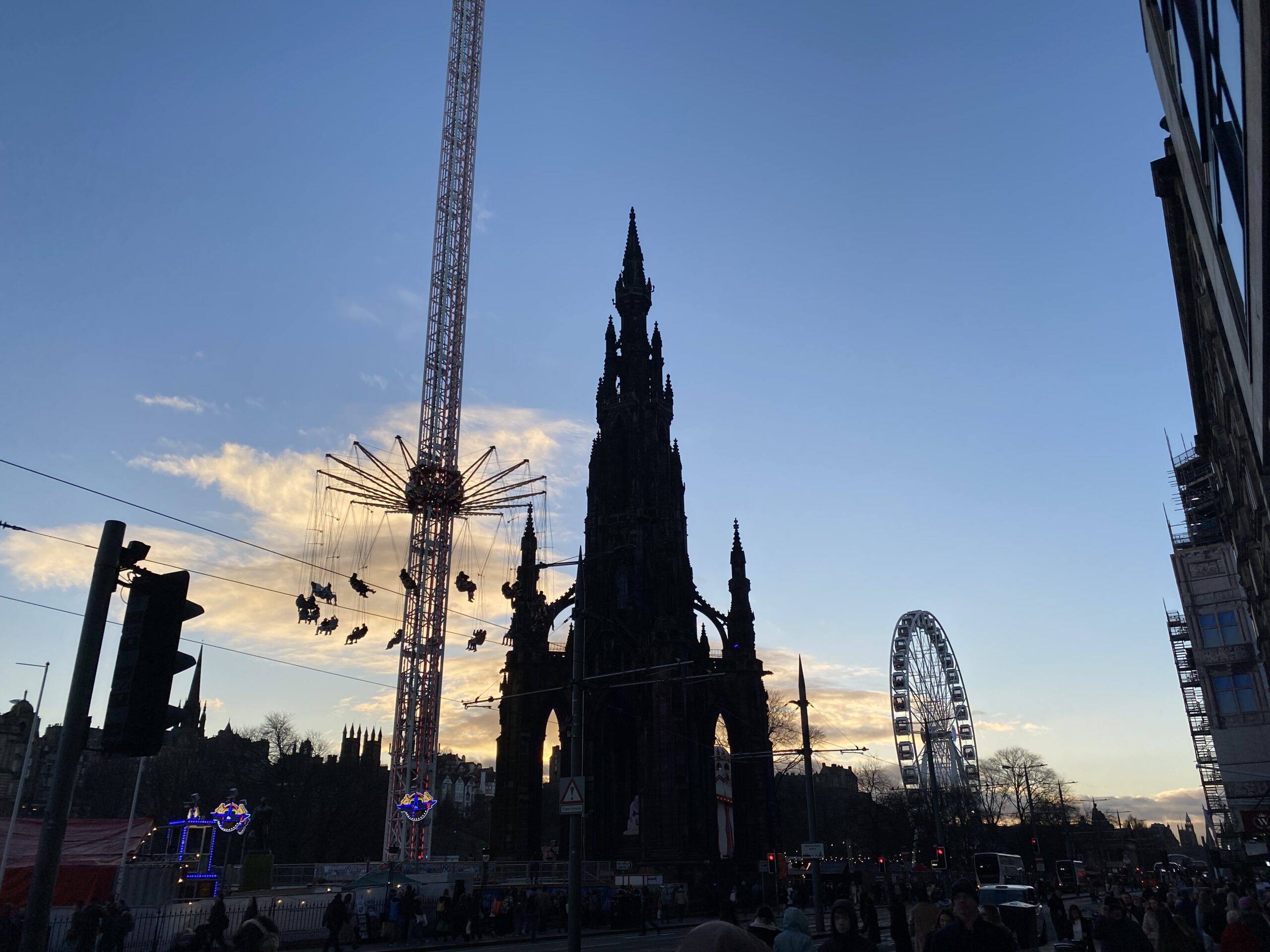
Before Vanesa went to Argentina to spend the holiday with family, she stopped by the classic Edinburgh Christmas Market, and braved more than the cold!
Transcript
Ian (00:00:12):
Hello and welcome back to Podcast 13 and welcome to a special December episode where we’ll be wrapping up the year. I’m Ian.
Vanesa (00:00:19):
And I’m Vanesa. If you’re listening to this at the end of the year, thank you so much for staying with us. And if you’re just joining, you have picked a pretty special episode.
Ian (00:00:28):
This time of year is always about reflection, looking back at where we’ve been, taking stock of where we are and imagining what’s ahead.
Vanesa (00:00:35):
So we thought we’d lean into classic seasonal structure, the three Christmas ghosts, the ghosts of Christmas past, present, and future. I’m going to use that as a way to reflect on Venue 13 and Podcast 13 and everything we’ve been building together this year.
Ian (00:00:50):
Vanesa, did that the venue actually has an interesting connection to a Christmas carol? Though many Theatre programs do stage adaptation of Dickens’ classic this type of year, we actually have a unique and more direct link.
Vanesa (00:01:02):
Really? I did not know that. What is it?
Ian (00:01:05):
So Charles Dickens is said to have been inspired to create Ebenezer Scrooge after misreading a gravestone. That gravestone is not only in Edinboro, hypothetically, but it’s in Canongate Courtyard, the same church who actually owns Harry Younger Hall, the building which is converted to Venue 13 for the festival. The grave belonged to Ebenezer Lenox Scroggie, a local merchant and caterer. Due to poor lighting or a misunderstanding of the inscription, which was said to have read Mealman, like corn grain merchant, Dickens reportedly read it as being mean man. Is that true? Well, probably not. The gravestone has been lost if it ever existed. And there’s not a record of the name in the census. It’s a fun story. It’s also a period of time which I’ve been learning recently in which Christmas was outlawed in Scotland and its celebrations. So it’s like an odd time for that to happen too.
(00:02:01):
But it did inspire us to use the ghost to frame this episode. We’ll be talking about the work that we’ve put into reviving Venue 13, the artists and communities that shape this year and the work that’s traveling beyond Edinboro, and then giving us a chance to look at what happens next.
Vanesa (00:02:17):
And we’re also joined by a very special guest, Chantal Bilodeau, co-founder of Climate Change Theatre Action, who’ll be sharing her perspective on working with Venue 13 and the role of climate storytelling right now.
Ian (00:02:29):
So if you want to grab a warm drink, give your misas some cheeses and settle in, we’ll begin.
Vanesa (00:02:52):
I’m going to start by talking about the Ghost of Christmas past, who symbolizes the revival risk and the reimagining of Benethetine. Now, when we talk about the Ghost of Christmas past, we are really talking about bringing Venue 13 back to life. Ian, looking back on this past year, what did reopening Venue 13 actually mean for you?
Ian (00:03:10):
Well, it was really about bringing back an artist-led venue after a period of long uncertainty. It hadn’t been used as a venue since 2019 was the last time it hosted a season. And it had always been a place with a program that was good for experimentation and risk, which is also something that I feel like we’re seeing a bit less of since things reopened and came back. There’s been some changes to licensing and the way that venues get set up that I think makes that a bit a bit challenging that we’re seeing a bit more sameness in venue configuration. And so that can sort of influence the work that’s happening as well. And that when the venue closed down, how it sort of operated before, it was a great place to get started because it was so supportive. There was a lot of crew there and it was sort of organized in that way as being just a single space, same as it is now, that where it couldn’t host hundreds of shows, like some of the larger venues, it could put a lot of attention into the few that it did have.
(00:04:10):
And so that sort of home that’s supporting artists, especially people who are coming for the first time or have something weird and ambitious that they’re trying to accomplish, that that sort of establishing trust and artists and with audiences and collaborators again, I think that’s really what Venue 13 and the revival has been.
Vanesa (00:04:29):
For me, coming into this from a startup and tech world, some of the biggest challenges were indeed rebuilding the venue and connecting with the community. And I found that rebuilding the infrastructure system and the workflows and getting those contacts and again, building that list of contexts that we’re going to be working with from now and into the future was quite challenging. And I found myself thrown into this very, very competitive market, but I have to say people have been really kind and generous with their knowledge and they’ve came to my age and I said, “Look, we’re bringing back Venue 13.” And it was met with a lot of excitement. A lot of people had these memories from Venue 13 in the past. They were like, “Oh, I used to go there all the time or I used to see shows there. I used to perform there.” So the feedback has been really good.
(00:05:16):
For me also, because I’m not part of this space, it was learning how to run sustainably with limited resources within the arts and Theatre space and understanding both the limitations from the venue and from Edinburgh in general during that month. It is an Olympic size event. The infrastructure of the ZTA is put to the limit every single year. Connecting with the Edinburgh Arts community and creating those contacts, the support network is something that continues to flourish. And I am amazed at how many people are interested in being part of what we’re creating.
Ian (00:05:50):
We’ve extended that into what we’re doing now, Podcast 13. We’ll talk about Future 13 in a bit. And I was wondering, why did launching this podcast feel important to you alongside the venue itself?
Vanesa (00:06:05):
I guess because I’m seeing this as not just the singular Venue 13 aspect of it, I tend to have a wider view on trying to, again, reach everyone and connect with artists and with the audience and with the public. And because of my background in operating operation relationships manager and marketing and PR, I just feel like creating a parallel space for reflection and for the arts and the Theatre content to come out is crucial. I feel like we could probably use this platform to actually help share resources, to actually make people feel part of the journey that we very much feel like they are part of. And just as another way of reaching out and keeping the connection alive and sharing the process that is bringing many three team back to life is something quite special. It’s not going to happen many times. It happens once and Podcast 13 will give us a medium, again, for connection with artists and collaborators.
(00:07:05):
If anybody wants to reach out, this is just another way to say, “I want to be part of this. I want to read a climate change Theatre actual play and I want to know more about Future 13 and how we can get involved.”
Ian (00:07:16):
Yeah, I think I like that we’ve included the CCTA play readings. They bring a lot to the podcast. They provide something that’s like a regular framing thing, an opportunity to pause and listen. They also give us a roster of people that we can bring on. I know people have mainly heard us in these inaugural episodes, but we’re starting right at the top with Chantal and bringing her into this episode. And just as those players are intended, they’re low barrier ways to engage with climate themes in a theatrical setting. And because that’s so important to the way that we work, I think that that’s a great way of setting up and drawing parallels between these broader topics and the venue and the type of Theatre and type of performance that we’re interested in having and keeping those climate conversations active and ongoing. Another
Vanesa (00:08:07):
Aspect though, another thing we could say that also made Venue 13 quite significant this year was the subsection of Market 13, which became, it did become a big part. We actually reached a large niche community of people that wanted to support the climate, the plant-based eating, the vegan eating, the sustainability side of things. How did you feel as it all came together in the end?
Ian (00:08:34):
Yeah, Market 13 was really interesting. I think that we initially started, it sort of grew organically. When we initially were talking about it, I know that there were a couple of things that we were excited about having, just that there was something at the venue, like something that somebody could have there. And we found really great partners in SoftServe Cartel, and that allowed us to tap into partners that they had and a lot of thinking that they were able to support. It’s something that I hope will cross over into performance. One of the reasons that we like this venue and are excited about this venue is because there are artists that have come to us to talk about having shows that have food in them. We weren’t able to get any of the productions that involve food into the venue this year, but that’s something that’s still moving forward and the market is a direct thing.
(00:09:27):
It really supports creating a welcoming social space outside of the performances where people are coming to us sometimes just because of the food and because of the type of space that we’re providing. And I know that it came together, we sort of didn’t realize a hundred percent that it’s actually what we ended up doing, though I don’t think it surprised anybody in the end. But can you talk a little bit about why it was important for Venue 13 to become a vegan
Vanesa (00:09:54):
Venue? I think it was a very rare opportunity. So let’s start with that. Like you said, we wanted the place to have food and we wanted people to find it delicious, to find it comfortable, to hang out because it’s a beautiful space. It’s right next to a really nice garden. It’s a very quiet area. It’s where I would want to go with my friends. And I felt what could make it even better summer, let’s just get some fantastic ice cream. And then the connection with Softsare Hertel and then the other vendors, it just made it so ideal. Aside the fact that I’m vegan myself, I think it’s very important for the fact the Venue 13 became a vegan venue because we were presented with an incredible opportunity that doesn’t come all the time to say, “You have the power. If you choose vegan vendors or plant-based vendors, you’re going to be doing a massive, massive service to reducing the overall venue’s carbon footprint.” It would be very difficult for us to say we want to be a climate focused venue and not be a vegan venue.
(00:10:57):
I’ve worked in tech before and we did carbon accounting software for our companies. I do know that in the Theatre world, there is the equivalent. We have Julius Bicycles, we have Theatre Green Book and all of these initiatives trying to bring down the footprints and the emissions from venues. And they talk about things such as modularity on stages and where do you get your stages from and reducing paper. But a lot of people are not talking about hiring vegan vendors. And a lot of the time the case for this is that it’s not within their power. It might be, it might not be. And those conversations should be more important, should be more normalized. We became the first fully vegan vendor in the history of the Edinburgh Fringe, which is amazing, but also quite shocking. It’s 2025, especially since there was a vegan boom a few years ago.
(00:11:51):
I’m surprised why it didn’t happen in those fringes back in the day, and it happened at this ring. And I feel like it’s important to show that ethical choices can still be really delicious. Now, Ian, can you share a bit more about some of the collaborations that shaped Market 13?
Ian (00:12:06):
Oh, definitely. We both mentioned SoftServe Cartel already, which is sort of where we started with things. I think primarily because it’s like, wouldn’t it be cool to have ice cream at our venue? And that you had seen them and reached out to them because they were doing vegan soft serve and that opened up a number of other conversations as well because they are on the festival circuit. They are busy. And so they brought in people like the Tuskers, which were doing Sri Lankan street food, which was delicious and also built this relationship with Soro, which was really exciting because they had had to close in one of their spaces. They were operating two spaces. They recently closed down one and were consulted into another one. And so they had a bit of capacity and really turned the kitchen into a destination for people who were really wanting that because there was a high demand for that, especially craving it in an accessible way because their actual restaurant where you go and sit down, it’s high end, it’s a really nice place.
(00:13:12):
And so bringing that to the festival crowd, I think was really exciting. And it kept us well fed too. And we had some food come over from considerate donuts as an example, like other vendors who were coming in and would provide various aspects for it as well. And so there was a huge variety of things that we had there. There was always something new, which I think reinforces what you’re saying in terms of showing that these ethical and sustainable choices can also be delicious. It wasn’t bland in any way. And these are turning into some long-term relationships so that we’re looking at how do we continue to support this moving forward. We became a food destination. One of the other unexpected stories of this last year has been how far AI Campfire has traveled. Did you imagine that it would end up having this type of journey?
Vanesa (00:14:00):
I think no, I would’ve never imagined they would’ve gone if they’ve become such an integral part of Venue 13 productions. So it began as an experiment. It was rooted in pushing boundaries both with folklore and technology, as well as how we used technology to tell a story. Now in this day and age, we are consuming so much information via our mobile phones and we are hearing we’re going to continue to hear more and more from AI. So I thought, well, we should probably start acknowledging that and talking about it because I do believe that aside from digitally generated images, AI will start having an effect in a wider variety of approaches within the arts and Theatre community. I never expected it to move beyond the diverse so quickly. The space, it gave it permission and a way to exist. And it was in an immersive setting.
(00:14:58):
We had the bean banks that we could put in this semicircle. It did feel like you were within a campfire. When people came in, they were greeted with vegan marshmallows. And I do feel like those little things allowed people to lead the world behind and actually sit and listen to the stories and experience it wholly and fully. But also the response of the fringe was so strong, but it was also controversial. We wanted to be one of the first people, one of the few people, this fringe to bring out shows with AI. And I feel like we were one of the handful, I believe there were about five, between five and eight shows in total. How did you read that reaction, Ian?
Ian (00:15:35):
Yeah. Well, I mean, to put it positively first, the controversy is sure that people were generally engaged with the topic. I’ve been thinking about it a lot recently because of the questions around AI use, especially in a lot of the platforms that are available, like what are the resources that go into it, especially if we’re thinking about climate, and then also from intellectual property. And there’s a lot of people who are speaking out about how AI can co-opt or take things that it’s trained on, which might be out there in the world and then properly credit them. And then that you have things that might be claimed under one person’s authorship that aren’t necessarily, you don’t know the complete derivation for everything in there. And those sort of like things that we just haven’t figured out with there yet. And a lot of people have a lot of strong opinions and we got a lot of them talking, especially when you had the idea to start having the conversations after each of the shows.
(00:16:39):
So what about what people thought? I mean, some people were just interested to see what the state of the technology actually was and to talk to somebody who was working with it because when you see a demo for something, you’re seeing something work out in the ideal way that somebody wants. And I think since then, it’s really become common to talk about things like AI slop, which is what we were trying to avoid, but even more so within the concepts, the greater concepts of what we were trying to represent on there, whether the entire thing is not generated out of AI. But where we are right now with that conversation culturally, it still triggers fear and curiosity and a lot of ethical questions. And by creating work, which is by no means if we were using it or not in a particular area or whether or not we were thinking about it and creating things in other ways, which we tried to obscure to see where is that boundary in there, that it’s not a puff piece saying how great AI is, but it exists within that debate.
(00:17:41):
And then that debate and those conversations felt really productive rather than dismissive of one side or the other, which is why I think that it’s taken off a bit where we were able to, it’s already toward to, it was in Chicago, we were talking about it in Sharjah, we’re going to be bringing it to Toronto and it looks like Malta. It’s also going to really interesting places. What do you think has made it resonate beyond Scotland?
Vanesa (00:18:05):
I think Scotland is a very special place. It consures a lot of fond memories. When you mentioned Scottish and Scottish folklore, people immediately start thinking about their own folklore. Not only do they just think about magical creatures and theories, but they think about monsters and lochness monster and maybe other folklor that is similar to what we have and they wonder what we have. Scotland has all this folklore. What do I have from where I come from? And so Scottish folklore is great because it feels local, but also it feels a little bit universal. It brings up those questions with some stories even have roots in other folk tradition or actually share similarities, which I’m like, yeah, I’m sure there are because the stories travel with the people. I didn’t want them to just be for children. And the good thing about when you tell a story, you can actually add your twist and it becomes alive and it’s out there in the world and that story will travel.
(00:19:02):
So the fact that the show is traveling makes me extremely happy. But now our show with the Scottish folklore, I have added a twist to bring awareness to climate situation and to encourage climate action. So most folklores are intended to keep children out of harm’s way, to keep children away from strangers or away from lakes where they could fall and drown. You create all these monsters that would drag these children away and eat them. The boogeyman can be represented in many ways from childhood all the way into adulthood. And I think that as collective adults, we should be scared of the biggest boogeyman of all, which is climate change. And since the story have their own climate awareness twist, it does open a lot of conversations. One turning point was when we started linking the project in relation to your ongoing academic research, Ian, and you feel like that has shifted the life of the work now?
Ian (00:20:01):
It reframed the pieces as both a piece of artwork and then also research, like the character of Symbilin and that comes out of some of that work and the conversations that we’re having and essentially me asking permissions like, “What if we brought this into what we were doing as we were talking about representing Scottish folklore for a more mature adult audience?” It’s something that I’ve been working on for most of my career, definitely directly for the last decade of these questions, more from a cultural standpoint than anything else as well. And I think that that has brought a lot to AI campfire, at least the contributions that I’m able to make with it. I do want to … All of the text, none of that is actually AI generated. That’s all Vanesa Kelly original writing for that. So all of the dialogue, all of the scripting and all of that comes from Vanesa.
(00:20:54):
We did a lot of work on the visual work. One of the interesting things about going through it for people that see it is that how much of it is based off of other type of film information. We were pretty expansive about the way that we thought about AI. So it’s not just generative AI. There’s generative AI in it with video platforms that are there that are based in other visual research and visual things that we created. So there was more about processing what we created or trying to get AI to look at matching up a couple of things that we created, but a lot of it is just filmed. So these sort of things in the making, in the way that we’ve made it, are all part of that debate about AI and culture so that when people are asking us about like, “Well, why did you do it this way?
(00:21:39):
And how are you using this tool? And what about this implication? What about this environmental impact? What about this intellectual property impact?” That it’s engaged in those conversations from the get- go, the technology is advancing. And so we wanted to continue to engage with that and engage with it critically.
Vanesa (00:21:56):
I think you’re on the money there because this research then, the pairing of the production, now it becoming a bigger project because it will now become researching productions. We do want to bring up possibly a section of AI campfire every year, if we can, to continue exploring the advancements of AI, or how can we actually use AI that is locally sourced or more ethical or less impactful to the planet. And I do believe that the sooner we start this research, the sooner we will be linking it to other research and writing it down, then that becomes a tool for teaching, for access. So when people are questioning, should I use AI, which one should I use? We have helped with our little grain of sand to bring more information into this topic right now, which is full of controversy.
Ian (00:22:50):
I actually wanted to turn that around to a question for you and might reverse where we’re going to go with this, is that all of this research and what you’re talking about is led us to that presentation, that shared presentation we did at the research symposium in Sharjah at World States Design. And I was wondering, what did that moment represent for you?
Vanesa (00:23:09):
I guess it was a fantastic opportunity because it opened my eyes to what the place of arts and Theatre is within the world. Now, I was extremely lucky to be there and to be part of all the talks and all the exhibitions from artists from around the world or making incredible designs and sets and have the sustainability in their minds and they’re actually in making the experience, they’re thinking of the viewer in mind and how is this going to affect your feelings about a certain play? And I do believe that that links strongly with what I want to create with the Icom Fire and with the stories. I feel like it sort of validates the work that we started, we brainstormed just in March, it validated the work with this international design context. It plays Venue 13 as not just as the venue, but also we are now a production space.
(00:24:07):
We’re a market and we’re a podcast and we’re a nonprofit. It feels like a lot, but it all feels like it’s cohesive and it’s making sense and it makes you excited to hear about the future.
Ian (00:24:41):
On this episode, I’m talking to Chantal Bilodeau. Chantal and I have worked together for over a decade. She’s the director of the Arts and Climate Initiative and as director of the Centre for Sustainable Practice in the Arts, we’ve done a number of collaborations. I’m very much the co-director to her director of the Climate Change Theatre Action as one example of that, which we’ll talk about how we’ve gotten to 10 years of working on that distributed festival. Chantal Bilodeau is a playwright and translator whose work focuses on the intersection of storytelling and the climate crisis. She’s the founding artistic director of the Arts and Climate Initiative, where she has spearheaded programs for nearly two decades, getting communities in the US and abroad to engage in climate conversation through live events, talks, publications, workshops, artist convenings, and an award-winning distributed Theatre festival, the climate change Theatre action.
(00:25:37):
Her playwriting awards include the Woodard International Playwriting Prize, as well as First Prize in the Earth Matters on Stage Ecodrama Festival and First Prize in the Uprising National Playwriting Competition. Her plays have been shown in a dozen countries and translated into Greek, Italian, Norwegian, and Portuguese. In 2019, she was named one of eight trailblazers who are changing the climate bonversation by Audubon Magazine. From 2015 to 2025, she curated the Howlround Journal’s essay series, Theatre in the Age of Climate Change, and she has contributed to several books, including Decentering Playwriting, Alternative Techniques for the Stage. She’s the editor of four anthologies of short plays, one of which earned her an honorable mention for the Patrick O’Neill Award for Best Edited Collection given by the Canadian Association for Theatre Research. Her ongoing project is a series of eight plays, The Arctic Cycle, that look at the social and environmental changes facing the eight Arctic States.
(00:26:37):
She’s a creative core member of the Laboratory for Global Performance and Politics at Georgetown University and is pursuing a PhD in English with a concentration in cultural, social and political thought at the University of Victoria in Canada. Chantal joins us now after working with us through the fringe at Venue 13 to present all 50 of the plays from this year’s CCTA. Thanks for joining us on Podcast 13, Chantal.
Chantal Bilodeau (00:27:05):
My pleasure.
Ian (00:27:06):
Today we’ll be reading Appealing by Paulo Cizmar. The two characters in this, we’ve got Jana, female, any age, and any ethnics is me. She is thoughtful, empathetic, focused, and ambitious. She’ll be played by my colleague, Chantel Bilado. J is any gender, any age, any ethnicity. J appreciates a great image, isn’t without scruples, but has a job to do. I’ll be playing J. The time is the present and the place is the photo department of an environmental media outlet. It could be print, TV, or electronic. The inspiration for the play is that Paula had often come across images that are staggeringly beautiful in the abstract, but when she took a cultural look, she realized in reality, oh my God, that’s a devastating watershed or this is a ruined section of forest. Isn’t it weird that in order to light the way, in order to get people to really look at what is going on, we have to remember that humans like things that are shiny and pretty, most carefully studying photo after photo, facing the audience as if the photos are on the fourth wall.
(00:28:17):
Each photo is beautiful in its own way. J enters and studies the photos along with her. The colors.
Chantal Bilodeau (00:28:22):
Yes, the colors.
Ian (00:28:24):
Wow. So saturated, intense, unreal almost in the light and the composition.
Chantal Bilodeau (00:28:30):
Oh yeah. This one in particular.
Ian (00:28:32):
Stunning competition. These are great photos.
Chantal Bilodeau (00:28:35):
But … But should I really be trying to make something attractive? Should I really be trying to appeal to the viewer’s eye?
Ian (00:28:44):
That was the assignment.
Chantal Bilodeau (00:28:45):
When in fact, these are photos of a great tragedy, great devastation. Should I? I mean, why am I trying to make what’s ugly beautiful? Why do I take these pictures? Should I? What should I do?
Ian (00:28:59):
I don’t know, but the colors.
Chantal Bilodeau (00:29:00):
Yes, the colors.
Ian (00:29:02):
It’s spectacular. They could be in a gallery.
Chantal Bilodeau (00:29:05):
It’s crazy. You’re asking me to make art out of an environmental calamity.
Ian (00:29:10):
Well, not me. I’m not.
Chantal Bilodeau (00:29:12):
Your boss is, your boss.
Ian (00:29:14):
We have to illustrate this story somehow. We can’t just tell it in words.
Chantal Bilodeau (00:29:19):
Words aren’t enough. No. No one listens to words.
Ian (00:29:23):
Not anymore.
Chantal Bilodeau (00:29:24):
So we need images.
Ian (00:29:26):
To attract the eye.
Chantal Bilodeau (00:29:27):
So that someone engages and cares.
Ian (00:29:30):
Yeah.
Chantal Bilodeau (00:29:30):
But do they?
Ian (00:29:32):
Well, that’s our job to get them to care.
Chantal Bilodeau (00:29:34):
But will they?
Ian (00:29:35):
Again, our job.
Chantal Bilodeau (00:29:36):
Yeah, yeah, yeah. I know. I know. I know.
Ian (00:29:40):
Got a better idea?
Chantal Bilodeau (00:29:41):
Oh, don’t. Stop. Just don’t push me. Don’t push me.
Ian (00:29:46):
Look, take a break. Why don’t you? Go. Do something else for a while.
Chantal Bilodeau (00:29:49):
For how long? An hour? A day? A month? The clock is ticking faster and faster and every day there’s some new disaster, some new evidence of some new consequences This is some new devastation and no, I don’t think we can afford to wait one more minute before-
Ian (00:30:06):
The story isn’t scheduled until the end of the week. You can afford an hour, just don’t get so wound up.
Chantal Bilodeau (00:30:13):
Nobody has to.
Ian (00:30:14):
One thing at a time. Take a break. Take your mind off things. Go look at something else.
Chantal Bilodeau (00:30:20):
Something beautiful?
Ian (00:30:21):
Yeah.
Chantal Bilodeau (00:30:22):
Something that isn’t all gunked up with human nonsense and human interference and human evil.
Ian (00:30:28):
Something like that.
Chantal Bilodeau (00:30:30):
What’s left really? What’s left that hasn’t been destroyed by human intervention?
Ian (00:30:35):
Well, deep wilderness.
Chantal Bilodeau (00:30:37):
It’s just a matter of time. If there’s a pure stream, it’s in danger of pollution from industrial waste upstream or the debris of a drilling operation. If there’s a remote gorgeous mountain meadow, it’s in danger of pollution from drifting smog. If there’s a broad, expensive ocean, it’s in danger of this, this, this, this, this crap, this disrefuse, this mountain of plastic bag and cans and straws and bottles floating into a great big graveyard of trash, rubbish crap, ruining the habitat for good God knows how many species, for God knows how many thousands of miles.
Ian (00:31:13):
Well, there’s still a little bit of something left. Go for a hike. Okay. Okay. Granted, not around here, but I don’t know. There’s some wilderness nearby somewhere, or we must have some photos of deep olderness somewhere in our library or somewhere.
Chantal Bilodeau (00:31:29):
Don’t tell me you’re going to try to put a happy face on this and I should just calm down.
Ian (00:31:34):
No, I could hire somebody else.
Chantal Bilodeau (00:31:36):
Yeah, you could. Why not you?
Ian (00:31:38):
Same problem. The job is the job.
Chantal Bilodeau (00:31:41):
And the job is some weird juxtaposition. Makes something horrific, attractive.
Ian (00:31:47):
Illustrate something horrible with something compelling.
Chantal Bilodeau (00:31:51):
I mean, to really do this justice, I should find the ugliest of shots. Photos of a baby dolphins with a plastic cocang ring around it snout. Photos of baby ducks pecking at a styrofoam cup. Photos of a dead otter washed up on the beach with a plastic bag wrapped around its neck.
Ian (00:32:09):
Okay. Stop.
Chantal Bilodeau (00:32:11):
To really do this job right, I should find the most repulsive, the most disgusting, the most revolting images so that people will get the idea.
Ian (00:32:22):
That won’t give them the idea. They
Chantal Bilodeau (00:32:23):
Will. They’ll be confronted with the truth.
Ian (00:32:26):
Uh-huh. And they’ll just look away.
Chantal Bilodeau (00:32:29):
Haven’t they already?
Ian (00:32:30):
But we don’t want to give up, do we?
Chantal Bilodeau (00:32:32):
Okay. So let’s do this. What colors are the most appealing? What will best attract someone to the story? What will draw the eye in?
Ian (00:32:42):
End of play. Paula Cizmar is an award-winning playwright, Librettist, whose work often takes a poetic approach to human rights and environmental justice issues. Among her full-length ecoplays are The Chisera, Anonymous Me and Water Rites. With Michael Bodie, she produced Sacrifice Zone: Los Angeles at the Natural History Museum of Los Angeles. Other works include Antigone X with No Passport Press, The Last Nights of Scheharazade, which received the Israel Baran Award and firecrackers with composer Guang Yang, which premiered at White Snake Opera in Boston. She is based in the US.
(00:33:26):
And now my interview with Chantal.
(00:33:29):
The Climate Change Theatre Action became a recurring presence of Venue 13. Why do you feel that it was particularly important to bring that message to the Fringe this year?
Chantal Bilodeau (00:33:37):
Many reasons. One of them is that CCTA, Climate Change Theatre Action, which we refer to as CCTA, was celebrating its 10th year, so it seemed fitting that we could take the place to Edinburgh for the first time and have all 50 of them presented. At the same time, Edinburgh is such an important festival and we had never been there, so it was a chance to be in conversation with other artists and see who else was interested in the intersection of Theatre and climate. And it was a chance to have more visibility too, to have these place travel to other places.
Ian (00:34:14):
Yeah. Is there anything that in particular stood out to you about the approach to the CCTA as it was programmed at Venue 13 this year?
Chantal Bilodeau (00:34:23):
Yeah. So usually the way the festival works is people in different locations pick up the plays and present them. They choose a number of plays and they present them in their location. With Edinburgh, Alphafly plays were done and we asked the different groups produced a place. So we had a different group almost every day, which means that the style of presentations was very different. And that was interesting. There were groups who chose to engage the public, those who were more presentational, groups who managed to merge both some of the stuff they were working on and some of the plays from CCTA. So the variety was kind of exciting.
Ian (00:35:05):
Was there anybody who participated who had previously been involved in the CCTA or was it mainly people who were coming to it new?
Chantal Bilodeau (00:35:14):
I think there were a couple of people who had participated before, but most of them were new to it. So again, another great opportunity to have more people know about the festival.
Ian (00:35:24):
With a number of people that were involved there, and I don’t know what the numbers are this year. I don’t know. Do you know how many people have registered events this year thus far, or roughly?
Chantal Bilodeau (00:35:35):
Yeah, I haven’t crunched the final numbers, but I think it’s about 125 events in 25 countries.
Ian (00:35:42):
Oh, that’s great. It ends up because the plays are available for free. We’re talking about a relatively small scale grassroots initiative. How does that participation support global climate storytelling?
Chantal Bilodeau (00:35:56):
It’s a chance for people who may not have a voice in that global storytelling to have one. It’s also a chance for people to get together with their neighbors, with their own community and have those conversations. So instead of being just a conversation that happens overhead on a global or even national or even regional level, this can be much more local. And we’ve seen some consequences of that, some results of that. There were some small towns where there were some climate committees that were created at the municipality level. There are some Theatre organizations who have realigned their missions to be more environmental, so it can have a lot of great impact at the local level. That’s
Ian (00:36:44):
Excellent. With the number of different presentation styles that occurred for the series of events that happened at Venue 13, there’s a number of them that happened, as you were saying, there would be readings as you’d expect them, people up on stage in a theatrical setting and others were not. And there’s been a lot of really interesting ways in which people have taken the CCTA plays and done them in sort of different ways. Do you have a thought as to why it’s important that the CCTA reaches beyond traditional Theatre spaces?
Chantal Bilodeau (00:37:17):
Yeah. For one thing, not everybody goes to the Theatre. So when you take the stories out of the Theatre, you can reach different people. Also, I’ve experienced that myself. It’s always that much more powerful to talk about the environment when you’re in the environment as opposed to being in a enclosed space with all the technology. I mean, Theatre’s great, but if you can take the place outside, then you have a different way of experiencing those stories. And again, we’re talking about local. There are people who do street Theatre, so you don’t even sign up to go see a play. The play just happens when you walk by. So that’s another way to engage people who might not even think about going to the Theatre.
Ian (00:38:03):
We’re just about to the time when the official CCTA 2025 is coming to an end where at the end of the year for things. People do things year round. They’re registered year round to do things. They just haven’t been able to … There’s no way to keep it contained. But this year, CCTA and it having been 10 years and now over 250 plays have been circulated through the CCTA. The model and how it exists in the world is changing. Can you tell me a little bit about what the future plans are for the CCTA? What are we going to see after this year?
Chantal Bilodeau (00:38:39):
The plans are still in flux, but essentially what I can say is it’s not going to be a contained festival anymore. We’ve been doing it where it would take place over 12 to 14 weeks in the fall. We’re going to try to open that so it can take place year round. We have all the plays published in anthology, so they’re accessible and we used to commission 15 new plays every other year. So hopefully we can still commission a few, but much fewer numbers. So maybe 10 every couple of years. And I’m thinking about organizing them around a specific theme. We have had themes in the past, but I’m thinking more about environmental themes, like maybe around oceans or about forests or sea level rise, that kind of stuff.
Ian (00:39:31):
With all of these plays in 10 years down the line here and all the different ways that you’ve seen it, seen the place produced and shared, what has been the impact that you’ve noted over that time?
Chantal Bilodeau (00:39:45):
I’ve noted definitely an increase in participation from when we first started, although it hasn’t been consistent, but people who participate tend to ramp it up from year to year. So for example, they’ll start with, if it’s at a university, professor may start by reading plays with their students in class. And then two years later, maybe they do shows around campus and another two years later, then it ends up on their main stage. It’s part of their season. So there’s been, I think people managed to find more resources and find more partners. So I interpret that as building momentum in terms of interest from a variety of people. I’ve also seen, I think it’s less of a novelty. When we first started, a climate change play was like, what? And now it’s not so outrageous to think that we can write about climate and that can be an interesting story.
Ian (00:40:48):
For this last year, we were able to do a shared launch for both the previous anthology and then also for information about the 2025 CCTA, that those of us running Venue 13 were able to be there with you in New York for that. But a lot of the events have taken on different shapes where they’ve been presentations of different type of works and sort of mini festivals in themselves. And you’ve been speculating on how with this sort of steady state version of the CCTA might lead to other programming in the future and how it might actually come back to Venue 13. And I was wondering if you could give us a little bit of a teaser, no commitment of what you’ve sort of been thinking might be some of the other ways in which the CCTA continues to live on and perhaps join us again in Edinburgh.
Chantal Bilodeau (00:41:41):
Yeah. When we’ve done launches in the past in New York City, the model was usually a few plays and oftentimes we’ve included music, poetry. So it turned, and we actually were in a cabaret space. So it was a little bit like a climate cabaret and it was successful. And it’s a nice way to have a little taste of a lot of different things. And that’s something that I’m in the back of my mind, I’m thinking I might like to do in Edinburgh. I feel like it would be fun for audiences to come and know that they’re going to get a taste of a lot of different things, but that the overarching theme is still climate. And also because your venue is so concerned with sustainability that it feels like the two would be aligned.
Ian (00:42:33):
Yeah. It is something that we’ve really tried to highlight. And it was really exciting to be able to bring the CCTA and have you there with us for the majority of the festival as well, that it’s exciting to think that we might be able to bring that work back. It was a really interesting part of our program allowing us to relaunch the venue, but just in Eduboro in general, with the fact that it was mentioned in reviews for other climate work in the festival, which was something that I hadn’t seen before. So I feel like it had an important impact there and people would be really receptive for having it come back. So I’m glad you’re considering us for the future. Nothing to do it for today and for this year. I really appreciate you. You’re our first official guest on Podcast 13, which will open it up to the program that we’re going to do next year, but thanks so much for joining us today, Chantel.
Chantal Bilodeau (00:43:29):
Thank you. And I’m honored to be your first guest.
Vanesa (00:43:55):
If you’re still with us, and I really hope you are, we are now moving on to the Ghost of Christmas present. Now, for us, the Ghost of Christmas Present is all about what’s happening right now, and right now Venue 13 is a place to perform. Now, when we talk about performing at Venue 13, do you want to tell our listeners what makes our Perform With Us model different from the usual Fringe experience?
Ian (00:44:17):
Well, it’s really designed to try and remove as many barriers as possible. It’s a different approach. As you said, I’ve been doing the Fringe since 2008. I’ve been involved in, I don’t know, I don’t have a precise count, but let’s say 50 different productions. And then I’ve ranged from supporting student productions from where I teach to large scale hot ticket immersive shows that I’ve been involved with technically. And it’s been across a number of different venues. I think I’ve been into, I’ve been to all of the venues, but I’ve done work in a lot of them and I am part of a few different groups or people tap into that knowledge when they’re looking at going and I give a lot of the same advice, but it’s also something that I know from attempting to teach it that people just don’t know until they know.
(00:45:11):
It’s not possible to really understand what you’re getting yourself into until you’re there. And usually my piece of advice that I give the most people is try and go before you try and do a show there, which is really hard to do or plan to do your show two years because you really need that on the ground experience to be able to understand how to best position what you’re doing. The curation works entirely differently. It doesn’t even really work like any other fringes, which is weird because it’s the first fringe. And so the idea that I wanted to come to is sort of how I was introduced to the fringe too through Venue 13 because at that point it was done as a project of the Royal Wells College of Music and Drama, and they did it as a placement and they were very generous with support.
(00:46:03):
I mean, they had a lot of resources. So if you needed to accomplish something technically, they’d see if they had it and they’d bring it with them from Cardiff, right? If they had that in stock, so there was a lot less rental or small things, they weren’t rent on a straight rental that was discounted if you did multiple weeks. And so I was like, that’s something that’s missing from the Fringe. In addition to what we’ve talked about in terms of the configuration and the way that venues get licensed now, that it’s a little bit harder for venues to have a lot of flexibility in the way that they might’ve been able to before because they need engineers in a different way. So with our model, we’re trying to make it so that artists are not just renting a room. It’s not just the fringe hour that they’re joining a supported ecosystem, that we want to be hands-on with producing, planning, scheduling, helping set the budget, helping them with a lot of the logistics, that it’s meant to be especially supportive so that it’s demystifying the process of bringing a show and really making it clear what the expenses are, what it takes to get a show up and to get people in to see it as well.
(00:47:12):
And so that is trying to make it so that essentially everything that you would need to do except for the accommodations, because that can vary a lot depending on the size of company and the level of comfort. So it doesn’t include the accommodations, it doesn’t include the travel because that depends on where people are coming from and personal expenses. It’s all these things that people discover usually they’re like, “Oh, I got a slot in a show.” And now it’s like, “Oh, now you have to figure this out. Oh, how do I figure this out? Where do I get this? Oh, I have to also do this. ” And we’re like, “No, no, no. This is everything that you have to do. We’re going to include it. ” Even people who are seasoned producers, who know everybody and that are always trying to figure out how to make it happen.
(00:47:50):
And I want someone to have a good first time experience and to make it more accessible for people. I think that’s it. That’s how to bring down those barriers. So when you have sign language and deaf interpretation, we’re like, yes, we’re going to put that in. It’s not just a question on the fringe questionnaire. We’re going to, as a venue, work with you on scheduling when that’s going to happen. You want to stream, that’s built in for it. And it might not be a right for everybody. There’s going to be people who have a lot of experience and a very small show, and there’s a lot of expenses that we’ve built into there that they’re going to know how to do it on their own. And that’s fine. We’re also small. We can only take so many, we only have so much space anyway. I think one of the really unique parts about it, and I think that people can sometimes underestimate, especially if they haven’t been and seen what it’s like to try and get people in, is around making the shows visible and doing that PR around it, which is really, that is your expertise.
(00:48:47):
That is your experience there. Why do you think that support around that is so crucial at the fringe?
Vanesa (00:48:53):
I guess that’s absolutely right. Every time you hear about a show and you see about a show, even if you see an adver for a show, this is all PR. The fact that you get to find out about the show, it is likely to be PR. It’s part of a strategy and there are steps and there’s plans and it’s crucial. The fact that it got to you is not a coincidence. It was absolutely planned way ahead and it wasn’t chance. The thing is that good PR and good marketing makes you think that you just came across it, that it was just chance because nobody wants to be forced to go and do something. No one wants to be sold something. Everybody likes the idea that just it feels like it came to them firsthand. So strong show needs a strong PR package to be seen and more importantly, so that people want to come and see it because it sounds really good.
(00:49:45):
It aligns with what I like or I will learn something from it. Or even from the marketing and the PR planning of it, you have to know what to share so that people when they share it by word of mouth, they can actually pick up three or four key aspects of your show without even seeing your show. Now, it’s very easy for people to say it’s just putting one advert on Facebook or on Instagram and it will be fine. But we as a venue, we want to make sure that we provide the full service and that the show that comes to Many 13 goes as far as it can go. It has the press releases, it has the journalist and the media contacts that can actually take that story forward. The Fringe is one of the most competitive performance events or environments in the world.
(00:50:32):
So great where you might have a great show and it can easily get lost during the fringe if you don’t have the right framing, framing the messaging and the strategy for outrage. And so I do believe that having a strong PR strategy for our perform with us business model will, it might feel like you might not need it, but the benefit will be immense. Now, Ian, since we are a new venue, there are a lot of contradictions there. We are offering so much, but we’re also quite a limited size venue. Who do you think when you start thinking specifically well suited for right now?
Ian (00:51:07):
Yeah, I think it’s great for first time fringe artists who need guidance and structure so they can focus on the work and also have someone even just to tell them what’s going on when they run into things that they just haven’t before. And I’ve done a lot of that in being parts of various groups or getting referrals from folks just a couple of days ago someone, I was explaining what they can and cannot do in terms of like VAT and when the program, the individual program ended. And then if you’re a business and you do this and here’s the form that you fill out. And there’s this stuff that you just like accumulate over time where people are like, “I heard somewhere someone told me like, O should look at this. ” And it might be old information and things like that, and they might not know where to get it either.
(00:51:48):
So I think that it’s important for us that we’re looking at how do we support people who are coming for the first time so we can think as much as possible off their plate. I think it’s particularly useful for international artists. We can be really useful for somebody who even understands the area, but for people who are coming from around the world where they’re taking a huge risk. We’ve been talking to people in Australia who have ambitious shows who may have visited before or been years ago because it’s a big undertaking to do. So it’s not something that they’re looking at on a regular basis and that we offer the ability like, again, let’s take as much of this off your plate as possible so you can focus on the work that the impulse and why you want to do this is because the work will resonate with audiences and there’s just so much to do around it.
(00:52:41):
I think we’re also particularly well suited for artists who are working with like hybrid formats or want some flexibility, like if they’re doing immersive work, we have a lot of focus on digital work as well. We want to make it possible. A lot of the digital work sort of vanishes in the festival now. It really expanded a lot when the festival wasn’t happening in person. But the way that I say it is that nobody’s putting in the effort to travel all the way to Edinboro to then just stream a show on a website back in their accommodation, something they could do at home. It’s very much an in- person, the average punter, the person who’s going to see shows who is traveling to Edinburgh to do that, that might be their vacation for that year because they love performance and they’re going to see like six, seven, eight, nine, a dozen shows a day and they’re not going to stop and go back and it’s like, “Oh, I need to connect to wifi.” But how does it gain visibility?
(00:53:36):
How do you still have the event in Edinburgh so that work has a place and it doesn’t vanish?
Vanesa (00:53:41):
So when you say that Venue 13 acts as a collaborator, any other things that bring to mind when you say collaborator?
Ian (00:53:48):
I think that in figuring out how to get it into the space, and not just looking at us like, here’s what our stage is and that’s what you get for it, but what does that space and the audience and how do they come in and what is possible within the container that we have for it? We’re talking actively to artists about scale, what type of materials that they use, where things get built. My expertise as a designer is within sustainable design. And so also as they’re trying to think about like, how do we tour this with the lowest environmental impact? That’s something that we’re working directly with them and that all that takes into consideration flexibility and formats. So rather than forcing everything into like a specific shape so that we can support experimentation, we can go through as many processes and really look at the process for how we’re supporting work as much as it is what the final things can become so that that’s a relationship that we end up forming before the festival.
(00:54:45):
And part of what we’re trying to do is also then make that available so that we’re preparing the work and like let’s help you write your writer. You have to think like what is the benefit of bringing a piece to Edinboro? And that is how it allows you to get a lot of people to see it and it might have a future life there. But we’re going to talk about the future in just a moment. So before we transition over to our conversation about future, with that in mind, Vanesa, what are some of the things like right now that you think that artists should be thinking about when it comes to bringing work to the fringe in 2026?
Vanesa (00:55:21):
I mean, right now it’s December. I would have thought the conversation, the real thought about it should have started already in October, but we are here where now, right now, I would say don’t wait. Planning early makes a huge difference. Even if you don’t have that grant or that funding approved yet, you’re not really sure where that money’s coming from. Don’t wait until you have all that money or all those confirmations before you start having the conversation with the venue. It is absolutely no bother for us to get that call with you, to talk about your show, to actually help you even just voicing it out. Even if I’m on a call and you voice your whole show idea to me, it helps you listen to yourself when you’re talking about it, and then we can work together to see if Venue 13 is the right venue for you and if 2026 is the right year for your show as well.
(00:56:13):
And I or you, Ian, we have no problem saying to you, we may not be the right venue for you, but this and this and this other venue may be. And we’ve created some tools, some calculators. Ian with his fantastic brain has created a venue comparison chart where we can actually help you put in your show number, your ticket price, and it actually helps you narrow down which will be the best venues for you. I mean, this is honestly Venue 13 technology going on here. So definitely make that call with us and let’s just have a conversation, no pressures, no pressure now, but if you leave it too long, pressure will come. And talking about the future, Ian, the Ghost of Christmas Future is here with us now. You’ve made it to almost the end of this episode and let’s just see what 2026 is going to bring for us.
(00:57:11):
Now, the go to Christmas future is where things start to get really exciting. We are building something very special and we want to support artists beyond just one fringe season. Ian, can you introduce us to Future 13 and tell us why it felt necessary to create it?
Ian (00:57:27):
Yeah. So Venue 13 first shows what ethical practice can look like in action during the fringe. We are focused on climate work. We have that running across all aspects of the way that we’re doing programming. We have a lot of digital infrastructure built in to be able to support hybridity. The building itself is a barrier-free, accessible building, and we’re looking at how we integrate those sort of features and expand that into the way that we present work as well. So we’ve really been focused on creating more accessible fringe, a more sustainable fringe, and something that can also be hybrid and where those things intersect, right? So that’s great for August and the venue. And we’ve been talking throughout the time of it would be great to be able to showcase those things in other periods of time. And as we pointed out, we can only do so much at the venue.
(00:58:23):
We’re relatively small when it comes to the fringe and we want to have those conversations with people and there will be people who find that it’s not the right venue for them or the right time for them. How do you still make that all useful? How do you get to the learning that people can then make better decisions in the future if they’re not with us? And so where we got to is sort of a year-round idea of a nonprofit organization or officially a SCIO, a Scottish charitable incorporated organization that we got approved towards the end of the year called Future 13, which is about creating space for learning and preparation and development year round. So it has a charitable structure that allows us to build those programs, seek out funding for those programs that are helping artists, particularly Scottish artists and then touring artists come and produce work or prepare to produce work at the festival that aligns with this idea of being more accessible, sustainable and hybrid.
(00:59:22):
And it’s about preparing them before they get to Edinburgh, not just when they perform and hopefully transferable things that you can take away from the way that we’re trying to approach what we’re doing with Venue 13 to all sorts of other contexts as well.
Vanesa (00:59:36):
This is fantastic. And just to look into what you just said, the sustainability, accessibility and hybridity aspect, what does that mean in practical terms for artists in relation to the nonprofit?
Ian (00:59:51):
The approach to accessibility means thinking about artists, audiences, and collaborators right from the start, how do you welcome them into the space? Are there different ways in which So they can access that content, like people who can’t travel to the venue. What are the pathways through something as practical as building a visual story, something as practical as scheduling, just assuming that we’re going to schedule as a venue, a sign language interpretation, that we are going to have relaxed performances that are not just things that you come to us and ask us for us, but we would like these things to exist and we’re building it into the model of the way that we present work. Sustainability means working with artists from the design process and then the technical configuration and how they might build it to make it like, how is this easier to tour?
(01:00:37):
How is this the most green way of actually touring from material choices to how you move them around to the logistics that support that to then working with your venue? And then how do you put that into practice, not just for the show that you’re doing, but put it into your writers and your documentation so you can continue to have the show exist in that way that aligns with your values moving ahead. And then the hybridity is really about combining live and digital elements so that you can reach beyond the one room. And for some of our artists that’s in mean streaming, so we’ve built in multi-camera streaming. Some of them mean documentation. So it’s that video version of it that they can make it available that is worth looking at. We’re also trying to make it so that people can collaborate between multiple sites, both audiences being able to access the work that’s happening in the venue, but then we run into all sorts of barriers.
(01:01:31):
There’s not been a festival that’s gone by where I haven’t seen somebody whose show is modified or canceled because they can’t get a visa to get in. They programmed it ahead of time, it just doesn’t time out. Or there’s been issues where people have thought that they had certain types of support and it wasn’t clear and they came and they did it and they’re like, “I just can’t perform the show under these, so let’s not throw good money after bad so change the way they’re going to do it. ” Or are trying to do things where they just have remote performers.
Vanesa (01:01:59):
So the program is still being, or we’re still designing the program and the strategy for it, but we do have some key points that we can share with you already. We do want to have some seminar series and some online talks about how the fringe works. Now, because for a lot of artists, and quite understandably, the fringe is kind of like the end is kind of like the culmination. But now that we are looking at the fringe from such a multifaceted approach, because we are not just a venue, but we’re also producers, we have a show, we have stake in the game here. We can tell you that the fringe is the beginning and it’s a tool that opens the doors for further touring, for further contexts, for further opportunities, for further shows. So understanding that about the fringe is really important. Now we’re going to try to create some Zoom sessions with specialized topics, recorded resources that artists can access internationationally way ahead of time, even when the first idea of the Fringe of a show comes into mind, we will have that available.
(01:03:06):
We want to provide clear explanations on production models and budgets and timelines because you may know how it works in your city, in that part of the world, but when you come to Edinburgh, everything could be completely different. And it is really important to have someone that can tell you a resource that can tell you that. And also Edinburgh Fringe prices and timetables and budgets are completely different to Edinburgh any other time of the year.
Ian (01:03:34):
That’s great. I think that we have a lot of things to look forward to. We’ll have more information about that. We’ll definitely go through as we are refining the Future 13 program and when we have some of those workshops available and have those learning spaces come up where we’re helping people prepare for the fringe. Keep an eye out for those. We’ll definitely discuss those more and go deeper into those when we have a bit more time for that. I know that we’re getting a little long on time and here as we go through our ghosts for here. So it might be a good time for us to bring it around to allowing people to enjoy their end of the year and to have a little bit of peace before they get into all the work that’s going to happen as they prepare for their 2026 fringe.
Vanesa (01:04:24):
Absolutely. I think looking back on this year, it’s clear that Venue 13 is not just a venue, but we are a community, we’re shaped by artists, we’re audiences, and we have shared values.
Ian (01:04:34):
It’s ultimately though about how we support creativity responsibly, sustainably, and generously, right?
Vanesa (01:04:41):
Absolutely. And I want to say thank you to everyone who performed, listened, volunteered, collaborated, questioned and believed in us this year.
Ian (01:04:50):
Yeah. We’ll be back in the new year with more conversations, more performances, and more ways to imagine the future together.
Vanesa (01:04:57):
Until then, happy holidays.
Ian (01:04:59):
Happy holidays. On today’s episode, you heard Ian Garrett and Vanesa Kelly with our guest, Chantal Bilodeau. Our music for this episode and all episodes is from Dusty Ducks, which we license via academic sound. Thanks for listening. If you enjoyed the episode, please subscribe and leave us a review. You can reach us at podcast@venue13.com or follow @venue13fringe on all socials. For full transcripts and to check out our past episodes, you can see those on our website at venue13.com.