Category: 2025

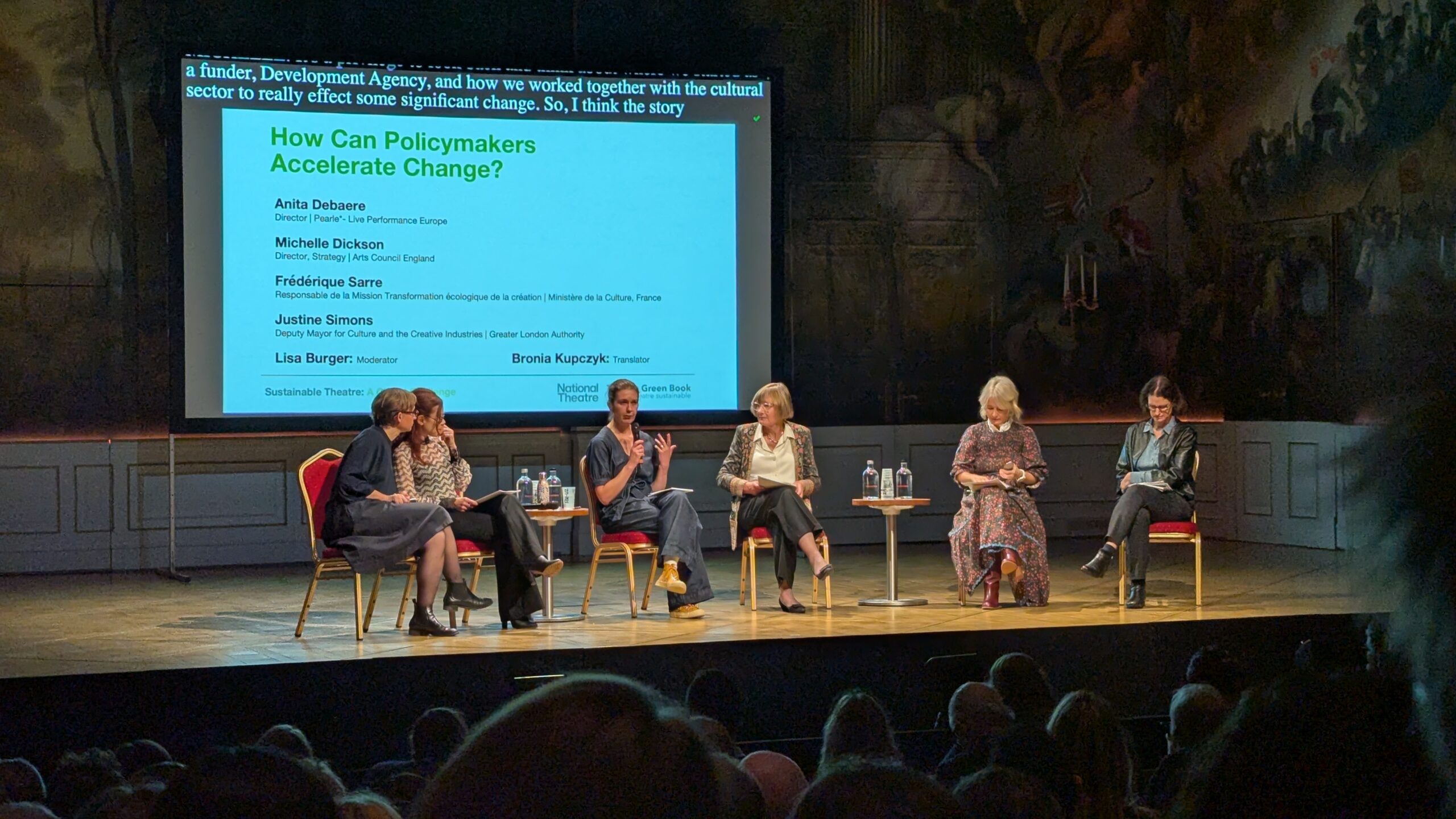
  • In this episode, Vanesa and Ian focus on sustainable theatre practice after Vanesa’s visit to the National Theatre event on the 14th November in London, where the Theatre Green Book took centre stage in an incredible event. They unpack the discussions, the international perspectives, and the sense of collective responsibility that shaped the day.

    Ian reflects on his own past involvement with the Green Book and the broader questions it raises for productions, buildings and operations, as well as his experience with the CSPA in Canada. Together, they also explore what these ideas mean for Venue 13 as it develops, and how their upcoming non-profit Future 13 will put these principles into practice.

    They also bring you this week’s CCTA reading: SO BEAUTIFUL TODAY, SO SUNNY by Marcus Youssef with Seth Klein.

    CCTA Plays Featured:

    So Beautiful Today, So Sunny

    by Marcus Youssef and Seth Klein
    Read by Ian Garrett & Vanesa Kelly

    Show Links

    Additional Media

    Transcript


    Ian (00:15):

    Hello and welcome back to Podcast 13. This is episode four. I’m Ian.

    Vanesa (00:21):

    And I’m Vanesa. Thank you for tuning in again, whether you’re a longtime listener or new here, we are just so glad to have you with us.

    Ian (00:28):

    In our conversation so far, we’ve talked a lot about performance psychology and global design from world stage design to Team Lab. This week we shift the lens to the foundations of sustainable theatre itself.

    Vanesa (00:39):

    Right, and this is also because I recently went to an event at the National Theatre focused on theatre Green book, which is a global challenge for theatre makers to reduce the environmental footprint. It really got me thinking, and Ian has an especially interesting perspective having contributed to the Green book, in the past himself.

    Ian (00:57):

    So today we’re reflecting on sustainability in theatre, not just in the work we make, but in how we make it productions, buildings, operations, and what that means for Venue 13 and our plans for our future nonprofit venture, Future 13.

    Vanesa (01:10):

    But first,

    Ian (01:11):

    Today we’re going to be reading so Beautiful Today, so Sunny, which is a collaboration between Marcus Youssef and Seth Klein. The inspiration for this verbatim piece is inside of the piece itself, policy analyst and climate activists, Seth Klein is Marcus’s neighbor. Over the last few years, they’ve become friends as each of them approach 50 and navigated transitions in their work lives. Part of Seth’s Change was leaving his full-time job to write a good war mobilizing Canada for the Climate emergency, which is a book that uses Canada’s historic national mobilization for World War II as a model for responding to the climate crisis. A note on this play, the characters are friends consciously choosing to have this conversation and knowing that it will be made public. It’s noted that the actors can feel free to include the audience if as or when it feels right, maybe particularly when the characters seem to acknowledge that are speaking publicly. The dance between public and private speech feels more like a useful way to investigate this For our reading, Vanesa will be reading the part of Marcus, and I’ll be reading the part of Seth and the Stage Directions. Seth and Marcus speak to the audience. They are not walking.

    Vanesa (02:27):

    I’m Marcus Youssef. I’m a 51-year-old cisgender man, mixed race, Egyptian Canadian.

    Ian (02:33):

    I’m Seth Klein. I’m 52, also a cisgender guy and my family is Jewish. We’re friends.

    Vanesa (02:38):

    We’re walking

    Ian (02:40):

    Outside in Vancouver, British Columbia, Canada,

    Vanesa (02:44):

    Ed Coast Salish territory

    Ian (02:46):

    On a cold day in late January, 2021 during the second wave of the COVID Pandemic, they speak to each other.

    Vanesa (02:53):

    Thanks for doing this.

    Ian (02:55):

    You’re welcome. Hey, just before we start, I just want to say I’m sorry about your dad.

    Vanesa (02:59):

    Oh yeah. I appreciate that, Seth,

    Ian (03:02):

    You were close.

    Vanesa (03:03):

    I guess. Yes,

    Ian (03:05):

    You’ve talked to me about him.

    Vanesa (03:07):

    He was a very powerful figure in my life as dads are, I guess.

    Ian (03:11):

    Yeah.

    Vanesa (03:12):

    Yeah. I thought we could just wander towards Trout Lake. That’s where I like to work.

    Ian (03:18):

    I’m happy with that.

    Vanesa (03:19):

    It’s so beautiful today. So sunny, can you introduce yourself in whatever way you feel like you want to?

    Ian (03:26):

    Seth’s introduction is likely to the audience. Okay. My name is Seth Klein. I most recently am author of a good war mobilizing Canada for the climate emergency for 22 years. Before that, I was the founding director of the British Columbia chapter of Canadian Center for Policy Alternatives,

    Vanesa (03:43):

    And over the last few years you’ve got a laser focus on climate change as an issue.

    Ian (03:48):

    I am very focused on the gap between what the science says we have to do and what our politics is prepared to entertain. Figuring out how to tackle that gap

    Vanesa (03:58):

    Is that the Green New Deal?

    Ian (04:00):

    I think the Green New Deal is a central and powerful model for bridging the gap.

    Vanesa (04:04):

    What is the Green New Deal? Give us a one paragraph summary.

    Ian (04:08):

    Okay, so the original New Deal, the Green New Deal, takes a profound crisis and meets it with massive public investment. It’s an ambitious plan to spend billions in new green infrastructure to electrify everything and create millions of jobs. Not sure. That was quite a paragraph.

    Vanesa (04:23):

    That was a very good paragraph.

    Ian (04:25):

    Thanks. Can I add The Green New Deal is about linking climate mobilization to tactically inequality. What I learned in my research about the effort to mobilize Canada for World War II is that it was actually hard to do with a typical propaganda go across the sea and go get Hitler. That works only to a point to truly mobilize people. The government had to promise that society or that this society people came back to was going to be different, which happened. Canada saw its first major income support programs introduced in the war, unemployment insurance in 1940, the family allowance in 1944, the architecture for the entire post where the state was written during the war. It was a pledge that the society people came back to was going to look different from the one they’d left. That’s how you mobilize everybody. It’s the same with the Green New Deal today

    Vanesa (05:13):

    And what’s the best argument against it?

    Ian (05:16):

    What’s the best argument against the Green New Deal

    Vanesa (05:19):

    If you had to choose one

    Ian (05:21):

    That it’s not realistic or feasible?

    Vanesa (05:22):

    What about the argument that keeps you up at night a little?

    Ian (05:25):

    Well, none of it

    Vanesa (05:26):

    Really,

    Ian (05:28):

    Really. I talk about it in my book. We’re all trapped by the legacy of 40 years of neoliberalism that has told us what is and isn’t allowed or possible. The powerful thing about an emergency, whether it’s the war or COVID, is that things seem politically or economically off limits. They suddenly become possible. If you said to Canadians in 1938, does the government have what it tastes to completely transform the economy has actually happened during the war? I’m pretty sure most would’ve said no. It’s going to happen with climate too. The only question is whether or not it will happen in time. That’s what keeps me up at night. Marcus maybe acknowledges the audience.

    Vanesa (06:03):

    I’m also conscious that some people who might watch what we’re constructing here are not from the wealthy industrialized countries. How did it impact what you’re talking about?

    Ian (06:12):

    That’s a hard one. It’s a fair question. The other piece of the legacy of neoliberalism is that it has undone our sense of our ability to go do grand things together. Maybe it’s wishful thinking, but history is full surprises of how quickly we pivot if and when we recognize emergencies for what they are and each society has to excavate its history for those relevant examples.

    Vanesa (06:34):

    So when I pitched this to you, I said, this year the theme is envisioning Get Green New Deal. And you were like, so this time you’re not going to write something Sonia Histic.

    Ian (06:45):

    Well, less dystopian,

    Vanesa (06:47):

    Right? You said less dystopian.

    Ian (06:49):

    Your last piece was very dystopian. This is a lot of artistic work that I’m going to say that again. There’s a lot of artistic work that tackles climate, but it’s almost universally dystopian.

    Vanesa (07:00):

    What’s your read on that?

    Ian (07:02):

    It’s understandable. When we think about climate, we imagine this terrifying hellscape that is likely to emerge if we fail to rise to the moment. But I’m also struck that a lot of the artistic mobilization for the Second World War was not like that. Even though they were surrounded by death and destruction, it was positive. It was rallying the public.

    Vanesa (07:20):

    I wonder if that’s artists not wanting to be propagandists.

    Ian (07:24):

    Yeah, you can’t tell artists what to do. I understand that. I think the Green New Deal needs to have a big arts component just like the original, I’m going to start this whole line over. Yeah, you can’t tell artists what to do. I understand that. I think the Green New Deal needs to have a big arts component, just like the original New Deal and in World War II artists walk this careful line. They were forthright about the gravity of the crisis, and yet they still imparted hope. I grabbed hold of the Canadian World War II story because I was trying to excavate a historic reminder of what we’re capable of and everyone’s got different stories to draw on. That invites us to say in the moments of existential threats or crisis, who do we want to be?

    Vanesa (08:05):

    Totally. Everybody goes through crisis. It’s a part of the human experience.

    Ian (08:10):

    Yeah. Hey, I want to say again, I am really sorry about your dad.

    Vanesa (08:13):

    Thanks. I appreciate that.

    Ian (08:15):

    End of play. Marcus Youssef’s play have been produced in more than 20 countries across North America, Asia, and Europe is a recipient of the Siminovitch Prize for theatre like Seth Marcus is based in Vancouver, the Unceded Coast Salish territory. Seth Klein is a public policy researcher. He was founding director of the British Columbia office of the Canadian Center for Policy Alternative CCPA and is now team lead of the Climate Emergency Unit, a project of the David Suzuki Institute. So Vanesa, what was the atmosphere like at the National Theatre Event, the 14th? What struck you most about how theatre makers are talking about sustainability?

    Vanesa (08:59):

    So to start with, I didn’t realize how many people had attended. It was sort of like a global call and it felt like we filled up a 500 people auditorium. It was so many people. The atmosphere felt very urgent and energizing and everyone was recognizing that sustainability is just not a side topic. It’s something that is touching every part of the performance and the arts and their role no matter what companies they came from, it was a wide variety of companies that are all involved somehow in one way or another in the theatre process. So some things that stood out, maybe how international the conversation was because there were people from all over the place, different countries. We grew up, we had Japan, we had Denmark, lots of you are from Europe, and it was sort like people were thinking beyond individual buildings were companies.

    (09:51):

    So they spoke about working across borders, across disciplines. There were serious discussions about sharing resources and sharing materials, and now companies that are now focusing on this, we had panels where companies spoke about exchanges talk between countries or touring with modular systems so that the local team can adapt and deciding productions and production workflows so that fewer things are single use. The national theatre actually brought out a short movie. Maybe we can actually link that later about how they’re reusing and how it’s sort of like they’re building this materials library and I believe that they’re one of the first ones are doing this. Another theme was the idea of multipurpose spaces and circular approaches. So one of the examples that the National Theatre did was a mental health flower garden that it also works as a flower farm for natural dyes. So this again is giving a space more than one task, so supports wellbeing and also production needs at the same time.

    (10:55):

    And that sort of thinking shows how sustainable theatre can be imaginative and degenerative and can be connected to different communities and different needs. So overall, yeah, the atmosphere was all planned. It was very honest. No one pretended that this transition is going to be simple or easy. We’ve had some really challenging and strong opinions from the audience and the questions that were, we were saying, well, how fast can we actually move? Are we ignoring the real elephant in the room? Why are we not sharing conversations between different rooms such as politics and arts and theatres? And as much as they were true, I do feel like gatherers like this ones are doing a massive amount of work trying to introduce people that do talk about policy and policy change.

    Ian (11:38):

    How did the Green book resonate for you personally as an artist, producer and someone building? Venue 13,

    Vanesa (11:43):

    To be fair, I met lots of people for the first time, many of them, and it does feel like everyone wants to make a change. Everyone was very excited to be there. The debates were well shaped, they were thoughtful and those were grounded on practice and the topics, they did speak directly to the future of how we’re going to make theatre moving forward. There was sort from now on, we’re going to do this still dwelling. So much in the past is looking at how things can be better now. There were several moments where the conversation turned to the international and European policy and we’ve had a few speakers, representative speakers and representative companies in panels and how the UK can still benefit from wider collaboration and by sharing standard co-productions, material libraries. And then also this common approaches to the circular practice. It did show that sustainability doesn’t follow borders, at least sustainability in theatre doesn’t have to follow national borders because theatre doesn’t really follow borders, especially when we’re talking about theatre and touring.

    (12:47):

    It can be quite a global movement. One of the things that resonated was that, especially with building Venue 13, was the idea that the Green Book gives a shared language and it doesn’t restrict the creativity. And by helping us rethink how we make tour and store the work and how we design the spaces, we will avoid a lot of waste. And that’s kind of like waste at the source. And as a producer, I found it very encouraging. It made me feel that we can actually do this. We can create a venue and a platform and support sustainability and it was real and in a practical way and it confirmed that the direction we’re taking a Venue 13 is a step, it’s like a right step in the global movement that believes that theatre can be inventive and it can be environmentally responsible at the same time.

    Ian (13:34):

    Were there particular sessions or people at the event that inspired you, ideas or commitments that you felt especially urgent or hopeful?

    Vanesa (13:42):

    Yeah, there are many people that are very inspirational. I’m going to be merging some names here, but a couple of them stood out I think for this question. One that really stayed with me was hearing Anita Dere, he drew this big powerful connection between the event and what’s happening globally right now, which is the COP 30 that happened at the National Theatre and the Cop 30 sort of happened at the same time, which is the Cop 30 was taking place in Brazil. She talked about how the timing wasn’t accidental, that the climate conversation and the theatre green book conversation that were part of the same movement. And I feel like she was one of the first ones and one of the only ones that actually made that comparison. And Anita said that something that really struck with me. She said, there are no boundaries in how we work anymore, but we do need methods and structures to help us achieve that.

    (14:35):

    And then she made reference to the Theatre Green Book as a fantastic tool for making that kind of boundary less collaboration possible. And then she explained how, so she works at Pearl and she explained the work that Pearl does with the national federations and the European Associations and how they mutualize this knowledge and the connect organizations by aligning international policy work. So she does say that culture is an international activity by nature and that we need that collaboration. And what I found really inspiring was how she described Pearl’s role Brussels, that they monitor the policy developments from European institutions or UNESCO institutions and international bodies. And then they translate that information and used that word intent. She said it’s like working with languages and they translate this policy so that we can actually understand one another and build a shared case. And she feels like this translation work opens doors not just as one individual, but because the collective weight of all of these organizations, they kind of come together and now they understand the conversation better thanks to these translations. And so she says the key was bringing conversations forward with openness, explaining what’s happening in each sector or region, listening to the differences and then using that to unlock new possibilities. So genuinely her chat was very inspirational. It made me feel genuinely hopeful. It was a reminder that sustainability in the arts doesn’t come from isolation. We really need to work together.

    Ian (16:11):

    How do you see your own role or our role at Venue 13 aligning with the goals of the theatre Green Book moving forward?

    Vanesa (16:17):

    So you might remember this Ian, and I’m going to bring you back to this actually. So there was another lady who was extremely inspirational and she was inspirational because in a way she is a little bit like me. One of the ideas that really resonated was it came from, again, a, so Sarah Morman, she’s the artistic director of head Suki to now, she said something very similar with what I said about Venue 13. So when Venue 13 became an all vegan venue, we had some people asking us how can venues be more sustainable? And I think I was half joking, but half seriously when I said that the reason why Venue 13 is that they’re all vegan venue, it’s because I’m vegan. And I said, well, if I’m going to have a venue and I have that power to make the decision, I’m not going to have it any other way.

    (17:11):

    So although that’s a small example in a way, I was trying to say that we just need a lot of little green dictators. And it’s a joke because I’m not a dictator, but it’s kind of like I had that possibility and I didn’t open it to like, oh, I wonder day if anybody else doesn’t want the venue to be vegan. I was like, no, we’re going to have a vegan venue. So it was a little bit selfish. And that reminded me to what Sarah said at the conference. She said she didn’t move towards sustainable design because he’s morphological and more virtuous, but she says he was a bit selfish. She says, it actually makes me more free. So sustainable practice opens up new materials, new methods and new ways of thinking, and also it becomes an invitation to explore, experiment and have fun and be more free.

    (17:55):

    So that really aligns with how I see our work at BSRT. So like Sarah, I want us to challenge our space limitations in, I want to make immaterial set designs or digital sonography or modular systems, and I want those approaches that make storytelling possible whilst minimizing waste. So minimal sets are environmentally responsible, they’re easier to tour, easier to source, and often they leave a lot of room for the imagination. Another thing that Sarah said that stuck with me was about the audience expectations and the audience experience. She talked about a moment working with the prop with stage blood, which is a prop that is very heavy, it’s messy, it’s hard to clean, it’s environmentally wasteful because you have to be poor more than what you need. And the alternatives were suggested, but I think as a team they realized that it didn’t look like blood.

    (18:48):

    So then they had to step away from the problem and ask, is anyone theAudience really believing that this is real blood? Of course not. So once they acknowledged that they could switch to a lighter, cleaner or more sustainable option without sacrificing the storytelling by giving credit that the audience will meet them halfway. So that’s the kind of shift that I want to do with Venue 13. I want to trust that the audience will actually meet us halfway, that the suggestions can be powerful or as powerful as realism and that we’re going to find creative solutions that can be greener. So yes, moving forward, our role is to embrace this spirit of experimentation for Venue 13, push for sustainable choices, expand artistic possibilities and support artists in imagining sets and systems that don’t rely on heavy materials or waste. So we want to align with Thea Green book as a creative toolkit that encourages us to rethink what’s possible, what’s also on stage, and what’s possibly storytelling whilst holding sustainability at the center. So Ian, you have contributed to Theatre Green book in the past. Can you explain what was your involvement and how you see this impact on the sector?

    Ian (19:56):

    Yeah, I got involved in the theatre Green book I think relatively early on. The sustainability and theatre has been something that I’ve been involved in for quite some time actually. I think that it’s officially, I can date it to at least 20 years at this point. And so it’s something that as a niche that I’m known for. So as they were being written, I did get a chance to review them and make contributions and comments on them. I think that in the long list of contributors are looking, if you look through the credits that my name’s someplace in there as well. And so that’s looking at that eye of thinking through these systems and thinking through the way that people are producing theatre and how they’re doing that in different contexts and in different places and providing that sort of perspective, a variety of perspectives.

    (20:50):

    I think that one of the things that’s true about sustainability in theatre in my experience is that it’s slightly different for everybody. It’s very dependent upon the context in which you’re working. I think that one of the most common questions that I’ve received over my career is what is the most sustainable thing that I can do as a theatre maker? And the first answer is actually always the same. And then everything else is sort of context specific. And the first answer is to make more art that engages with your audiences. And I used to say it a little bit more sarcastically, which is to make good art, but then you had to get into a conversation what makes it good. But when you start getting people together into a space and sort of amortize the impacts, the environmental impacts of those people, the sustainability metrics tend to be good if you’re looking at it from an impact or a metric measurement frame.

    (21:48):

    And really the best thing that you can do is get a bunch of people together into a room and have them have a shared experience. And then the thing that theatre also does is that they’re having that collective experience and perhaps you’re modeling different ways of being in the world. That’s the biggest impact that you can have. But then once you get past that, it really depends on the resources that are available to you, wherever you are, how things function, how your community works, what you’re building is what the show you’re putting on is and things like that. One of the things that I think is really important about the Theatre Green Book itself is the number of people that were involved in taking a look at it so that it wasn’t just bias towards one place or another, but was looking at here are things that everybody can do, but here are also a lot of questions that you can ask or here are things that if they are appropriate in your context. And this still doesn’t necessarily, it’s not the right resource for everybody. It does look at buildings and production in a way that a lot of people work, but there’s a lot of people that won’t. And I think that’s true for every sort of guide or tool that comes out in this topic. So I’m just one or my opportunity was just to be one of the many, many voices that helped to provide nuance for it so people could find their place in the conversation and find solutions that work for them within the theatre Green Book.

    Vanesa (23:09):

    That’s amazing. And from your perspective, what are the biggest challenges theatre companies face in implementing the Green Book standards, especially around set design and materials and waste?

    Ian (23:22):

    We have a lot of really enshrined practices in theatre. Part of this is that we come out of sort of an apprentice sort of model anyway. People get trained through doing. There’s not really one way in which people get into theatre. One of the things that I’ve always enjoyed over the course of my career is just hearing how people got into theatre. Because like myself, I didn’t set out, I didn’t go to university originally through theatre. I went to study architecture. I got involved in it sort of as an extracurricular activity. I found it very satisfying, decided to work for a bit and then went back to graduate school for it. And I’ve sort of dedicated myself to theatre since. But it was a process of how did you decide to get here? And so part of that means that it’s very social, like the way that one gets trained or comes up through theatre tends to be very social.

    (24:15):

    But what that also means is that we learn ways of doing things and we replicate those because they work. And there’s also utility to that because when you are doing something, we are working to very hard deadlines. We’ve committed, we’ve sold tickets, audience is going to come through that door, so you need it to work. There’s this idea of it being show ready, which you could also phrase this, the classic adage of the show must go on, but the show also is committed to open. It’s a big deal when it doesn’t. So when you’re doing that, you come up with ways of working that don’t put that into jeopardy, that you know that the audience is going to get the experience that you intend them to. It might not be identical every night, but you’re trying to get as many of the boundaries or many of the potential roadblocks or deviations from how it works as possible.

    (25:08):

    You end up working in very similar way is from project to project. You’re having to do that within a time crunch. And so you don’t have a lot of time for experimentation in there. So I think the biggest challenge that theatre companies face is that there are ways that work, there are ways that can accomplish what we are setting out to do whatever the concept is, whatever the artistic prerogative of that piece. And we’re trying to do it under very strict and sometimes very limited timeframes. And so it’s very easy to rely on ways that we know will work even if those aren’t necessarily the most sustainable ways working. And where do we find that time to actually be able to change what we’re doing. It’s one of the reasons that as you were talking about the communication, the collaboration is so essential because there’s not one company that is going to be able to really focus on all of the solutions or the comprehensive process. And as I was saying, it’s going to change every time. It’s going to be different for every show, for every company. And so having something like the theatre Green book that has some standardized advice that you can start from in the way that you’re conventionally working becomes extremely useful around set materials waste so that things that work so you can have that same confidence and then adapt it for your specific context and you’re that much farther ahead.

    Vanesa (26:31):

    And so I’ve been hearing quite a lot about that. We have to reuse, we have to reuse, we have to recycle, we have to reuse. But another thing that I’ve heard was if you have a set and a designer designed this set and another in the spirits of reusing or recycling it, if another play reuses that set, would it be a problem for the designer that would they be feeling saying some licensing over that? Can they license or actually say that this set was made by me and then what happens someone else who uses that?

    Ian (27:03):

    So coming first from the idea that we’re using our material waste is reducing what we’re making, that is one approach that you can take. You can definitely say can it be as sufficient with the material as possible? And sometimes you’re forced to do that regardless, budgets, time, et cetera for it. So it’s not just the green aspect of it or using less material or different types of materials that might require different ways of working, which might take more time or might be more expensive for it. All of those have impacts on the reused, recycling and reduced waste. I think that’s the most impactful choice that I’ve seen is really simple. And it is taking a look when you’re going through the process of budgeting or costing a production is just adding a column for end of life. This is something that so many processes that I’ve been involved with are not thinking about a show ending in a commercial sector.

    (27:58):

    It almost makes sense because hypothetically you have a hit show and it runs and runs and runs and runs. So you’re not thinking about disposing everything. But I know of a number of designers who, part of what brought them to this topic is because they would be working in that context and an official Broadway run would open and then close within a week or two and then it’s all in the dumpster. But you were sort of imagining that it might be the next wicked or cats and run for decades. And that is sort of an edge case for it as well. But in most theatre production we’re talking about a few weeks and so it’s pretty easy and actually surprising to me that we’re not talking about end of life at the beginning. Oftentimes in the traditional process, you go through the costing process, you build the thing and then once it’s open you’re like, okay, now we have work through our strike plan, figure out how we’re going to get it out of the space.

    (28:48):

    Now that we put it in there, we have to transition to the other thing. But if you move that to the beginning, move that to the same place when you’re costing, just add that column that says, where’s this going to go at the end? And are we cool with that? We have all this wood. Is that what we want it to be? We have all this steel. What’s going to happen with it? It allows you to factor it into your decision making. And so if people are familiar with the hierarchy of safety and hierarchy of guarding, the best way to mitigate most problems is to just eliminate them. So if you eliminate the program that you have all this waste by saying, I know where it’s going to go at the end and it’s not going to avoid everything. That’s been something that it has been surprisingly effective and sort of everybody can do that too because it’s not a use this or use that.

    (29:31):

    It’s not advocating for product, it’s being conscientious there. The other part of that around reuse when it comes to intellectual property is a really interesting question. And in a lot of places, and I know this is true in the conversations that I’ve had in both the US and Canada, that it is something that creates a bit of limitation. I’m on the board of the, well, it’s been bifurcated since we unionized, but involved in leadership with stage designers in Canada with the associate designers of Canada helped with the unionization. So now we have a Union ii, a D, C 6, 5, 9, and we also have a national art service organization that supports the design profession. And I’m still on the board of that. And one of the projects that we have been looking at is looking at our contracts as we negotiate the contracts with a lot of theatres that our designers end up working with and they have really good IP protections in it.

    (30:22):

    But if you look at that language, it tends to say that it’s protecting the full set manifestation of it. And then we know that the individual component parts for it, a piece of material or even if it’s assembled into something that’s relatively common or a useful thing that that’s not protected, but you end up in this huge spectrum of in-between space where people are a little afraid of it and really no one wants to, the way that it would be figured out is if it went to court and no one wants to do that, no one has the money to do that. So one of the proactive things that we’ve been doing with the A DC and with our contracts is offering a way for designers to articulate, here’s the boundary of what I think is mine and what I will allow you to do with it. So you don’t have to get into the legal battle of it. It’s about being proactive about where you want things to be and being proactive about how to mitigate the waste.

    Vanesa (31:16):

    Yeah, okay. So it sounds like stronger communication, leading the communication from both from the part of the people that are going to reuse the stage and also from the designer to say, I don’t consider this mine anymore if you do it in this way or another way. And so that’s really interesting. I think you might have answered some of this question already, but what role do you think workshops and trainings such as carbon literacy or sustainability training play for production teams?

    Ian (31:45):

    I think it’s always useful just to know more. That is what I teach in my university position too. I teach sustainable staging and also approaches the echo sonography, how it impacts design as well. And I do work around carbon literacy, sustainability training, how to evaluate processes and not from a sustainability lens and that sort of value setting for it. And I think that people have, especially because it has to do, a lot of people choose to do this because they value it. And so a lot of people will look at what their options are and they have an innate sense of how to improve things. But I think giving people the tools and the education, even if it’s just a point towards resources, becomes really useful to expand that, to keep people thinking about it, to understand that they don’t have to figure everything out, that there are ways that they can be supported in making this change and meeting other people that can help them around

    Vanesa (32:41):

    How should theatres communicate their sustainability efforts to audiences so that the green practices become part of their identity or not just a checkbox. And I’m asking this because sometimes you go to a performance, for example, say they have a very minimalist staging. Would you feel like the audience may feel like the company are trying to save money, or would you say that they would understand, oh no, this is actually a green effort or a green initiative, or how is it best to communicate this?

    Ian (33:09):

    I think particularly within the arts and especially within theatre, where the disconnect happens is when the approaches to sustainability are at odds with or just not aligned with the actual art itself. All the successful sustainability projects that I’ve been involved with in an artistic context have been successful mainly because the approach to it became intrinsic to the way that we were working and was very core to the type of art that we wanted to make. Now that doesn’t mean you have to make everything be a play about the environment. It doesn’t have to be a play about sustainability, but that we’re very intentionally thinking about the way that we’re working. And at this point I think that it’s pretty easy to say that every play that you see, every performance that you see is in the context of climate change. It’s part of the world that we’re in, so it is one of the reads that we have on anything that’s happening regardless of where you sit on the topic with it.

    (33:59):

    So I think that making sure that it has integrity in that regard, it’s related to what you’re actually doing. I have seen some theatres say like, oh, we’re going to go with minimal things and it’s actually more of a budget thing, but they’re like, oh, it’s also green, and they did take into task for it a little bit. Like going green does not mean taking things away. It means thinking about why you’re using what you’re using and perhaps doing things differently. So I think that communicating to audiences are being honest and having integrity and making sure it aligns with what you’re actually doing that doesn’t look like you’ve just added it on.

    Vanesa (34:37):

    And can we talk about the Center for Sustainable Practice in the Art with the CSBA, you oversaw the Creative Green Tools Canada program, which is based on the same program as Julie’s bicycle, so this has recently you had to wind down though, and can you tell us a bit about this and what the differences and perhaps the challenges are with this type of work between the UK and Canada?

    Ian (35:01):

    Yeah, this was a hard one in that for many years, once Julie’s Bicycle, which is a charity in the UK that has built amongst other things, they have lots of programs but has built a platform for doing emissions tracking within the arts and as part of the national portfolio under Arts Council England, it’s provided and supported. So when you get funding through Arts Council England like operational funding, you’re required to do environmental reporting of some variety. You have to have an action plan and then you have to do some reporting that says that you’re there. And so they support the existence of the tool to allow that to happen. Many places have tried to replicate that program. I think it has varied nothing has quite had the staying power of the special relationship between Joys, bicycle and Arts Council, England, even in the other nations of the uk, they have different approaches to it.

    (35:58):

    We have a close partnership with Culture for Climate Scotland, formerly Creative Carbon Scotland, and they have other tools. They had looked at that tool early on as well, so we got support to bring that in. There was systemic excitement around it from the Department of Heritage and the Canada Council for the Arts back in 2019 and 2020. And so for about five years, we went through a couple of years of first adapting it to a Canadian context, really customizing the way that people interact with it though a lot of the backend calculation and what it tracks so that you could compare with other localities is common. And then we operated for three years only Quebec as a province and with their provincial funders started to integrate it into the funding scheme. And so there was a mandate for it and other provinces didn’t. It didn’t happen the federal level, I think people might’ve been looking to go in that direction, but it wasn’t able to be sustained with the amount of support that needed to actually properly grow.

    (36:59):

    And with it tied into more sort of discretionary and strategic approaches to funding as opposed to a specific grant or a specific long-term commitment, it was always a challenge to keep up. So in this last year, as people were reevaluating their budgets, even the commitments that we did have, which didn’t quite get to the full amount that was required to keep it operational started to decrease. And so eventually we had to make the hard decision to retire it and eventually ended up having to dismiss the staff that was associated with it just as this, we couldn’t financially sustain the program. And it’s interesting because I think a lot of people are sad about that, but it is something that is not necessarily built into our system. We’re trying to do systematic change there and it’s not even happening in our organizations in the same way that somebody has to do it.

    (37:51):

    It’s still tied to people wanting to do it, and that makes it a challenge because it’s something that you can choose to do or not, you don’t need to work that way. There’s not an expectation at this point that that’s the way that we’re going to work. Whereas there’s other values that we have embedded into the theatre profession, health and safety, a lot of equity approaches and access approaches, those are now expectations. And there is both legislation, there’s cultural policy, there’s funding that supports those aspects of it, and we haven’t quite gotten there the same way with sustainability. Part of that might be just because it’s just not as immediately visible or there’s been a lot going on in the last few years. So it’s an interesting juncture because it was great to see. I had originally hoped that I would be able to be at the event for the either Green Book as well, but it didn’t come together because we’re facing other types of structural challenges and sort of where that puts us as also.

    (38:52):

    So then what is the best thing for us to do? What is our best approach to take to this topic? If people think that it’s valuable and they want to do something, but maybe emissions isn’t the right thing for, in this case for Canada and perhaps for other places, what are the things that we can do? We’ve seen a lot of initiatives come and go. The CSBA was founded in 2008. I’ve been working in sustainability and theatre, if not the arts, more widely since 2005. And we’ve seen lots of up and down cycles of when people are supporting this work and advancing. And part of that has led to initiatives coming and going, and my approach is always to be like, I want to see something stick where no one benefits from being possessive or from saying, this is my thing. No one’s getting particularly wealthy doing sustainability within the arts.

    (39:44):

    And so I think that it’s interesting to see that we’re the contrast point where in the same week or within a week span, you have this event at the National Theatre celebrating the Theatre Green book and its translations with its international partners. And it’s sort of sustained growth over the last few years with the challenge to initiatives in other places and other jurisdictions. The Creative Green Tools Canada program being an example of that. We’ve seen a lot of ups and downs and you can imagine that it’s challenging within the us and I know that there was representation from the Broadway Green Alliance where a lot of the leadership work is happening in the US also at the Theatre Green Book event. So it’s an interesting time to see the shifts in where the priorities are going, especially as we get to 2030 when a lot of the commitments articulated in those sustainable development goals have important benchmarks and deadlines that they’re trying to hit.

    Vanesa (40:43):

    Thank you for actually touching into those challenges. And yes, like you said, bringing it back to the deadlines, the 2030, the SDGs and bringing light into these issues. And like you said, maybe society has not been embedded in theatre like other things have that have more stronger policy and stronger funding and granting for and that should change as we build on Future 13. I do know we’re not going to go into this too much today. We probably will dedicate a full episode to this when we’re very excited to talk more about it, but what lessons from the theatre Green Book do you think are most relevant and sustainable for sustainable arts nonprofit like we are planning to be?

    Ian (41:24):

    I think that, I mean, the most important thing that has been my experience is just building the relationships and reaching out to people and saying, how can I help? I think that’s part of the ethos behind Future 13 and why we thought that made sense to create a sort of not-for-profit service approach where we’re trying to help people produce, we’d like to be producing a Venue 13. We can embed the values within our own small venue that operates during the Fringe Festival. If there are people that are interested in what we’re doing, how do we share that out? How do we help people do that? And so I think that the Theatre Green Book actually does a good job of helping people understand what the communication is. It’s in a really good job of building coalition around it. And so I think that both the principles that are in it, and so its approach to sharing is an important part of what I’d hoped for Future 13 especially, because one of its purposes is to help artists within a very specific context within preparing work for the festivals to do it a much more sustainable way to take advantage of the knowledge that we have and the way that we run the venue, whether or not they’re performing with us or not.

    Vanesa (42:37):

    Thank you, Ian. So there we have it at attending the Theatre Green Book event was a reminder. The sustainability theatre isn’t just an ideal and it’s something that we can build into in every part of how we work, but also it requires ambition, humility, and the willingness to change and also to collaborate.

    Ian (42:55):

    Yeah, absolutely. The Green Book offer is practical shared standards, but it’s really up to theatre makers to use them, adapt them, and hold themselves accountable for us at Venue 13. This is not just a mission, it’s our responsibility.

    Vanesa (43:09):

    As we said. Speaking of Venue 13, we are very excited about our next chapter or an extended chapter to Venue 13, which would be Future 13, our sustainable arts nonprofit. We’ll be talking more about that in our next episode and how we will put the Theatre Green Book principles into action.

    Ian (43:25):

    So until next time, thank you for being here for caring about theatre and the planet and for being part of this community.

    Vanesa (43:31):

    See you soon.

    Ian (43:37):

    On today’s episode, you heard Ian, Kurt and Vanesa Kelly, co-directors of Venue 13. Our music for this episode and all episodes is from Dusty Decks, which we licensed via academic sound. Thanks for listening. If you enjoy the episode, please subscribe and leave us a review. You can reach us at podcast@venue13.com or follow @venue13fringe on all socials for full transcripts. And to check out our past episodes. You can see those on our website at venue13.com.

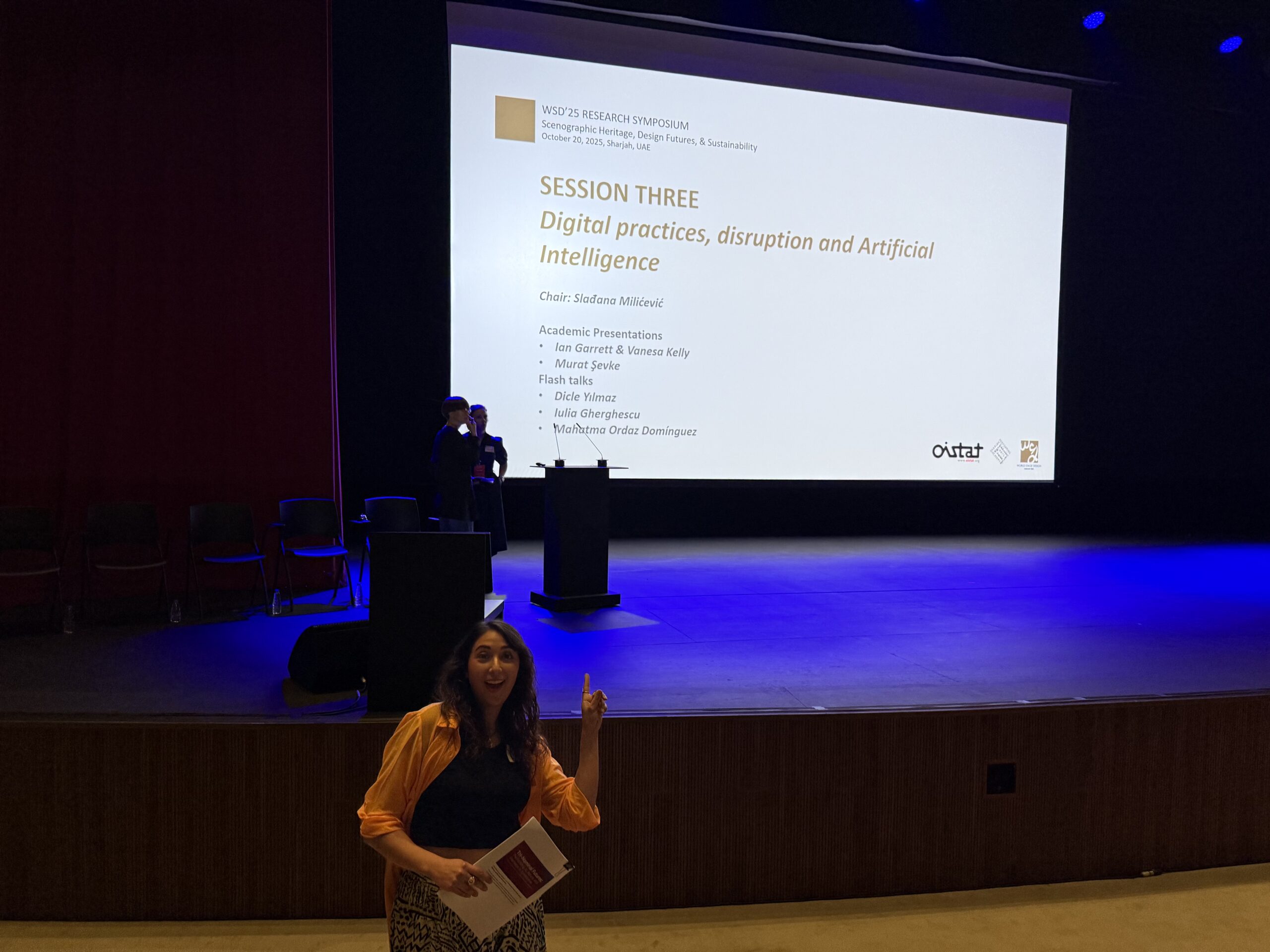
  • In this episode, Ian and Vanesa take you on the next stage of their UAE adventure! After World Stage Design 2025 in Sharjah, Ian delivered a talk at NYU Abu Dhabi, exploring “Somewhere in Time: Ghosts, People, Sites, and Signals.” 

    Together they reflect on Ian’s presentation, touring the university’s incredible Red Theater, Blue Hall, and Black Box, and engaging with the curiosity around sustainable, hybrid, and ecological design.

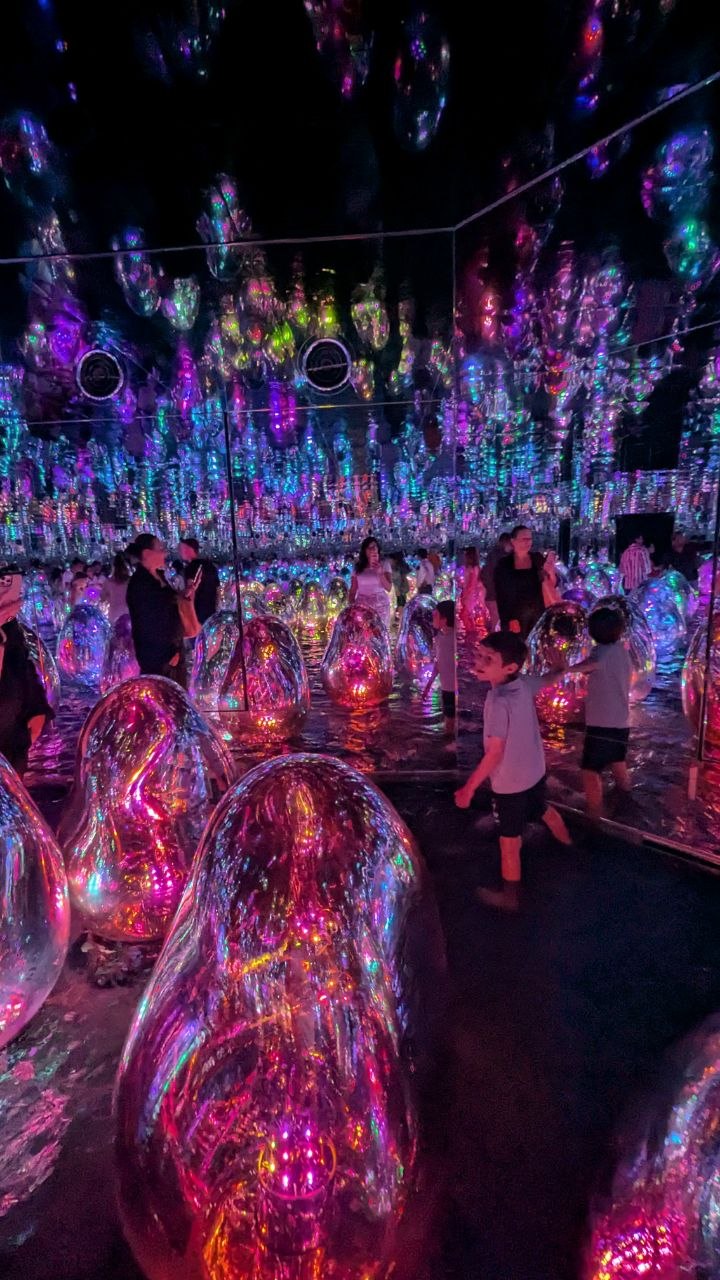
    Plus, they share their experience at TeamLab Phenomena Abu Dhabi, a 17,000 m² immersive art space where light, water, sound, and motion respond to your presence whilst sparking ideas about participation, performance, and the future of stage design.

    All this as well as bringing you the reading of their weekly CCTA play. This week you heard Earth Duet, by E.M. Lewis. 

    CCTA Plays Featured:

    Earth Duet

    By E.M. Lewis
    Read by Ian Garrett & Vanesa Kelly

    Show Links

    Gallery

    Transcript


    Ian (00:17):

    Hello and welcome back to Podcast 13, episode 3. I’m Ian.

    Vanesa (00:21):

    And I’m Vanesa. Thank you for joining us again. Whether you’ve been following since episode one or just discovered us, we’re so glad you’re here.

    Ian (00:28):

    In our last episode, we shared highlights from World Stage Design 2025 in Sharjah in the UAE. It was an extraordinary week surrounded by artists and designers from around the world,

    Vanesa (00:39):

    But our time in the UAE didn’t end there. After the festival, Ian was invited to give a talk at NYU Abu Dhabi, and I joined him down the coast for the trip, which turned into one of the most unforgettable experiences where everything we’ve been talking about at WSD suddenly clicked into focus,

    Ian (00:55):

    Exactly the talk, the conversations at NYU and our visit to Team lab phenomena right after they all connected. So this week we’re reflecting on that journey from the research symposium in Sharjah to a digital landscape in Abu Dhabi and what it tells us about this kind of work we’re supporting through Venue 13 and Future 13. But before we get into that conversation, we’re going to go through this week’s CCTA play. This week. We’re going to be reading Earth Duet by EM Lewis. There’s a poem by Emily Dickinson that goes in this short life that only lasts an hour. How much? How little is within our power Earth? Duet is asking a similar question, but specifically about the natural world. It’s for two players and here it’s everything,

    Vanesa (01:44):

    Everything,

    Ian (01:46):

    Everything.

    Vanesa (01:47):

    Ripe bread, strawberries,

    Ian (01:49):

    Golden                

    Vanesa (01:50):

    Golden

    Ian (01:51):

    Peaches dripping,

    Vanesa (01:53):

    Sit up down your

    Ian (01:54):

    Chin. Blueberries. The blueberries,

    Vanesa (01:57):

    Things that are

    Ian (01:59):

    Fruit,

    Vanesa (02:00):

    Things that are

    Ian (02:01):

    Sweet. Also,

    Vanesa (02:03):

    Also

    Ian (02:03):

    Things that are

    Vanesa (02:05):

    Tall. Elephants and

    Ian (02:07):

    Trees,

    Vanesa (02:08):

    Fur, cherry oak,

    Ian (02:10):

    Things that are

    Vanesa (02:12):

    Tall,

    Ian (02:13):

    Fathers and

    Vanesa (02:14):

    Sunflowers,

    Ian (02:15):

    Skyscrapers,

    Vanesa (02:17):

    Mountains,

    Ian (02:18):

    Everything goes finite.

    Vanesa (02:22):

    We are

    Ian (02:23):

    Finite.

    Vanesa (02:25):

    All the people,

    Ian (02:26):

    All the things

    Vanesa (02:27):

    We can’t hold onto.

    Ian (02:28):

    We want to hold onto.

    Vanesa (02:31):

    We want so badly to hold onto

    Ian (02:33):

    Slippery

    Vanesa (02:34):

    Time. Tick, tick, tick time, tick, tick, tick. Slipping

    Ian (02:42):

    Through our fingers

    Vanesa (02:44):

    Makes it hard to think about endings.

    Ian (02:46):

    I have trouble thinking about endings.

    Vanesa (02:49):

    Endings are hard.

    Ian (02:50):

    We like beginnings better.

    Vanesa (02:52):

    Babies,

    Ian (02:53):

    Baby showers,

    Vanesa (02:55):

    Merry gold seeds,

    Ian (02:56):

    Chocolate chip, cookie dough,

    Vanesa (02:58):

    Sunrise, tick,

    Ian (03:00):

    Tick,

    Vanesa (03:00):

    Tick, sunset.

    Ian (03:02):

    We want so badly to hold on to

    Vanesa (03:05):

    Time

    Ian (03:06):

    Each other

    Vanesa (03:07):

    Memories,

    Ian (03:08):

    Things. We love

    Vanesa (03:09):

    World. We love

    Ian (03:10):

    Going.

    Vanesa (03:11):

    Things are always

    Ian (03:12):

    Going.

    Vanesa (03:13):

    Grieve there

    Ian (03:14):

    Going.

    Vanesa (03:16):

    What can we do?

    Ian (03:17):

    What can we do?

    Vanesa (03:18):

    What can we do?

    Ian (03:19):

    What can we do?

    Vanesa (03:22):

    Change the way the world works.

    Ian (03:24):

    No

    Vanesa (03:25):

    Change the way the world works.

    Ian (03:28):

    No

    Vanesa (03:29):

    Change the way.

    Ian (03:30):

    Change the way.

    Vanesa (03:32):

    Change the way we work upon the world.

    Ian (03:34):

    Change from short-term thinking to

    Vanesa (03:37):

    Long-term thinking.

    Ian (03:38):

    We’ve been cutting off the branch we’re sitting on,

    Vanesa (03:41):

    We’ve been pretending all the resources,

    Ian (03:43):

    All the resources,

    Vanesa (03:45):

    All the beautiful useful resources

    Ian (03:47):

    Will last forever.

    Vanesa (03:49):

    So we’ve used them and

    Ian (03:51):

    Use them.

    Vanesa (03:52):

    Use them

    Ian (03:53):

    Finite.

    Vanesa (03:54):

    This world is

    Ian (03:56):

    Finite.

    Vanesa (03:57):

    Everything here is

    Ian (03:58):

    Finite.

    Vanesa (04:00):

    Things run out.

    Ian (04:01):

    There are a lot of people here,

    Vanesa (04:03):

    Here on this earth

    Ian (04:04):

    Using

    Vanesa (04:06):

    Wasting,

    Ian (04:06):

    Not thinking about tomorrow.

    Vanesa (04:09):

    Tick, tick, tick.

    Ian (04:10):

    Scary to think about

    Vanesa (04:12):

    Tomorrow.

    Ian (04:13):

    Endings

    Vanesa (04:14):

    Scary to think about.

    Ian (04:15):

    So we don’t.

    Vanesa (04:16):

    So we’ve acted like

    Ian (04:18):

    Everything and

    Vanesa (04:19):

    Everyone

    Ian (04:20):

    Will last

    Vanesa (04:21):

    Forever, but it

    Ian (04:23):

    Won’t, not the way we are going,

    Vanesa (04:26):

    The way we’re going. Is it possible for us to

    Ian (04:32):

    Change the narrative?

    Vanesa (04:33):

    Is it possible for us to

    Ian (04:35):

    Change the world?

    Vanesa (04:37):

    What is our power here?

    Ian (04:39):

    What do we want our power to be?

    Vanesa (04:42):

    Is it possible for us to change the way the

    Ian (04:46):

    World works,

    Vanesa (04:47):

    The way we work up the world?

    Ian (04:50):

    We can fix things we’ve broken.

    Vanesa (04:53):

    Do we want to?

    Ian (04:54):

    Do we think it’s important to

    Vanesa (04:56):

    Do? We think it’s our responsibility to

    Ian (04:58):

    Do we think it’s somebody else’s responsibility?

    Vanesa (05:01):

    Anyone else’s responsibility to

    Ian (05:04):

    Change the world or

    Vanesa (05:05):

    Do we think it’s ours?

    Ian (05:07):

    Do we think the time to change

    Vanesa (05:10):

    It’s some other time

    Ian (05:11):

    Or now,

    Vanesa (05:13):

    Do we care about the world we live in?

    Ian (05:15):

    Do we want to be around tomorrow

    Vanesa (05:17):

    And tomorrow

    Ian (05:19):

    And tomorrow after that,

    Vanesa (05:21):

    After we come and go,

    Ian (05:22):

    After our children come and go

    Vanesa (05:24):

    And their children come and go?

    Ian (05:26):

    If we even have children,

    Vanesa (05:28):

    It’s not about our children,

    Ian (05:30):

    It’s all about children

    Vanesa (05:33):

    Having a world tomorrow.

    Ian (05:35):

    We have the power to make that happen.

    Vanesa (05:37):

    How?

    Ian (05:38):

    Change the way we work upon the world.

    Vanesa (05:41):

    Let’s change the way we work upon the world.

    Ian (05:44):

    Let’s institute some

    Vanesa (05:46):

    Long-term thinking.

    Ian (05:47):

    Let’s take care of what we’ve got.

    Vanesa (05:50):

    Let’s be good stewards of the earth

    Ian (05:52):

    Of this beautiful earth

    Vanesa (05:54):

    Of the sweet blue planet earth

    Ian (05:57):

    Right now. It’s the

    Vanesa (05:58):

    Only one we have.

    Ian (06:01):

    End of play.

    (06:01):

    EM Lewis is an award-winning playwright teacher and opera liberalist. Her work has been produced around the world and published by Samuel French. She received the Steinberg Award and the Primus Prize from the American Theater Critics Association, the Ted Schmitt Award from the LA drama critic circle, a Hodder Fellowship from Princeton University and a place in the Mellon Foundation’s National Playwright Residency program. She lives on her family’s farm in Oregon,

    Vanesa (06:35):

    So we left Sharjah in the middle of World Stage Sesign busting from all the ideas about sustainability and performance design. Then we both found ourselves heading to Abu Dhabi for your talk at NYUAD for the audience, NYU Abu Dhabi is the liberal arts campus located on Saadiyat Island, Abu Dhabi, bringing together students from more than 120 countries in a purpose-built environment blending innovation with tradition. Its art center houses, a collection of highly specialized theatres and studios like the 700 seater Red Theater, this black box, which is a flexible studio space and the blue hall, 150 seat recycle hall with pipe organ inspired acoustic designs and sprung wooden floor. Ian, what were your initial thoughts on the campus and its arts facilities? What struck you about the scale, the design and ambition on the stages? The red one, the blue hole, the black box

    Ian (07:31):

    It was so interesting to see these purpose-built spaces. They are each demonstrating where the priorities are. There’s a lot of wood involved and there’s not a lot of trees in the UAE, so somebody put some extra care into how these spaces are being configured down to the recital hall included. The chairs were also made out of a blonde wood as well, which is great for the acoustics, but it’s something that seems sort of luxurious in a lot of the spaces that I’ve been into as well. We saw more sort of standard chairs in there, but it really sort of stressed the importance of providing the best environment for performance to be developed here and for it to be displayed to those who are coming here and really spoke to the overall investment in the cultural infrastructure on Saadiyat Island across the entire region, the entire area. That part of Abu Dhabi is really seeing a growth in cultural facilities and museums and performance that I think is really demonstrating this shift in thinking around how do we bring in the world and how do we have a cultural conversation about how we interact in it as well.

    (08:48):

    Vanesa, as someone who is tagging along, what was your reaction to seeing all these bespoke spaces?

    Vanesa (08:54):

    For me, it was extremely useful to have the tour and to have the explanations as to, like you said, why they’ve built each theatre with wood in mind. And there was this blonde wood all over and the whole place fell like it was like you were inside of an organ and you could see the edges and the curvature of every single corner. You can see how the acoustic traveled there. For me, the blue hall felt like being inside of an origami wrapper, so as if you were making an origami crane with paper and then you undo it, you can see all these triangles in the paper and you felt like that was a representative on the walls and you can see how the sound would be bouncing off all of those jagged edges and bouncing around so that people who must have gone a much better surround system experience. And for what I could understand from the black box, it was a very modular, flexible studio that unlike a lot of other places, it allowed to customize things to the theatre company’s needs, such as changing the depth of the stage, even the flooring. So that was also fantastic to see and also really informative to learn.

    (10:14):

    Ian, how did you feel presenting your sonography work to students and faculty in Abu Dhabi in a different cultural and geographic context to your usual practice?

    Ian (10:24):

    It was a really meaningful experience, not just because in part, it was organized by Abby Diez who was our host at NYUAD because she had worked for me, the Centre for Sustainable Practice in the Arts a decade ago before she had moved to the UAE and taken up this work with NYU. So in that way, it was the first time that we actually met in person, even though we had spent years working together and we’ve known each other for a while. It was the first time that we had shared physical space to each other, so it was special in that regard just to be able to put that together. But the talk itself, it was called Somewhere in Time: Mapping Art, Technology, and Ecology, and it was really about tracing how ideas move through the things that I work on across projects and across time. I used four coordinates as a way of thinking ghost people, sites and signals. It’s not a formula, more like a compass. Moving through things and being able to connect that work together was really something that was special for me, especially bringing it into a context that I’d never been before.

    Vanesa (11:29):

    I love that framing. It felt like such a poetic way to describe the creative process, the ghost being what we inherit. People being the collaborators, the sites being the spaces that holds the work and if I’m correct, the signals being the invisible systems that connect everything. Was there anything you changed or adapted for the audience? Did the structure influence how you presented your ideas about the or sustainability or hybridity?

    Ian (11:55):

    Well, the structure, let me talk about projects like Parkway Forest and Groundworks and Vox Lumen, not as separate experiments but sort of as one living map, sort of a cycle of energy collaboration and care. What came up in conversation was how much these things resonated in the Gulf right now there’s this glowing interest in how technology and sustainability intersect culturally, not just technically. So the way that the talk ended up getting structured was really informative of being able to demonstrate how these lines of thinking and how these different guide points are actually connected to each other and we create more of a through line through the work.

    Vanesa (12:33):

    I could feel people connecting with the idea that design isn’t just about building something new, but about listening to the systems that are already there. So whether they’re ecological or social or digital. And did you sense any particular curiosity or questions from the students about how perhaps theatre design connects with sustainability or with your work in Scotland?

    Ian (12:56):

    Yeah, there was one exchange in particular, which was with a student who was looking at projection mapping. They were both looking to create sort of a ceramic piece and then projector map onto it when it was done. And so thinking about the way that you have the influence over the physical elements and then the phenomena, the projections, the digital technology, and it’s something that doesn’t necessarily have a tangible form and how the things come together. I think that there’s a lot of hunger for that as it was being explained to us by Abby as we were walking around doing our tour, she was describing that this is of great interest to a lot of the students right now, and in talking to some of the faculty members as we were on that tour, a lot of their work is as well. It is an interesting environment to be doing this on.

    (13:46):

    We saw this in world stage design too. We didn’t have an opportunity to go experience it, but there was a sound installation farther out into the desert. And so I think that there’s otherwise seemingly foreign landscape for a lot of people who are coming in from outside or it is just less represented in popular culture of the dunes. A very shifting landscape too combined to then how do you bring in highlights of phenomena? How do you coordinate these things together? How do you create and experience across both the physical environment and the technology environment? I think that was one of the main things I think it came across in the talk, but like I said, with this projection mapping conversation with a student coming in of they’re dealing with earth, they’re dealing with clay and then looking at bringing the technology on top of that and the conversation that we’re having was about as much as you can plan for it, getting your hands into it, getting into it, creating the thing and projecting onto it, seeing how it takes light, seeing how that would have that reciprocal relationship.

    (14:56):

    It goes very indicative of a lot of the conversations that we’re having. There’s a true back and forth, and I think that it’s true also when we’re going to be in Scotland though it’s a very different landscape for that as we’ve been developing A.I. Campfire now Return to A.I. Campfire that the way that this hosted in the venue is very much about how these things intersect in these landscapes. What are the points of engagement between where we are and how we want to express other ideas about what those signals are for it. So for me, the question was how can we make those systems visible or even those are the performance in a way. That’s what sort of led us straight to Teamlab and phenomena, which we were both excited to see. It’s sort of a living example of what means to design with ghost people’s sites and signals all at once sort of arising out of the desert, right?

    Vanesa (15:48):

    Yeah, absolutely, and I absolutely get what you say, and I really enjoyed the exchange with that student. I feel like she got quite a lot of points out of that to take forward into the practice and into the project that she was going to do. You gave her some really clear things to start working on, which was really, really good interaction to see.

    (16:06):

    So Ian, do you think it’s time that we tell people about our experience visiting TeamLab? So TeamLab Phenomena, Abu Dhabi was this massive 17,000 square meter immersive art playground where exhibits mix the light, the water movement and everything responds to you as you walk about and you can touch everything. You can touch the walls and there’s a reaction. You can step into something and if something happens and you’re surrounded by moving light at all times and then there’s also a water area, which is really exciting. This really sparked the big ideas about future performance and design for Venue 13. For listeners who haven’t seen it yet, how would you describe Team Lab phenomena Abu Dhabi?

    Ian (16:50):

    Well, it’s interesting because it’s a purpose built home for TeamLab evolving installations. They’re based in Tokyo. They have a number of different installs throughout the world, but this is the first in which they’ve actually created the building to house things. So I think it’s operating at a scale. You’ve got these massive projection spaces, environmental soundscapes, shifting air currents, it lives up to the phenomenon name. There’s sort of every natural phenomenon causing different sort of interactions there. So you’re not just observing the art, you’re participating in it too, whether or not that’s because it’s interactive in a way that you might expect through a digital environment. You see the environment reacting to you projections of wind currents or insects floating or animals crawling around that have been generated through some other user experience. Then they can go splat or they change directions or they start moving around you. So there’s those elements and then there’s the actual physical phenomena too. You had mentioned walking through water. There are parts of it where you are going through, you have to take off your shoes and roll up your trousers so that you’re not getting wet so you can walk through these environments where things are floating around, et cetera. It’s just sort of one of those rare places where you truly feel that the art, that technology and the ecology are all in dialogue together.

    Vanesa (18:09):

    Walking in, I remember thinking this is the kind of skill where, I dunno, the invisible becomes visible. It’s like anything you can think happened. It’s like your brain is working extra hard to comprehend it, but it’s all very kind of quite impossible to comprehend, so they make light become sort of matter and then you have sound which enhance the space and the voids type of thing. It makes you feel a bit hollow and your own body sort of becomes part of the story. I mean, I was a bit nauseous in a couple of the exhibits because you just feel larger than life. What exhibits caught your attention, Ian?

    Ian (18:48):

    Well, there’s Morphing Continuum… in that one. There’s hundreds of floating silver balloons or they sort of exist as shapes. It’s relatively dim, they swirl around you. They’re connecting the air currents and having those so that they turn into these vortexes of these silver balloons. And so you have these tornado patterns as light and wind interact, you sort of become immersed inside the movement. There’s also, and there’s another space in which they are going through a series of laser light shows that they have hundreds of lasers intersecting into a space. They create different sort of shapes in sort of an atmospheric haze and I feel like I could have stated there for a very long time. It’s also one of those things that while they encourage you to take photographs, take videos, share things about it, so many of these things as phenomena are really hard to document in a way that you can communicate outside of experiencing it as well.

    (19:49):

    And between all of these, I know one of the things that I took away from it, as someone who when I’m in environments like this, I want to know how it’s done and when I go into most performance environments, I’m usually able to decipher how things are accomplished and I like that sort of puzzle to it. And I’m always delighted when something takes me by surprise, where I am lost in the moment of the experience where I don’t, at least for a moment understand what the technical systems for it is. And between all of these, even when I did understand it, the lasers, it’s very obvious how it was done, but through combining various key elements to it in such a clever and ultimately really simple way, it became really engaging for me where I was able to separate myself from the technology. What were some of those that caught your eye?

    Vanesa (20:42):

    I remember one of the lasers and it was a circular room and there were millions, millions of lasers pointing to the center. And from an untrained eye, the best way I can explain it is that it’s a low room. You’re lying down on beanbags, you’re looking upwards. There’s this circular round of lasers pointing to the center and where they meet, somehow they create the shapes and at one point to me it was like it felt like you could in heaven or you could see Aurora Borealis just because of the combinations and how the lasers met each other in the middle. So you could see the suspended aurora borealis. It was pretty amazing. But also don’t forget the bio cosmos, which is like you walk in on a net and it’s stretched about this vast space and you don’t really get a sense of how big the place is.

    (21:32):

    It feels infinite and you’re in this net and there’s clearly nothing under the net. So you’re suspended and there are projections all around you and they’re moving in a diagonal circular way. There are flowers and birds and cosmic imagery and it feels like you’re stepping into another dimension. But because everything is turning in this sort of planetary way, I guess that’s the best thing I can say about it. This is one of the ones that made me feel a little bit nauseous. It’s like I had to sit down on the net and breathe because you could be standing, but everything feels like it’s moving around you. But when we walked into Team Lab, the first thing that hit me was how the space itself felt alive. Every single room felt like it had its whole movement and that one of the pieces that really stayed with me was the levitation void.

    (22:24):

    I’d like to go back actually because I don’t think I experienced as fully as I should have, but it’s this massive black sphere that it feels like it’s suspended by itself by magic, and it was such a darkest shade of black that you couldn’t really understand or your brain couldn’t really make sense of the shape of the spear. It just felt like a hole of void, a completely 2D hole of void in your 3D life. And it is really interesting to how your brain tries to rationalize that. How does the immersive of all the nature of Team Lab, their installations, the art, the response to the environment audience, how do you think that connects with your own interest in performance ?

    Ian (23:13):

    Well, this is something that’s always been what’s drawn me into this. One of my favorite artists is also Olafur Eliason, who’s similarly worked with phenomena as well, maybe less projection. They can be a little bit more simple too. But I know what you’re saying about levitation Void, another one where it’s just such a simple idea that there’s the minimal instances of technology. It’s not meant to be an overwhelming sense that this is a techno space for it. In that one there is essentially it’s a giant balloon and they’ve got these wind currents moving through that cause it to levitate, but at the same time your brain’s trying to make sense of the shape of it as well. And so it’s like these simple exchanges between the physical environment and the technology that allows it to disappear. I mean there’s plenty of the spaces where the projection mapping is like, isn’t this cool?

    (24:11):

    There’s very much a isn’t this cool? But a lot of the success of these and what changes them over from this is a cool exhibits or something that you might see in a museum. It’s like educational that with really well done technical mastery around projection mapping. Is that where it sort of crossed over into feeling natural? It felt like it was like an ecology. It felt like it was part of the physical world much as being imposed on it. And in that way it sort of allows these phenomena to be the performers, right? It’s an experience that reminds you that performance can exist without performers, that the audience, the technology and the environment can co-create these instances of meaning together.

    Vanesa (24:58):

    That’s absolutely right. Yeah, you said it, that’s what it was. Do you think that this visit influenced or will influence how you think about immersive performance and audience interaction on scenography in any upcoming projects?

    Ian (25:12):

    Well, I think that it’ll actually come into Venue 13 quite a bit. One of the things that’s really appealing about the space that we have available to us and why we’re interested in this sort of open space and not carving it up or not trying to create really small conventional spaces that thinking about what can be done through these simple interventions that through floatable, a little bit of air, maybe a little bit of technology that you can create really meaningful experiences that hold magic in those spaces. And I hope that influences a lot of the projects that I’m doing, but I really do hope that it’s something that when we’re bringing people in and they’re engaging with us and working with us to bring something at the venue 13, that open space, that blink canvas in three dimensions becomes something that engages all those senses in the same way.

    (26:08):

    What about you, Vanesa, having absorbed all these international perspectives, how will you bring some of that back to Edinburgh and Venue 13?

    Vanesa (26:18):

    That is still to be seen, but absolutely with the research for Return to the AI Campfire, which is going to be the second installation from the campfire series, we had a conversation with some collaborators potentially to inject more technology and more immersive interactions between the visitors and the project. And in a way, although we do have it is a show and it is a production because it’s a digital production essentially. It is a little bit like performance can be done without performers. So we do want to find a way of finding that the audience can interact with the piece and take something away from that. Something that is like you said, magic a little bit more, something that wakes up within them that says, oh yeah, that was actually quite neat and I’ll remember that and I’ll tell people about it because that has changed me in a way, maybe changed the way I view things in a certain way.

    Ian (27:20):

    Yeah, it is one thing to note also for our audience that we’re both big fans of magic. We’ve seen a couple of magic shows when we were working on the festival together and I used to work with a lot of magicians as well. Maybe this is fodder for a future episode where we talk specifically around magic, but there’s something about in working with them, I know how a lot of illusions are accomplished for it, similar to what I was saying with the team lab space, and I know technically how a lot of this is accomplished, but being still brought into that sense of wonder or being still brought into this idea where at least for a time don’t know how something is accomplished or might know how it’s accomplished and it’s done so skillfully that I can’t see the system of how it’s working even though I know how it must have happened.

    (28:07):

    Those are the things that bring me great delight and that’s sort of what I’m trying to accomplish within the themes of the talk. The ghosts in the inherent technologies and data systems, they’re reanimating the people as the visitors and moving through the work, the site in the desert, there’s climate shapes, the building itself and the signals are everywhere. The code, the sensors, the flow flight, it’s all a total performance ecology coming together to sort of create these illusions or a suspension of the concreteness of everything around us that there’s still mystery in the way that we’re observing things

    Vanesa (28:46):

    And that connects so strongly with how we are thinking about Venue 13 as a kind of living system. It might be smaller in scale, but it’s still about the presence and adapting and the modularity that it has and the relationship that it’s going to have between the audience and the performance.

    Ian (29:05):

    I think we’re building a venue that listens to its artists, to its audience and its environment and we don’t want to talk about work like this. We want to make space for it like Team Lab interested in art that doesn’t just happen once and disappear but evolves, responds, and regenerates performances and installations that can grow over time.

    Vanesa (29:22):

    I think what impressed me most was that Team Lab, for example, if we’re going to take them as an example, is that they’re not hiding the technology. They are showing how the systems are working. It’s all there to be seen. I think their advantage is that they have space and for us at Venue 13, because we have a smaller amount space, we have to think a little bit more about how to fit as much of the illusion of space because one of the things that was very jawdropping is how you go into Team Lab and it feels like some of the rooms are endless and they go on forever and it is all smoke and mirrors, don’t get me wrong,

    Ian (29:57):

    Literally, literally stuck mirrors.

    Vanesa (30:00):

    But the thing is how do you make those installations more modular? How can you actually create that for say one hour in one evening and then how do you pack it up and then all of a sudden it’s a dance performance. It’s a completely different set. It’s a completely different stage. And I believe that that’s an advantage of any 13 of its simplicity that it can actually transform in various types of stages and nothing is fixed. And we are very, as directors, we’re very open-minded to say, how can we quickly, quickly turn this in from one thing into another? So essentially I think that we are the magicians here, but with Team Land, they are making sure that all the systems work, everything is beautiful. And it reminds me about a bit of what you said in the talk that sustainability isn’t just a technical challenge, but it’s also an ethical challenge because how is that building supporting sustainable site? But I feel like I could see also, as I said, they’re not hiding anything. I could see how they work it into their exhibit.

    Ian (31:01):

    Sustainability is about relationships between energy and labor, between infrastructure and imagination. My Project Vox Lumen, which came up in the talk, taught me about that with the way that it required certain negotiations among labour to allow it to happen in the way that it was engineered to be able to use renewable energy to power dance performance. Team Lab reinforces that on a much grander scale, it’s not just about efficiency but also awareness. Every movement, every line of code becomes part of that performance.

    Vanesa (31:33):

    That awareness is what we’re trying to bring into our own projects, whether that’s like a touring performance or a market installation or a new production in Edinburgh. And we are going to have quite a lot of research to do because we want to make sure that every show that we do is actually has that element of both sustainability but also of awe, I guess. And wonder,

    Ian (31:56):

    I mean speaking of projects that really sort of embody that kind of awareness, do you remember Dream State at the Adelaide Fringe? We caught that earlier this year while we were doing our recon trip to see what sort of work was happening in Australia. It felt like another great example because it’s also touring and temporary of what we’re talking about.

    Vanesa (32:14):

    Oh, absolutely. Dream State was kind of living dream space. It was like a meditative experience because it used light and the sound and movement in a way that it felt very personal but also quite collective because you were there with everyone else. You could wander through the rooms like space through space and feel a very immersed, some of the actual room sections were a little bit disturbing, so it was like noise and kind of through lighting a little bit, but you were inside someone’s imagination. It felt like a dream, but certain rooms were a little bit like a nightmare.

    Ian (32:47):

    It reminded me that audiences are craving experiences that evolve around them, not just linear stories, but worlds that they can explore. So that’s sort of mystery. I can see how that influences someone to think about something not like a haunted house, they just came past Halloween and it’s not too different from that, but that sort of exploration interactions, something that you feel like you have agency within the environment. This is type of energy we want to nurture at the venue with work that blurs between installation and performance involves discovery and can grow a shift over time. For me, seeing Team Lab after giving that talk at NYUAD felt like coming a bit around full circle. Everything I’d been describing in theory about mapping relationships across art technology and ecology was just happening there right in front of us.

    Vanesa (33:40):

    And it also gave us a glimpse on what’s possible when those systems are supported. And we had countless talks with people about grants and funding and it made me think about how Value 13 could become a kind of incubator for the same way of working where artists can, they can prototype, they can test, they can evolve work that blurs the lines between the live, digital and even environmental performance, their digital storytelling projects for example, or a sensory installation or performance which could be powered by renewable systems. And it was great speaking to so many artists because we were like, well, talk to us about Venue 13. Don’t be scared of the fringe because we are demystifying the fringe, we’re making it simple. We are a medium small to medium sized venue and we are willing to meet you halfway. It’s like, tell us your dreams. What do you want to create? Because that’s the part that excites us. So Venue 13 and Future 13 are about building that infrastructure at a human scale. The visit to Team lab reminded me that the future of performance isn’t just about the technology, but about grabbing the attention of the people.

    Ian (34:52):

    Yeah, attention. I love that because that’s what ultimately connects all of it. From my talk to team lab to the work we’re supporting, it’s all about learning to pay attention differently to energy, to each other and to place.

    (35:06):

    And I suppose we should thank everybody listening for their attention right now because that’s going to bring us to the end of this episode from Sharjah to Abu Dhabi. It’s been an incredible journey connecting the threads between research, design and imagination.

    Vanesa (35:20):

    It really has the visit to team lab phenomena for walking into a world practices. We’ve been preaching in the art, that technology, the sustainability, everything can coexist in harmony.

    Ian (35:31):

    And it’s inspiring to think about how these same ideas can thrive in smaller spaces like Venue 13, where we’re building a community creative sustainability.

    Vanesa (35:39):

    So whether you’re listening from Edinburgh or Abu Dhabi or anywhere else, thank you for being part of this evolving story.

    Ian (35:46):

    And until next time, keep exploring, keep impacting and keep imagining what performance can become.

    Vanesa (35:55):

    Thanks again for tunning into Podcast 13. We’ll be back with another climate change theatre action play, and more reflections on sustainability and performance.

    Ian (36:04):

    Take care and see you soon.

    (36:07):

    On today’s episode, you heard Ian Garrett and Vanesa Kelly, co-directors of Venue 13. The topic was on our visit to team lab phenomena in Abu Dhabi and a guest talk from Ian at NYU Abu Dhabi, which will include a section of highlights for it sort of tagged onto the end of this episode. If you’re interested, our music for this episode and all episodes is from Dusty Decks, which we license via Epidemic sound. Thanks for listening. If you enjoy the episode, please subscribe and leave us a review. You can reach us at podcast@venue13.com or follow @venue13fringe on all socials for full transcripts and to check out our past episodes. You can see those on our website at venue13.com

    (37:12):

    …but that sort of creates the parameters on which you’re collaborating with folks. This happens with site as well. So Groundworks, we export how signals travel through stories lay the media tracing networks already existed with the way that those stories are stored in the way that actual physical infrastructure throughout that region erases or makes visible, those sort of things. Sometimes the next extent of practice though is the map, not just a map that system, but also build one and to construct the infrastructure that allows the performance to exist differently. So this is sort of where Vox Lumen, this project Vox Lumen was with Zata Omm dance company started. This is an early rendering of this performance. There was a question here that William Yong, who’s the choreographer director of the company, started with when we were talking about it, which was, and this came directly out of the Coachella project, conceptually could a full length dance performance be powered entirely off grid?

    (38:13):

    You had a performance say within a theatre and it’s like, can we do it without using any of the electoral infrastructure mainly to see if it can be done and then what’s the scenography of what that space looks like? Ultimately, the piece was sort of imagined as a world where sunlight has vanished and survival depends on cooperation and renewable energy. The production itself lit by those rules, all the light that was on stage and actually all the tech that was on stage was powered by energy that we had to gather during the day. So before they got to the choreography, we began with systems design, re-engineering, some solar charging kiosk and module batteries, testing various types of low energy devices, newer LED devices, mapping the energy load of each of our lighting cues as well, which is something you don’t normally need to do. And then, so this informs the aesthetic that becomes inseparable from the technical architecture.

    (39:07):

    So in that way, Vox Lumen and Groundworks are related because they’re both about this energy and relation. But here, this is a novel metaphorical, it’s literally about electricity and that’s sort of like the essence of moving from concept to execution, right? The artistic question that defines the system and then the system ends up sort of defining four that goes along with the work. So once we have this question of performance live entirely off grid, except wasn’t design of the original sense, we need stage designer figuring out where everything goes. But it was a multi-year research project to figure out where is this energy would come from. We had tried pizeoelectrics, we had pressure sensitive floors that they were dancing on for a little while. There were wearable circuits woven into fabrics and all of these failed. We didn’t use any of those.

    (39:58):

    I think a couple of them show up in props there just to keep them working, like putting stuff on the dancers and they couldn’t accomplish what they wanted to accomplish with the movement for it. So that was out, it was artistically driven in that. So we ended up going with solar. We were going to go with trying to get the audience on the bike so we couldn’t find it to be tenable. This was te, you can imagine in southern Ontario because known for being cold, it’s actually fun fact Southern Ontario, they test building materials there. So it has the most dependable extreme with their swings from negative 40 to positive 40 for theatre, which is uncomfortable. And this was in the end of February, the performance of the March 1st and second. And you can see the spam on the ground at for, so we also don’t get a of daylight right now.

    (40:49):

    The sun’s down by three. Three doesn’t come up until near 9:00 AM so every road will be short day, but we still won’t say we can still do as a source. There’s a bit of redundancy built into it as well. And we are charging these batteries. And so having to go through the engineering process that brought us to the previous image that you saw that they have to last the entire performance and how does that influence the way that we design both the lights, video where we brought into it sound and also set itself. One of the interesting parts about this, again, and this seems to be little things that I enjoy or seeing, it might seem like they enjoy too, like Groundworks. So these batteries are outside to get into, again, they have to go through the lobby. Those are three different labor you use that govern the people that work in each of those spaces.

    (41:39):

    So as much as we had to design the system and we had to design the actual show itself, we then had to have labour negotiations to actually be able to make it work because they wouldn’t let us run a cable through an open door to the other side was against fire code. So because of that, we had to come to this agreement between how this pass off and chain of control of the batteries were going to work or there was no show available at all. So it becomes its own sort of other layer of choreography that reflects the type of work that you’re doing in negotiation with length care and assess between the technicians, artists, administrators, et cetera, just to get the show to open in the first place.

  • In Episode 2 of Podcast 13, Ian and Vanesa take you inside World Stage Design 2025, an international gathering of scenographers, artists, and researchers shaping the future of performance.

    Ian shares his perspective as a seasoned participant, and reflects on how this year’s WSD compares to previous editions, while Vanesa brings her first impressions as a playwright and producer, discovering this global creative community.

    Together, they discuss new collaborations, inspirations from the Scenofest Research Symposium, and how events like WSD connect to the work happening at Venue 13.

    CCTA Plays Featured:

    Space Cat

    By Lewis Hetherington
    Read by Ian Garrett & Vanesa Kelly

    Show Links

    • Climate Change Theatre Action – https://www.climatechangetheatreaction.com/

    Transcript


    Ian (00:11):
    Hello and welcome back to Podcast 13, episode two. I’m Ian.

    Vanesa (00:16):
    And I’m Vanesa. We are so happy you have joined us again, and if this is your first time tuning in, welcome. If you’re curious about who we are and why we started this, do have a listen back to episode one where we talk about the vision behind Podcast 13.

    Ian (00:29):
    Exactly. But whether you’ve been with us from the beginning or you’re just joining now, thank you. Honestly. What a fantastic way to round up your summer by supporting us, cheering us on and seeing this little project grow week by week. We feel it.

    Vanesa (00:42):
    We truly do. Coming up in today’s episode, we’ll be diving into another play that is Space Cut by Lewis Hetherington and later in the episode we’ll be talking about World Stage Design 2025, a global gathering of designers and theater makers happening right now in Sharjah and we’ll be sharing our own experience presenting at the research symposium.

    Ian (01:02):
    Let’s get started. Space Cat by Lewis Hetherington. This play is about an astronaut who is sent in a deep space to find a new planet for humans to live on, and a cat who sits at home wondering where he’s gone. I wanted to write about the barrenness of space in comparison to this extremely beautiful planet we’ve been given. I wanted to ask why we are all being sold as vision of space colonization and who will actually benefit from it. It can be played by any two people. Please feel free to change pronouns to match those used by the performers. If you would like to use a different name for the cat than I suggest Jesse..

    Vanesa (01:38):
    He’s coming back. He always comes back. I mean, I’m fine. I’m not worried and I like my own space. Everyone knows that patting about watching the world go by, but he’s just, well, I want to know that he’s okay.

    Ian (01:56):
    This is it. I’m on the edge of everything. Like the first ever sailor with the first ever boat looking out to see back in, well, whatever that would’ve been, I don’t ever think I would be important and I didn’t mind, but when this came up, it spoke to something inside me, something vast, something important.

    Vanesa (02:15):
    He likes to fall asleep in the sunshine. He likes to eat his breakfast lowly while listening to the birds. What if there aren’t birds where he is? What if he doesn’t have his special mug for coffee?

    Ian (02:27):
    Leaving the earth’s atmosphere felt something like something was tearing inside of me, but they said that would happen. They prepared us for everything. Training was hard, but everyone was really nice and it’s software doing most of the work and the people back down on the ground. It’s not just me. There’s loads of us all in separate pods, normal people given this chance, drifting off into the great beyond. It doesn’t matter who finds something. Obviously it’d be nice if it was me, but that’s not what’s important.

    Vanesa (02:56):
    Look, I miss him. Okay? I do. I mean, I know everyone says cats are loners and that we don’t care about anyone. And maybe that’s true for some cats, but not me actually. So yes, I do miss him. I want him to come home

    Ian (03:10):
    264 days now. Now not that days mean anything in space. It’s like a corridor with no windows, doors are in. So that’s why we have to keep this wellbeing log. There’s all these mental and physical exercises that keep us right. There’s a dot on the screen and it zips about and you have to tap it to catch it. It makes this little sound. Beep beep. It’s really satisfying. Beep beep. Oh, and if you thought airplane food was bad, you should try spaceship food. What else? I keep thinking about seeing earth. I know I said before, but just seeing it there. Blue and green, A glowing ball of life spinning in space. It was weeks ago, but if I close my eyes, I can still just about see it.

    Vanesa (03:51):
    Doors open and close, but it’s never him. Someone else lives here now and she smells like him, but she’s sort of annoying and she snores. We keep to ourselves. She does buy me little treats sometimes. I keep looking out for him. He’s coming back.

    Ian (04:08):
    There’s nothing here, just dust and nothing. It’s not like I thought I’d stumble across a new home planet straight away. But did you see that film Avengers Infinity War space in that is all green and purple and swirling? I mean, I knew it wouldn’t be like that, but I keep thinking about my cat. Well, I bet he hasn’t even noticed. I’m gone silly. Really? My sister moved in. They’ll be fine. 454 days now onward for humanity. That’s one of the affirmations they gave us.

    Vanesa (04:39):
    What is taking so long? What is he doing? What is more important than being here?

    Ian (04:45):
    I sent a message to the company. I said, if we do find a new planet, can my cat come? They said, no.

    Vanesa (04:51):
    I look for him all the time. I go out to the balcony and look for his bouncy walk below

    Ian (04:57):
    689 days. Ralph is maybe dead by now in cat ears. He would be, I don’t know, but really old. That tears me up inside. It feels bigger. The machines say I’m fine. They need our bodies to respond to samples from the planets. They keep blood moving to keep my flesh alive to see if it gets poisoned. I hope Ralph will be okay at the end. I don’t know what it’s like for a cat at the end.

    Vanesa (05:22):
    I’m so tired now. My bones are achy and it feels like I’m sinking. I just want to see him again. Was my breath always this thin? He’ll come back now he he’ll come back and put his hand on me, on my tummy. What was that? No, nothing. It’s all just shapes and light. Now I can’t see very much, but I’ll know him, his voice, his smell, his hand and my tummy. He needs to hurry up. I don’t think there’s long. No, and I want to hear his funny little noise that he does when to get my attention. He goes,

    Ian (06:00):
    Meow, meow, meow. And

    Vanesa (06:02):
    I run to him. Not now. I can’t run to him anymore. I’m sinking. I’m sinking away to somewhere else and then I’m gone.

    Ian (06:12):
    Meow, meow, meow. Obviously it won’t bring him out here, but it’s nice because for a split second I get this little lift as though he might appear. Meow, meow, meow. I used to sit on my balcony in the sun. Ralph would sit in my lap, we’d fall asleep as I was stroking the soft fur of his underbelly, there was a little wooden box and I grew rosemary. I don’t remember how it smelt, but I remember I liked it. I’d pick a bit and Ralph would nibble it. We’d watch the birds, the clouds would drift and sometimes the sky was pink and purple as the sun was setting. Maybe when he died, his soul floated out in the space and he is drifting towards me. Maybe I’ll see him. Whisker is glowing and eyes live. He’ll drift up to me and his ghost wipe paws will tap gently at my face saying, come on, get up.

    And then maybe his gentle ghost body will weave between my legs before he drifts onward to cat heaven, but probably not. Day 904. I wonder if everyone is dead. Maybe earth is just another planet of poisonous gas and dust. Now all these ones, maybe there’s been some brilliant and clever technical solution which just swept in and solved everything, but that’s what this is meant to be. Maybe I’ll find something and save everyone. I just want to see my cat. 3,467 days, I really beep, beep. Sorry, my brain is flooded and my eyeballs are swollen. Really? What was the smell? It was muscles like a pop balloon. Old plastic bags atrophied. They told us this would happen, but there’s no planet is there. Not for someone like meow, meow, meow. I really did have Ralph. I was a normal human and I thought that was nothing, but it was not nothing. Beep beep. The machines make it so we can’t die for the mission. Maybe if I get to the edge of the universe, then I will die and have a moment of euphoria, breath in my lungs, cat in my lap. The scent of rosemary in the air. I really did have it all. I had it all. And then …

    (08:20):
    End of play.

    (08:27):
    And that brings us to the end of today’s play. What a journey. We hope you enjoyed stepping into that story as much as we enjoyed sharing it with you, but it was a sad one wasn’t. It

    Vanesa (08:41):
    Was a tough one. I’ve got tears.

    Ian (08:44):
    Do you miss your cat while you’re here in Sharjah?

    Vanesa (08:47):
    I miss my cat. Yes I do.

    Ian (08:50):
    But moving on to the second part of today’s episode, we have some muse to share from world design while we’re here Insha.

    Vanesa (09:01):
    So Ian, can you tell to any new listeners who haven’t heard of it before, what exactly is World Stage Design and what makes it special

    Ian (09:10):
    So World Stage Design, it’s an international festival of stage design and scenography. It started in 2005 in Toronto and it’s gone to a different city every four years since then. Sort of one year delayed from 2021 to 2022 because of the pandemic, when it was in Calgary. It invites designers from all around the world to submit work as individuals. So it’s not necessarily as political as sort of its counterpart of it, the Prague Quadrennial, which happens in sort of alternating four year increments. And it allows us to celebrate both professional and then emerging designers and to see each of their individual works equally together. There’s prizes associated with that. And then there’s this event called ScenoFest, which has a festival of performance design-based performance that comes and there’s things to see throughout the day. Some of it’s in theatre, some of it’s outside. There’s workshops, there’s talks, there’s presentations. And then ota, the International Association of Theater Architects, Scenographers and Technicians, they have their meeting and organizational meetings. So this group is from around the world get together to coordinate other events that they’re going to do, pick where the next one’s going to be and things like that. So it is a giant festival focused on design and getting people from around the world to collaborate with each other.

    Vanesa (10:35):
    I see. So this is actually massive. You’ve been involved in several additions before. How does this year compare what feels different about World Stage Design in 2025?

    Ian (10:46):
    Well, I was one of the co-chairs for World Stage Design in 2022, so in part it feels very relaxed. I have very little that I’m responsible for. The scale continues to grow. There’s always more people getting involved. It’s great to also just meet more people who are getting involved both of World Stage Design and then also with just OISTAT in general. It has to be hosted by an OISTAT centre. A country has another organization that organizes people locally. So it’s really exciting to see it taking place here. It’s opened up a part of the world that is sort of new to that community and also it’s therefore introduced a lot of different topics and perspectives and traditions that maybe were less represented in previous editions of it. That’s always one of the fun things about it being in place to place is that you learn about the performance and design traditions in that place. Another big focus this time around has been sustainability. We did have a strand of ecoscenography in Calgary in the last edition of it, but that’s continued to grow. It’s like finding its way into everything. And of course the digital component to it and conversations around AI, which have at least in terms of generative AI and the way that it’s influenced the design field have really opened up in the last couple of years are a lot more central than they were before.

    Vanesa (12:11):
    You mentioned sustainability and hybridity. Are those still big talking points this year?

    Ian (12:17):
    I think even more so now. There’s a challenge with people getting here. It’s far for a lot of people. It was 13 hours flight from Toronto and it was 14 hours flight from Brisbane. So there’s people from all over the world, but it’s sort of like a central point in that regard. But then it’s talking about now that we’re back in person mostly that was something we’re just starting to get back to and the cause of the delays in the previous edition that it’s that big topic of what do we retain from that? How does that something that continues to influence our work when we can convene because all sorts of different reasons that we might not be able to be in the same place together. So hybridity is a big important part of that as is sustainability. It’s a conversation can’t avoid by having a city that’s as young as Sharjah growing out of the desert as well for it. But it’s also a core tenant of the Emirates that they’re trying to pursue and it’s being hosted by the Sharjah Performing Arts Academy and it’s a core part of the types of things that they’re trying to teach as they’re starting up the school as well. So they’re sort of woven throughout everything.

    Vanesa (13:26):
    I see. And have you noticed any emerging themes in the way the designers are approaching the performance? So maybe something that reflects where the world is right now?

    Ian (13:35):
    I think we’re talking a lot about human agency and it’s a much more human scale as well because one, the conversation around ai, I also think just it’s always a conversation with how the political global climate influences the conversation of people collaborating together because influential of how performance work gets to get made and who is funding what sort of thing and how people are able to get here. A lot of people are getting grants and things like that to be able to show up. And so you can never completely separate it from the political milieu of the time. And so those conversations as they’ve become real hotbed conversations in general are pervasive in a way that I just don’t think that they have been before and it might be a lot having to do with both the time and place.

    Vanesa (14:27):
    This is certainly a place that brings up a lot of conversation when it comes to attributes. Leading into my next question, which is what about the accessibility or inclusion, how are those being discussed or showcased in design practice at WSD?

    Ian (14:43):
    I think that what we’re seeing a lot of is principles of universal design coming into people’s design work and the way that they design spaces being a new building it itself is, and I think that’s something that’s not always been present at it as we’ve been looking at adaptive space, there’s a presentation earlier today about what’s going to happen with the next prog quadron, which is going to be in June of 2027 and they’re renovating this historic convening center, sort of like a beaux artes conference centre if you will, the Industrial Palace in Prague. And I was having a conversation with the artistic director and asking whether or not part of that renovation was making more accessible, one of the challenges of using it before and just finding a large enough venue for an event like this or the PQ. I think that the other part of it is the digital component to that and people being able to actually access the work itself, physically get to it and whether or not it’s there.
    (15:42):
    So it gets back to that sort of hybridity question of when you’ve got a lot of people coming really far and that’s one of the reasons that World Stage Design moves around is to make it so that it’s not always really far from everybody, but then you have to think about how do people access the work or participate without necessarily being able to travel to that place for any variety of reasons. So I think that those are important questions that happen particularly here when you’ve got a place like Sharjah or the UAE in general that is really this meeting point between a really forward looking modernity that’s rooted in sort of like the being on this tip of the Arabian Peninsula as a meeting point that has a lot of tradition for it. There’s a lot of momentum towards the future in a place like this.

    So Vanesa, this was your first time at World Stage Design, right?

    Vanesa (16:36):
    That’s correct.

    Ian (16:38):
    What was it like walking into this space for the first time?

    Vanesa (16:42):
    It was overwhelming, I have to say in the best possible way. There was a lot of, I was met with a lot of creativity. I was very, very lucky to have met so many wonderful people and they’re all connected. They’re all connected to their work, they’re connected to you. You’ve worked with so many of them in the past and I was actually very touched by how everyone was, first of all so kind, so inspiring and how everybody wants to collaborate with each other. I thought that was a fantastic sign immediately to know that this was the right place for me, the right place to bring my ideas and the right place to try and make professional connections because it really feels like it will pay off. There were some, the building on itself as a space is beautiful and what they’ve done the entrance is they’ve put these huge pillars with exhibitions and the exhibitions range from digital to select small models of stages from every type of stages such as stages or costume design.

    (17:46):
    And they were supplemented by the model with the video at the back of how it would look like in real life and how it behave in a performance. There were some workshops as well, which I really enjoyed. There was one about pickling and it wasn’t just about pickling, it was about the history and the connection and how cultures that didn’t necessarily have access to land can still use and reuse food and preserve it for longer. And I believe that’s passing on these important key messages so that we keep using this because this is the ancient knowledge that needs to be passed on and the communities are built around it. I feel like this was quite eyeopening for me to see design as forefront because as a play writer and maybe producer and hopefully performer in the future, it’s interesting to see that what I have in my head is also kind of something that other people have in their heads.

    (18:37):
    It’s like when I think about a play that I want to write, I first have to think about the scene and the setting in my mind and then as I write the play, I have to start thinking as well at some point we’re going to have to build this. We’re going to have to build this as a stage physically or digitally. So this is extremely inspiring for me and it also helps me rethink how I can create this world building at the stage light texture. Right now for AI campfire, we are going digital, but also we are working with immersive technologies. And also another thing that I want to bring into this practice is sustainability, modularity. How can we use things so we can reuse as well? Now that we have the venue access and we can actually store things, how can we start creating things from the beginning that are going to be sustainable and they can use in the future?

    Ian (19:24):
    And you’re not just here as an observer. You presented at the research symposium on Monday as well. How do you feel being a part of the international mix of voices?

    Vanesa (19:32):
    It is an extremely inspiring and humbling experience as you know, but many people here in the audience might not know. I have come to arts and theater and being a producer and a playwright, I’ve come from not a particularly straight line of experience because my background is in pharmacology and then I moved into working in renewables and tech and I set up my own freelance PR and theater and arts and consultancy. So I feel like when I came here and I was going to present, I came with quite a lot of insecurities. I was accompanied by my insecurities, but the people that I’ve met, they didn’t care about how I came to be. They just cared about what I’m going to be moving forward. And that was extremely wholesome to feel so accepted so quickly. I was met with a global community there rethinking sustainability, storytelling and inclusivity. And I’ve already took up some context of people that are working, for example in alternative materials. Like there’s this lady who’s wonderful, she’s creating this material out of kombucha, and so she wants to mass produce this in a way that she can potentially bring it to stage design, which is a wonderful material. It’s completely biodegradable and obviously now we have a new contact and I’m just thinking, well, I am a fermentor myself, so I’m going to experiment with that. So it’s been really inspirational.

    Ian (20:58):
    Do you find it inspiring in terms of your own practice as a playwright and producer?

    Vanesa (21:03):
    Absolutely. Absolutely. I want to know, write differently. I want to write with the end goal of thinking building in the workshops and the things that I’ve experienced here. So for example, in my own past as my own hobby, if I’m going to be making kombucha, can I actually start creating some fabric out of it so that I can use it in the next show as some sort of a token, a reminder, something that people can take with them because I do believe that big things come from small things and if I actually can give them a little token, a little heart made out of a kombucha, that can be a key ring. They will be thinking, oh my god, that’s made out of kombucha, for example. And it’s biodegradable. And I do believe that the small acts that we can do can have big impact on climate action.

    Ian (21:50):
    And you mentioned meeting new people. Do you feel like this opened up any doors for you or for the venue? For Venue 13?

    Vanesa (21:56):
    Absolutely. I think it was really interesting to share with people. Not only that, we have a project on the go and we have another project on the go with the return to the AI campfire, but also to share with them that we have now a space in Edinburgh and it’s established space in Edinburgh as Venue 13. And we also have hopefully we’ll have soon an ongoing year round space, which is going to be have a physical space, but also an online space in Future 13. And I believe that people now want to collaborate and it’s one of those things you need to know who is in that space to basically start the collaboration, start the conversations, and this will definitely open the doors and we will have presenters that we would’ve met them here and they’ll be presenting with us in 20 26, 20 27. I do feel like that’s a connection that we can make quite easily here.

    Ian (22:46):
    That’s great. And what about the event itself? Anything that you’d change or anything that could be done differently to make it even better?

    Vanesa (22:54):
    I think I didn’t realize that the place itself is kind of quite far apart from the main city. I think that it is quite well put together. I think the schedule sometimes overlaps a little bit, which is a bit of a shame, so we have to make tough choices to go to one thing or not another. As a vegan myself, I felt like there could have been a few more vegan options perhaps, but I do believe in generally when we’re looking through the apps and through the offerings and restaurants and things, it feels a little bit limiting still. So heads up, it is HAI is getting better, but I do feel like if they have that in their minds for the future as well, tell me, I haven’t experienced this before, but I felt like it’s quite cold inside the buildings and inside the theaters, but it’s really hot outside, so I don’t know if you can hear in my voice.

    (23:49):
    I already have a bit of a sharpness to it because I actually am getting a summer cold. It is just because again, it’s the culture of having here the very cold inside, so inside the car, inside the building and just extremely hot weather outside and I believe that that’s quite a shock. And if you’re going to bring here people from all over the world, they’re going to be feeling that difference. And I do feel like the building itself, it’s a little bit on the cold side now. We were both part of the research symposium on Monday. Should we tell the audience how does it feel to present alongside so many international voices?

    Ian (24:28):
    Well, along with the event that I was at in Chicago earlier this month where we got to share AI campfire, it was installed at the WT center there. It’s been really exciting to get the word out in general about the work. Now that we’ve been able to get a little bit of distance from it. It’s not every day running. We’re not on that fringe schedule of 14 hour days every day. And because then we’ve had to do this work of distilling it down into something we can share with others, it’s been really helpful for me to think about where we’re headed next and then be able to have the conversation with people who are listening and getting excited about it or even critical about it to be like, what are the things that I need to be thinking about moving ahead now that it’s not just like go, go, go, go. Show, show, show, show, show.

    Vanesa (25:16):
    No, yeah, I actually, I agree with you as well. From my experience, I felt like being able to talk about the show as opposed to just showing the show allowed us to explain to people the reasoning behind it and to share more about the various aspects of ai. I feel like right now it’s almost as if we have a duty of teaching people that there are varieties of ways someone can use AI and that they’re not all necessarily completely detrimental to either the environment or to the practice. I do feel like the talks like this ones are extremely useful to pass that message along. What ideas stood out to you from other presenters?

    Ian (25:57):
    For me it was about the interactions between different types of performance. I mean that’s what ours is about at its core, but I think we saw that about many types of presentations, like how we relate to others, to the environment, to technology. It’s all about unpacking these different types of interactions that we have with humans and non-humans alike. What about you?

    Vanesa (26:23):
    Other than the workshops on the community side of things that were very, very wonderful and there were great ideas that I’m going to implement. Another one that I would like to know more about is there was a presenter who was a digital costume designer, which to me that was extremely revolutionary because we have in our own show we have Symbiolene and when we were created Symbiolene, we were torn between creating her digitally or to actually for me to put on the kind of motion capture suit and to move with her and to give life to Symbiolene. And at the time it felt, because due to ignorance, it felt like a really complicated and it felt like we were very inexperienced. But now that I’ve seen this presentation and I’ve seen how the characters that this person has built digitally can move with ease and is been moving real life by this person wearing the motion capture sort of like a suit, it opens up idea for what could be other installations of AI campfire. Could we have something that really brings AI to life in real time whilst it being moved by a person, by a performer. So these are things that again, it brought more questions, but that’s a good thing. More questions are always good is when you just don’t even know what to ask about. That’s where the ideas just die basically.

    (27:50):
    Did anything surprise you about how people are thinking about the theater and sustainability in 2025?

    Ian (27:57):
    I think the thing that surprised me was just how edible everything is. There is the scoby, there’s been things on fermentation. I’ve had conversations around growing sets and things like that and it’s been something that I’ve been part of those conversations before and talk to other people about those topics before, but it seems to be an undercurrent here. So I think that the surprise is just how delicious World Stage Design is this time around. I mean the food’s also been good too, but it seems to be an undercurrent of things.

    Vanesa (28:34):
    I think I agree with that. Yeah, everything seems to be now we’re trying to, we’re aiming for things that are made in of scoby, seaweed, mycelium and I quite like that. We’ve had a chat with someone earlier today about buildings and how we could potentially integrate mycelium into buildings and I like the fact that we’re not creating things that are going to end up barren and unused. There is this idea as well that pre pandemic and then post pandemic and there’s a train of thought that people are being asked to return to office because there are all these buildings that the contract still need to be paid for. And it is kind of like are we tying ourselves to the status quo just because it was built for it, can we not create buildings that actually have a shorter or smaller lifespan to them? And I like the idea of leaving nothing behind once we’re done with it. Do you think there is a growing overlap between the research and the practice between what’s being studied and what’s happening on stage?

    Ian (29:38):
    I think so. I think it goes hand in hand with the questions of how we make things. So it’s not just about what we do, not just doing things but why we’re doing them and sort of one thing leads to another and then you’re down a deep well of more questions, which just means that you’re doing the research. How do you feel about coming in overall, having joined the research conversation here, it’s your first time presenting in this sort of way?

    Vanesa (30:03):
    It is actually, and it actually makes me want to get more involved. If anything, I’ve already seen that there are calls for papers, calls for talks or calls for abstracts. And I’m thinking I’ve never thought that, first of all, I never thought that my ideas were going to actually become a real show and now that they are a show, I feel like that I should write them down and I should continue on this research. And I feel like once you put that knowledge out there, you meet other people that are also researching the same thing as you and maybe between each other we can all answer some questions that we all have now. It’s amazing seeing all these international collaborations and it makes me think about Venue 13. How do you see what’s happening at WSD connecting to what we are building here in Edinburgh?

    Ian (30:49):
    It’s a lot more connected than I had originally thought. We’ve had a lot more conversations about work, which would come to the venue than I imagined, but it also makes sense. A lot of the work seen here is design driven with very specific production needs and that’s something we’re focused on. So it’s ultimately making a lot of sense to me. Really it sort of shows the gap we’re trying to address at the fringe with the venue where the unique and maybe complex production needs of our project form a barrier to participation. So we’re just not seeing that work as much. For our listeners who might be new to us, Venue 13 is now open for inquiries for August of 2026, and we’re especially keen to hear from artists and designers who share these values of sustainability and inclusion. What has being here shown you about the types of projects that we might host this summer?

    Vanesa (31:43):
    We had a few conversations already with people that have projects and what it made it very both easy and complicated at the same time. We are a wonderful venue. We are kind a startup venue, 50 seaters, 60 seaters. We don’t have that many spaces. So once was a concern of will we have enough people because we’re a fantastic location, our great space, I feel like we don’t have enough spaces and I feel like we’re going to sell out if anything very quickly. And there’s this whole curation idea and this place again made it very easy and very hard, easy because everything here upholds value that we have a Venue 13 pretty much, which also makes it easy and hard because it’s like, well, we only have a certain amount of spaces. So yes, please, if you would like to talk to us about performing at Venue 13 in Edinburgh in 2026, this the time, drop us an email, let’s just have that conversation. Absolutely no pressure. But if we don’t have that conversation, we will not know what possibilities are there.

    Ian (32:50):
    And Future 13, that’s the nonprofit arm that we’re developing feels very aligned with the spirit of WSD. Do you want to share a little bit more about that as it’s sort of in the works right now?

    Vanesa (33:01):
    It is in the works. We have actually submitted our application and we do believe we have quite a strong application and constitution. So once that’s approved, we will be able to elevate the offerings of Venue 13 into a teachable ongoing support slash workshop that people can actually access to present not just at the Fringe but anywhere else. But as soon as you speak to someone about the Fringe, the first thing that they feel is that they said they’re feeling overwhelmed. They don’t even know where to start. And it is an absolute beast and with our knowledge combined creating Future 13 and giving this support, I believe it’ll change lives. It’ll make people feel much more connected to the fringe in a global scale.

    Ian (33:47):
    I think that’s a good place to bring us to the end of the episode. That’s an excellent sentiment to bring it to. It’s been quite the week here in Sharjah from sharing another CCTA play here on the podcast and into diving into the world of World Stage Design 2025.

    Vanesa (34:06):
    It really was very special for me being A WSD for the first time. It feels like stepping into a global laboratory of ideas, so much creativity, so much generosity, and it’s brilliant to know that what we’re doing at Venue 13 and Future 13 connects with that international conversation.

    Ian (34:25):
    Exactly. It’s really all about community. The same energy we saw at WSD is what drives this podcast and our work here in Edinburgh. Speaking of which, a quick reminder, Venue 13 is open for inquiries for August, 2026 of your performer, designer or company looking for home at the fringe and you want the type of support that we can offer, please to get in touch.

    Vanesa (34:47):
    Yes, we’d love to hear from you and next we will be back with another play from the Climate Change, the Action plus more highlights and conversations about sustainability, creativity, and performance.

    Ian (34:58):
    So whether you’re joining us from Edinburgh or anywhere else in the world, thanks for being part of this growing community.

    Vanesa (35:05):
    Thank you again for choosing us and for making podcasts of the team part of your week. We’ll see you very soon.

    Ian (35:10):
    Until then, take care and keep exploring. On today’s episode, you heard the directors of Venue 13, Ian and Vanesa. We read Space Cat by Lewis Hetherington. Thanks for listening to this week’s episode. If you enjoyed the conversation, make sure to hit subscribe so you never miss an update. You can find us wherever you get your podcast. We’d also love it if you take a moment to leave us a review. It helps get more people to discover the podcast and join the community. It’s especially helpful to get those on Apple podcasts so we rise to be the most popular hybrid vegan climate theater podcast in Edinburgh. It’s a highly competitive niche, but honestly, it’s a big help even if we are a very specific flavor. Got thoughts, questions, or ideas for future episodes, we’d love to hear from you. You can reach us at podcast@venue13.com and across the socials @venue13fringe. Our back episodes and transcript can be found on our website, venue thirteen.com. The music you heard through the episode is by Dusty Decks, which we got through Epidemic Sound. Until next time, thanks again for tuning in and we’ll be back with another episode soon.

  • On Monday, October 20, 2025 Venue 13 Directors Ian Garrett (Toasterlab) and Vanesa Kelly (V-KIND Arts & Theatre) presented their collaborative research at the Scenofest Research Symposium: Scenographic Heritage, Design Futures, and Sustainability during World Stage Design 2025 in Sharjah. Their talk, Tri-Nominal Futures: Performing AI, Nature, and Heritage in Symbiolene, explored how artificial intelligence can be re-imagined not as a tool of extraction and optimization, but as a collaborator in ecological care.

    You can see a recording of the talk here:

    AI, Agriculture, and the Question of Time

    The presentation drew from Garrett’s essay Old McDonald Had a Farm: 01000101 01001001 01000101 01001001 01001111, which parallels modern AI systems with industrial agriculture. Both, he argued, share an obsession with efficiency—reshaping ecosystems and infrastructures for maximum yield and minimal reflection. Garrett and Kelly posed a provocative question: If a solar-powered drone can harvest crops, what does the farmer do with the extra time?

    In the 1920s, when overproduction threatened to stall economies, reformers imagined technology freeing people for rest and reflection. Instead, the logic of perpetual productivity won out. The same risk haunts AI today—unless artists and designers model alternative relationships.

    Ecoscenography and the Tri-Nominal Framework

    Through A.I. Campfire and its central character Symbiolene, Garrett and Kelly explored a Tri-Nominal Framework that brings humans, technologies, and nature into reciprocal relationship rather than hierarchy. Drawing from ecoscenography, they describe creation as a living system—co-creative, celebratory, and circular—where materials, energy, audience, and media are inseparable .

    The work engages cultural heritage as ecological memory. From Indigenous agricultural systems like the Three Sisters to European foliate heads and Green Man carvings, the team connects ancient relational practices to contemporary AI. These traditions once synchronized with the rhythms of soil, weather, and migration; their reactivation through performance is both an act of remembrance and design foresight .

    Symbiolene: Between Myth and Machine

    Symbiolene—part Symbiocene, part Jolene—embodies an imagined “eco-AI,” longing not for domination but connection. As both character and collaborator, she bridges the triad of human, machine, and environment. Within A.I. Campfire, audiences gather around her presence—half-digital, half-ritual—to reflect on coexistence, attention, and care .

    The project reframes AI not as novelty but as cultural adoption: a mirror reflecting human intention. If we desire balance and restoration, we must teach those values to our tools.

    Toward Return to the [A.I.] Campfire

    The next phase of the research, Return to the [A.I.] Campfire, unfolds across Scotland’s heritage landscapes. Using local AI systems and low-impact methods, the team continues to ask: What kind of culture do we teach our technologies to remember?

    By merging performance, myth, and machine learning, Garrett and Kelly suggest that sustainability in design is not only about reducing impact, but also about re-encoding care—slowing the pace of innovation to match the rhythm of the seasons.

    More info about WSD2025 and the Research Symposium

    https://www.sharjahwsd2025.com

    https://scenolab.com.au/wsd25-research-symposium

  • This August, Venue 13 becomes ground zero for one of the most urgent and imaginative undertakings at the Edinburgh Festival Fringe: the debut of the 2025 Climate Change Theatre Action (CCTA). In celebration of its 10th anniversary, CCTA arrives in full force with an unprecedented three-week residency featuring 50 short plays and artistic encounters that grapple with the defining issue of our time — the climate crisis.

    Presented daily at 4:00 PM from August 1st through August 23rd (with Mondays off), this living, breathing programme is anything but a traditional festival lineup. It’s a ritual. A provocation. A gathering place for grief, rage, joy, and radical hope. Every day offers something entirely different — and every single event is a one-off.

    At the core of the CCTA model is a belief in decentralised, global storytelling as a catalyst for awareness and action. Since 2015, CCTA has mobilised thousands of artists worldwide to respond to the climate emergency through live performance. This year’s theme, “The Time Is Now,” underscores the rising urgency of the moment — and the opportunity the arts hold to shift not only minds, but systems.

    A Micro-Festival Every Day

    CCTA 2025 at Venue 13 is no passive experience. With each 4:00 PM event, the hall transforms — into a climate café, a galactic comedy, a ritual kitchen, an eco-cabaret, a post-human think tank, a collective funeral, or even a live-action Dungeons & Dragons campaign.

    Opening night features Science is Dead! by David Geary and Space Cat by Lewis Hetherington, paired with a keynote welcome from CCTA co-founder Chantal Bilodeau and curators Anne Kelly and Ian Garrett. What follows is a revolving door of forms and formats: immersive installations, choreographic rituals, verbatim dialogue, satirical sketches, speculative drama, eco-somatic performance, and participatory play-readings.

    You’ll meet grieving bees and arguing orcas. You’ll be serenaded by climate physicists, called to action by street theatre makers, and led through speculative forests by Indigenous thinkers, postcolonial food artists, and the odd talking snowflake. From Edinburgh-based collectives to international ensembles from Korea, Portugal, Canada, and the U.S., CCTA 2025 invites you into a deeply interconnected creative ecology.

    Some Highlights Include:

    • A Eulogy for the Future, a surreal, deeply human performance-café hybrid by Artsake Theatre and The Blue Loop
    • Tango in Silk, a luminous cross-cultural dance and storytelling piece by Xi Liu
    • JOY CENTERED, a ceremonial vegan nosh activation led by Aisha Lesley Bentham (with edible ingredients selected for their energetic resonance)
    • Playing with Fire: An Ecosexual Emergency, a visually striking and politically searing film by Annie Sprinkle and Beth Stephens
    • The Penguins, a satirical play performed by the largest audience-cast in Venue 13 history — where everyone becomes part of the story

    Other events are curated in collaboration with Edinburgh Communities Climate Action Network (ECCAN), Arctic Lion Theatre, Fregoli Theatre from Galway, Switchboard Operations from Los Angeles, and international partners through the Centre for Sustainable Practice in the Arts and the Arts & Climate Initiative.

    Theatrical Action as Collective Practice

    CCTA’s arrival at the Fringe coincides with a new era for Venue 13. Under new leadership and relaunched as Venue 13 Fringe Ltd and the Venue 13 Trust, the space is doubling down on its legacy of emerging work with a renewed focus on climate, care, and community. Ticket sales from the CCTA programme support both the artists and the venue’s ongoing development as a sustainable cultural anchor in Edinburgh.

    More than just programming, this residency is part of a long-term commitment to using the arts as a tool for climate literacy, cultural renewal, and public imagination. These aren’t just plays about climate change. They are interventions. Invitations. Trials. Joyous acts of resistance.

    Be Part of It

    The climate crisis is not a future problem — it’s a present emergency. The artists of CCTA remind us that action begins with awareness, and awareness is shaped by the stories we tell. Venue 13 invites you to take part in that story. Show up. Get moved. Bring a friend. Change the ending.

    🎟️ Book now: venue13.com

    💸 Support the venue: crowdfund.edfringe.com/p/venue13returns

    📍Find us: Harry Younger Hall, 3 minutes off the Royal Mile

    📲 Follow along: @venue13fringe

  • We’re back — and we’re officially incorporated!

    We’re thrilled to announce that Venue 13 Fringe Ltd is now an official company registered with Companies House. After decades of supporting independent and international artists at the Edinburgh Festival Fringe, Venue 13 is stepping into an exciting new era — with a year-round vision, a nonprofit trust in development, and a model rooted in care, sustainability, and community.

    A Legacy Worth Building On

    Since 1980, Venue 13 has provided a launchpad for emerging and risk-taking performance. Originally founded by the Royal Conservatoire of Scotland, and later managed by the Royal Welsh College of Music and Drama, our little black box has hosted the early careers of artists like David Tennant, and has supported hundreds more to find their voice on the world’s biggest arts stage.

    But we’re not just celebrating the past — we’re building the future.

    When the RWCMD closed up shop in 2024, our new Directors, Ian Garrett and Vanesa Kelly, stepped in. Ian, who first presented at Venue 13 in 2008, and Vanesa, a creative force in Edinburgh’s sustainable arts community, are now reimagining what a Fringe venue can be.

    What’s New?

    With our official incorporation, we can now:

    • Offer shareholding opportunities to mission-aligned partners
    • Launch the Venue 13 Trust, a nonprofit dedicated to outreach and artist support
    • Run year-round programming and workshops
    • Provide full-service Fringe support: PR, tech, housing, and touring help
    • Build a digital archive and hybrid performance platform
    • Open Market 13 — a new space for food, crafts, and community exchange

    In short: we’re becoming more than just a venue. We’re becoming an artist-centered ecosystem.

    This Year’s Programme

    We’re kicking off this new chapter with two deeply resonant projects:

    🌍 Climate Change Theatre Action 2025
    The global launch of the 10th anniversary of CCTA takes place at Venue 13! This month-long series of short climate plays reminds us all: The Time Is Now.

    🔥 A.I. Campfire
    An immersive media experience that blends AI, folklore, and ecological grief. Come sit by the fire and experience a story told through code, myth, and memory.

    We Need You

    To realize this vision, we’re calling on our community to help co-create the future of Venue 13. We’ve launched a crowdfunding campaign with a goal of £13,000 — every contribution goes directly toward supporting artists, upgrading our tech, launching the Trust, and bringing Market 13 to life.

    🟢 Support the campaign here

    From shout-outs to signed anthologies, we’ve got some meaningful thank-you perks lined up. But more importantly, your support helps build an inclusive, sustainable, artist-first model — not just for this August, but for the long term.

    Ready to Go Further?

    We’re also opening up investment opportunities for those who want to partner with us more deeply. If you’re interested in being part of the sustainable creative infrastructure we’re building, reach out to us. Let’s talk.

    📧 Contact us at: info@venue13.com


    Join the Movement

    Venue 13 isn’t just a place. It’s a promise — to centre artistry, champion equity, and make room for bold, brave performance.

    If you’ve ever loved the Fringe, ever stood on our stage, or ever dreamed of what a better festival could look like — now’s your time to step into the circle.

    Follow us: @venue13fringe
    Explore the 2025 programme: www.venue13.com
    Support the campaign: crowdfund.edfringe.com/p/venue13returns

    Together, let’s make Fringe history — again.

  • As we announce the 2025 programme for Venue 13, we are especially proud to present Climate Change Theatre Action 2025 (CCTA 2025). This is more than just another production on our calendar—it marks the culmination of a decade-long project that has connected artists and audiences around the world through the power of theatre and the urgent need for climate action.

    Founded in 2015 by Elaine Ávila, Chantal Bilodeau, Robert Levitow, and Caridad Svich, CCTA has grown into a global movement, sparking over 500 events across six continents. Managed by the Arts & Climate Initiative in partnership with the Centre for Sustainable Practice in the Arts (CSPA), it has engaged tens of thousands in conversations about climate change through live performance and community gatherings. Hosting its Edinburgh Fringe debut at Venue 13 is both an honour and a natural fit.

    This year’s edition celebrates CCTA’s 10-year milestone with a rich programme of performances, workshops, and interactive events responding to the theme “The Time Is Now.” Over the course of August, audiences will experience 50 short plays presented across 20 events, blending new commissions with highlights from past festivals. These works reflect diverse perspectives on the climate crisis, offering audiences a space for reflection, dialogue, and connection.

    In collaboration with Culture for Climate Scotland, the Traverse Theatre, and other partners, Venue 13 will serve as a hub for these events during the Edinburgh Festival Fringe. It’s an opportunity to bring together local and international voices at a moment when collective action feels especially vital.

    “This is the culmination of a decade-long dream,” says Ian Garrett, director of the CSPA and producer of the CCTA series at Fringe. “So many artists have created CCTA events in their own communities, and this year we have a chance to bring the plays to Edinburgh under one roof, at a moment when we need collective action more than ever.”

    While the Edinburgh events are a focal point, CCTA 2025 continues its global reach, making these 50 plays available for communities worldwide to present in their own formats—from readings and performances to films, podcasts, and interdisciplinary art gatherings.

    We’re looking forward to welcoming audiences, artists, and collaborators to Venue 13 for this special programme. Artists and companies interested in participating in Edinburgh’s CCTA events can submit expressions of interest via the CSPA website:

    🔗 https://www.climatechangetheatreaction.com/join-us/

    Tickets for Climate Change Theatre Action 2025 at Venue 13 are now available through the Edinburgh Fringe website:

    🔗 https://www.edfringe.com/tickets/whats-on/a-i-campfire

    Further details on workshops, special events, and activities will be announced week by week on the Venue 13 website and social media channels. We invite you to stay connected and join us in this important conversation.

  • As we prepare for another vibrant year at the Edinburgh Festival Fringe, we’re pleased to announce A.I. Campfire as part of our 2025 programme at Venue 13. This 20-minute immersive experience stands out for its thoughtful integration of digital storytelling and Scottish folklore, offering audiences a moment of reflection around a sculptural fire where past, present, and speculative futures converge.

    Created by Toasterlab and directed by Ian Garrett—whose work many will remember from Aionos (ZOO, 2023) and Transmission (Futureplay/Assembly, 2017)—A.I. Campfire brings together emerging technologies and ancestral knowledge in a way that feels grounded and considered. Garrett, who also serves as Associate Professor of Ecological Design for Performance at York University in Toronto, has long explored the intersection of sustainability, scenography, and immersive design. His scenographic approach, informed by ecoscenographic principles, shapes a multisensory environment where sound, light, and spatial composition evolve in real time with the narrative.

    Audiences are invited to join Symbiolene, an A.I. entity trained on centuries of myth and oral tradition, as it channels stories of Selkies, Kelpies, and other shapeshifting spirits deeply rooted in Scottish culture. Written, co-directed and co-produced by Vanesa Kelly of V-Kind Arts and Theatre, this is a debut production that signals a meaningful commitment to stories that reconnect us with the land and with each other. Kelly’s approach acknowledges the role technology might play in revitalizing ancestral teachings, and A.I. Campfire is the result of a collaboration that balances technological curiosity with cultural reverence.

    This is not a show about replacing tradition with machines. Instead, it raises questions about what we choose to remember—and how we might listen differently when stories are told in unfamiliar ways. We’re excited to share this work with Fringe audiences and proud to host it at Venue 13.

    Tickets for A.I. Campfire are now live via the Edinburgh Fringe website:

    🔗 https://www.edfringe.com/tickets/whats-on/a-i-campfire

    We look forward to welcoming you to the fire.

    • Venue 13 was invited to attend Climate Change Theatre Action’s (CCTA) launch event, celebrating ten years of climate-focused theatre and marking the official launch of Venue 13’s 2025 programme
    • The event featured the announcement of the festival’s 2025 theme, program, and how to get involved, and the launch of the latest CCTA anthology, which includes the 50 plays commissioned for the 2023 festival 
    • CCTA 2025, in partnership with Venue 13, will open a call on March 14 for partner artists and companies to co-host 18 readings during the Edinburgh Festival in August 2025. 
    • CCTA 2025 and Venue 13 will partner with organisations such as Culture for Climate Scotland and the Traverse Theatre for the series during the Edinburgh Festival. 
    • This will mark the 10-year anniversary of CCTA and the last round of CCTA commissions of new plays, bringing a decade of impactful storytelling to a close.  
    • Media images link: https://drive.google.com/drive/folders/1AbuwaEPu7gx6Fh-LQsXXte8MUnXvh3z4?usp=sharing 

    New York, 1st March 2025 – Today, at Theatre Row, the Venue 13 team joined Climate Change Theatre Action (CCTA) as it proudly celebrates its 10-year anniversary with a preview of the 2025 festival and the launch of its latest anthology, “All Good Things Must Begin,” containing the 50 original plays commissioned in 2023, 

    This celebration marks the official launch of Venue 13’s 2025 programme, with a selection of plays confirmed to grace Harry Younger Hall this August. 

     CCTA Reading by (L to R) Zoe Kay, Penelope Deen, Sivan Raz

    During their milestone event, CCTA announced the writers of 10 newly commissioned plays, which will join a selection of works from the last decade to create the CCTA 2025 collection. . These plays, addressing climate-related themes, represent the culmination of a decade-long initiative to tell climate-conscious stories through theatre. Since 2015, CCTA has commissioned over 250 short plays and made them available for free during its biennial, global distributed festival. CCTA plays have been performed hundreds of times on every inhabited continent. 

     NYC Climate Theatre Partners – L to R – Ian Garrett, Anika Larsen of New York City Children’s Theatre / co-Writer and Director of The Pocket Park Kids, and  Molly Braverman and Austin Sora of the Broadway Green Alliance

    During the event, guests enjoyed readings of a few short plays from 2023, learned about theatre artists and organisations in NYC engaging with the climate crisis and heard from a panel of previous event organizers. Partner organisations including Theatre Row, the Broadway Green Alliance, and New York City Children’s Theatre shared their efforts to green theatre practices. 

    The celebration also featured a preview of CCTA’s exciting programme for the 2025 Edinburgh Festival, where Venue 13 will host 18 readings in partnership with other theatre companies to present all 50 plays. Information about how to participate in the Edinburgh Festival was shared along with how to participate in the global festival. This international gathering promises to bring together a global community of climate-focused theatre-makers and audiences to inspire action through storytelling.  

    Notable partners for CCTA’s first ever self-organized reading series include Culture for Climate Scotland (CCS, formerly Creative Carbon Scotland) and the Traverse Theatre. The Traverse, whose resident playwrights will be featured in CCTA 2025 , will bring CCTA to their prominent theatre bookstore, and offer the full series of  anthologies, including both a new edition of the 2017 anthology “Where is the Hope?” and a chapbook of the ten commissioned  plays for 2025. 

    The 2025 CCTA/Venue 13 Team – L to R – Vanesa Kelly, Ian Garrett, Chantal Bilodeau, Julia Levine

    This event also marked the culmination of the commissioning part of CCTA. Following this year’s festival, CCTA will continue to encourage people to read and perform the plays from its vast collection, and use them in class settings but year round instead of in a condensed festival format. It will also support the use of the plays, especially by people with little theatre experience, through the creation of educational materials and other resources

    CCTA Co-Director, and Venue 13 Producer Ian Garrett, remarked: “This year marks 10 years of investing in the creation of new plays and the dramatisation of climate change. We’ve commissioned over 250 plays from playwrights from all over the world for performances on every continent. It is bittersweet to end the commissioning of new plays after a decade, having seen all of the creative ways this topic has been approached. We’ve seen a significant increase in climate change theatre everywhere, it felt like the right time for us to shift our focus. It is an honour for Venue 13 to showcase these plays at the Fringe Festival as an acclaimed farewell.”